I'm Sam, a motivated designer striving to create solutions that balance innovation, function and feasibility. Passionate about designing intuitive, user-centered products.
Opsis: Head Mounted Vein Projector
Vein access procedures like venepuncture and cannulation are routine in hospitals but often challenging, especially with non-visible or difficult veins. Junior doctors and medical students, who commonly perform these tasks, may struggle due to nerves/stress and limited real-world training.
This can result in multiple failed attempts, causing patient discomfort and distress, as well as excess pressure and self-doubt for staff. Senior clinicians or costly equipment are often called in, wasting time and resources on an otherwise basic procedure.
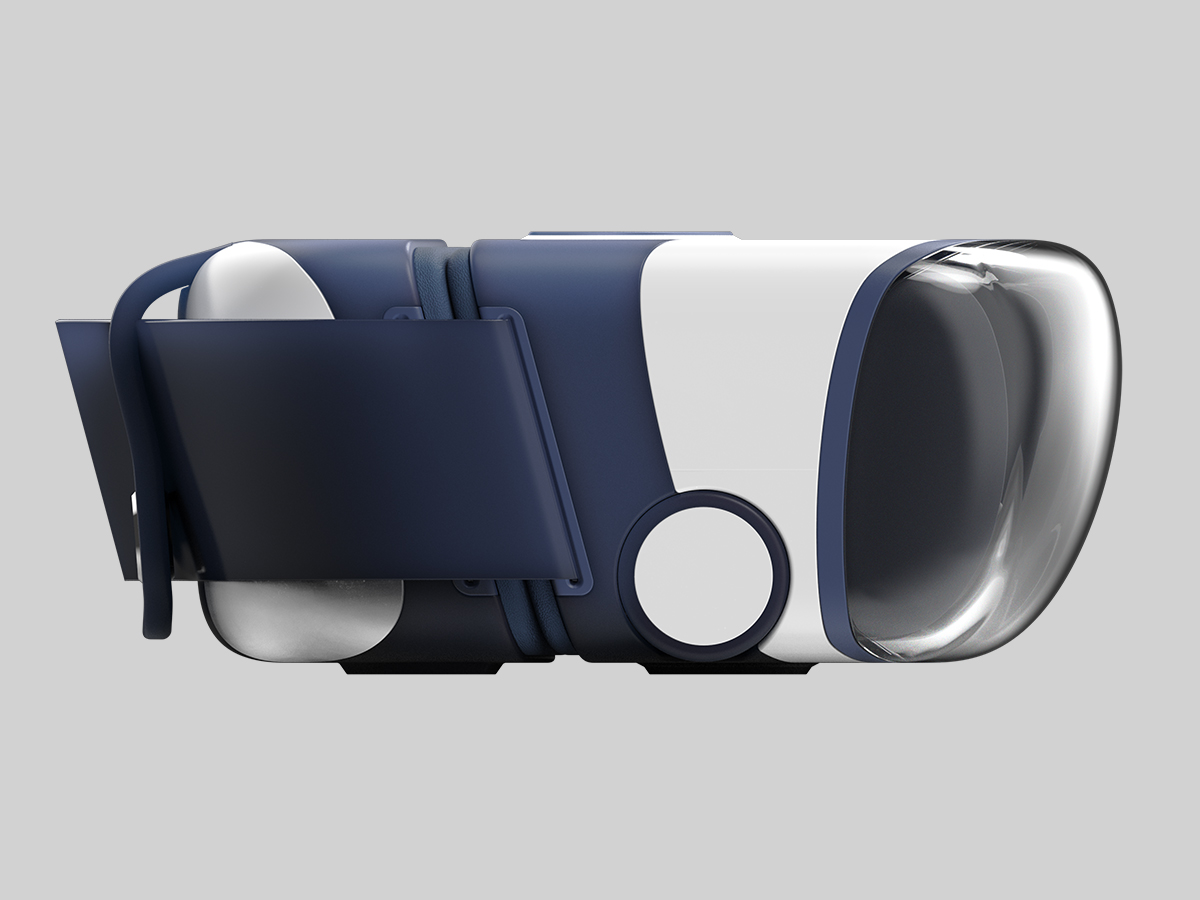
Smooth, fluid design inspired by current aesthetic trends in the medical tech space.
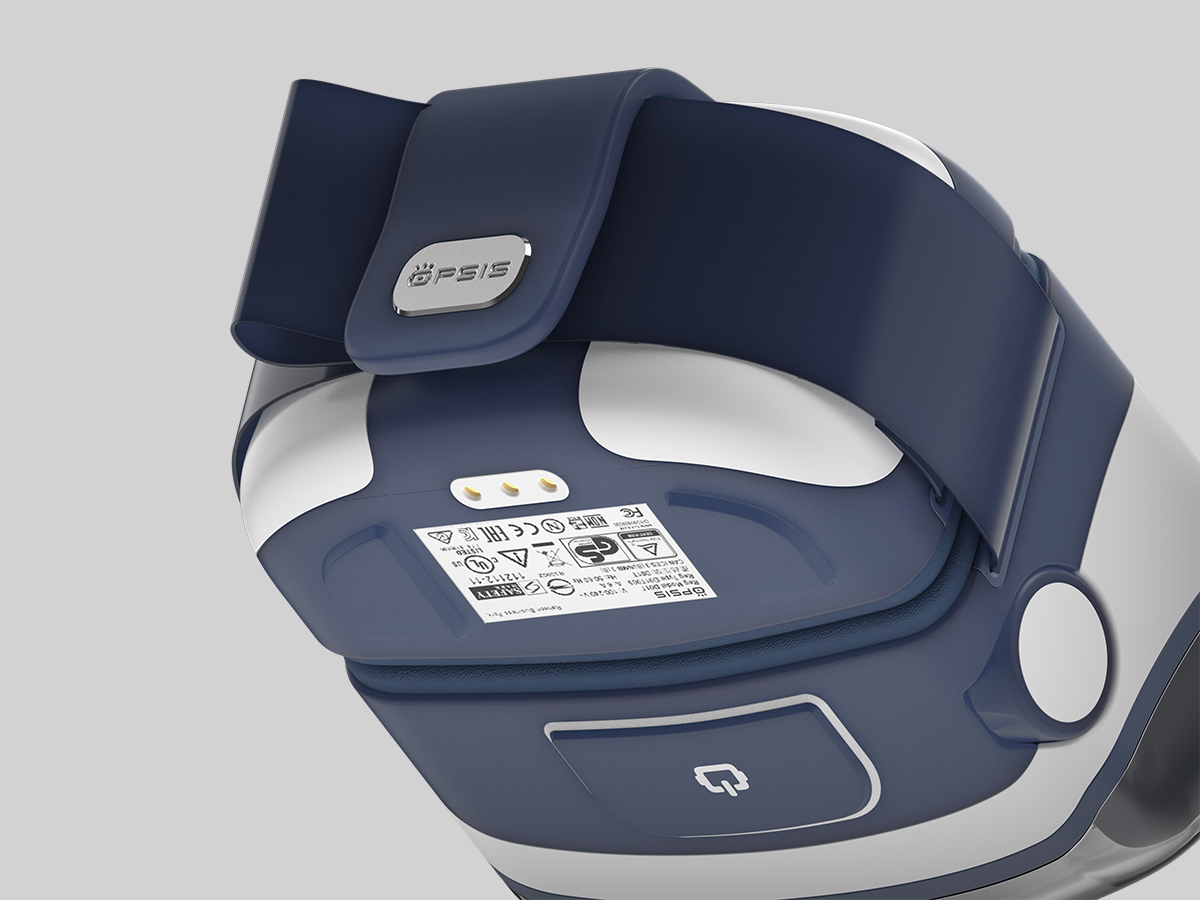
A flexible magnetic tag keeps excess headband length out of the way when not in use.
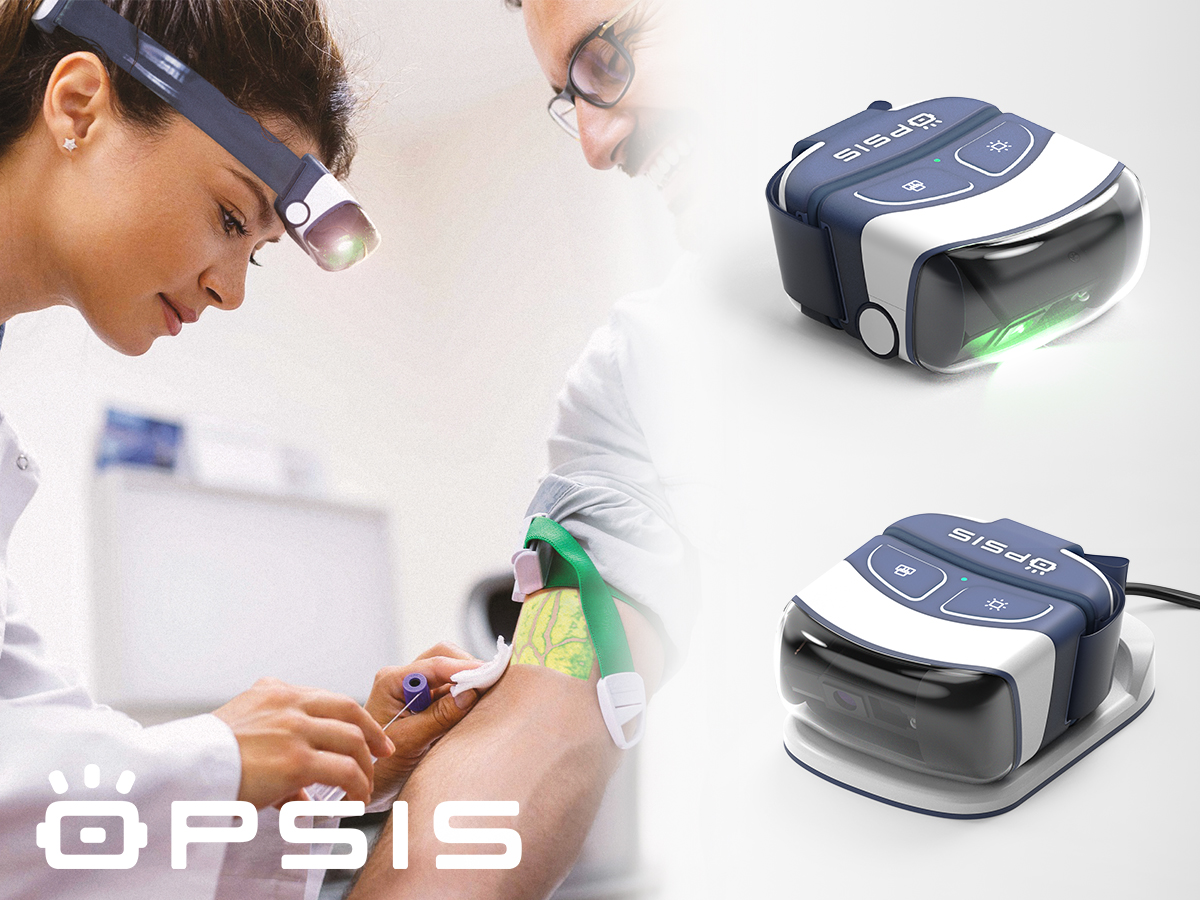
Opsis is a forehead-mounted near-infrared vein projector that displays real-time vein images on the skin, helping anxious or inexperienced doctors find veins in patients with difficult access. The device emits infrared light, which is absorbed by hemoglobin in the blood vessels. An infrared sensitive sensor picks up the light that bounces back, creating an image of the vein structure under the skin that can be projected on to a patient’s arm in real time.
Opsis uses existing NIR vein projector tech found in handheld devices, but unlike any of these, Opsis is hands-free, lightweight, and uniquely positioned in the market. It allows resident doctors and students in training to perform procedures confidently and independently, reducing the need for senior intervention or costly equipment. This improves efficiency, saves time and resources, and supports the wellbeing of both patients and clinical staff.
How it works
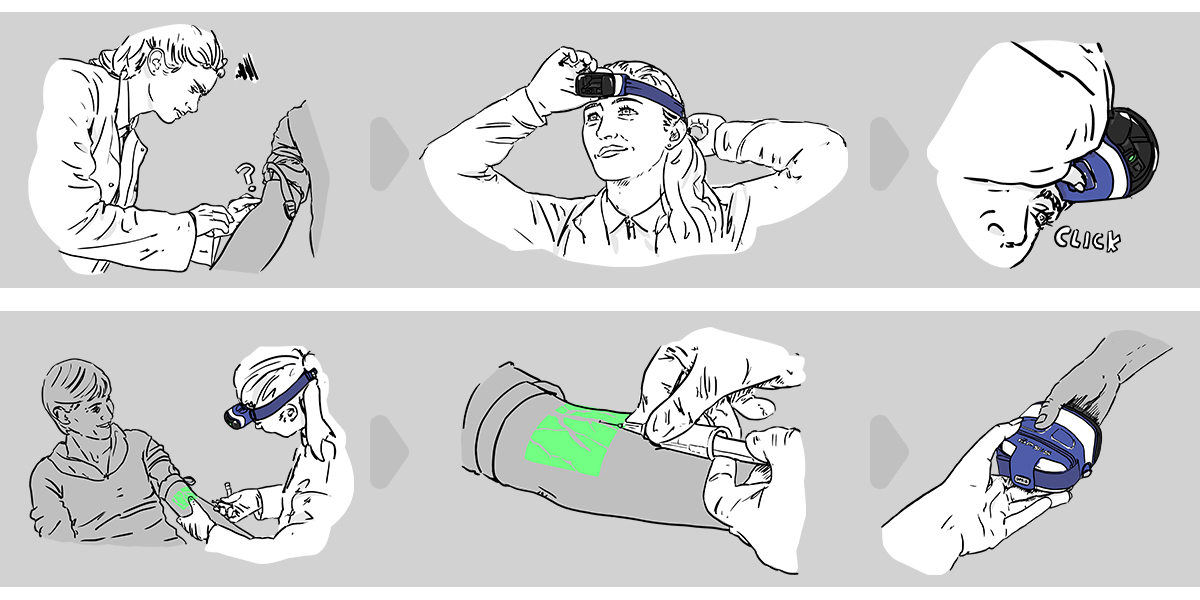
A junior doctor or other medical staff has issue finding a patient’s vein. Rather than waste time and affect the patient’s experience by sticking the arm multiple times, or waste hospital resources by asking a senior to take over, Opsis can be used.
The device can be pulled over the head with its elasticated strap securing it to the forehead. Opsis can then be activated, its NIR technology imaging and then projecting a real time map of the patient’s veins on to their arm. The venepuncture procedure can then be carried out with aid from the vein projector.
Its small footprint and diminutive size compared to other vein finder solutions allows it to easily be carried around or shared between doctors across wards wherever issues may arise.
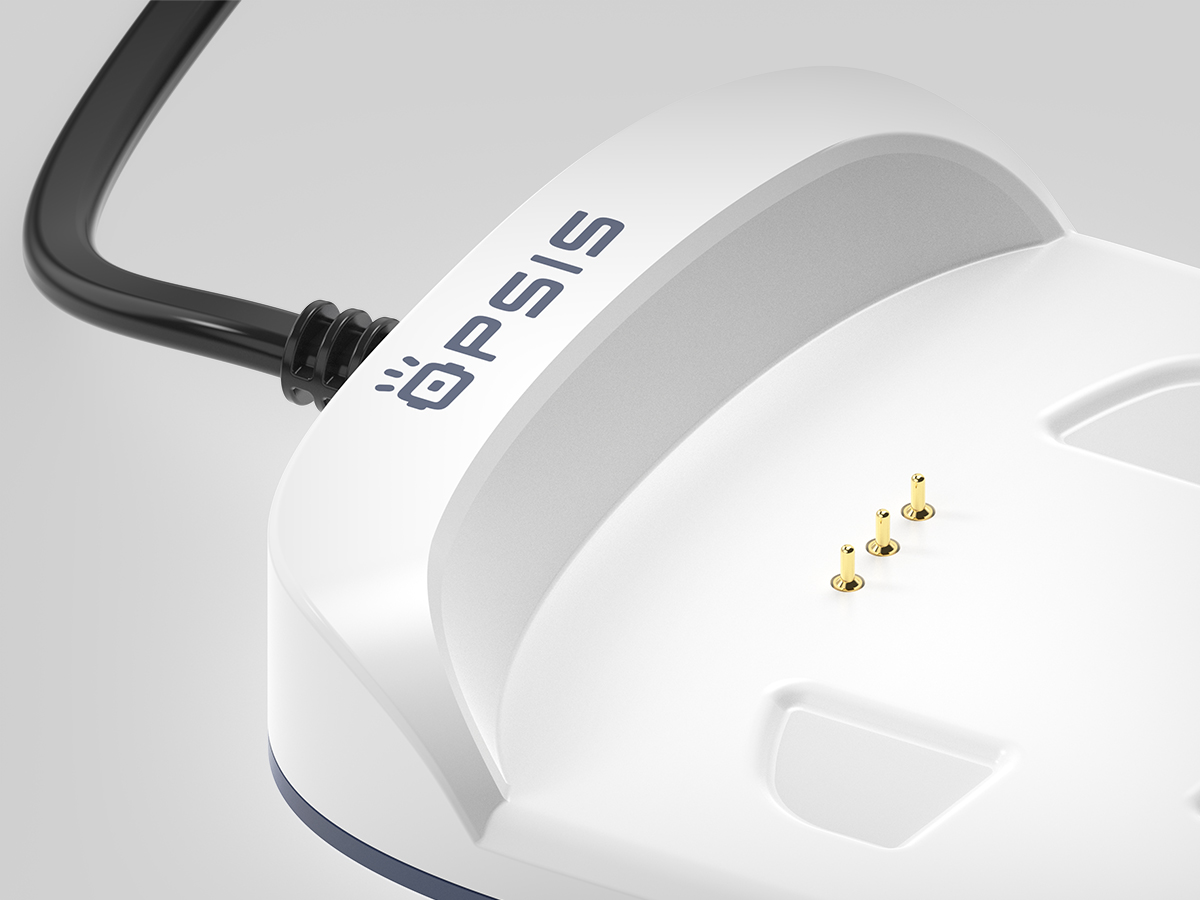
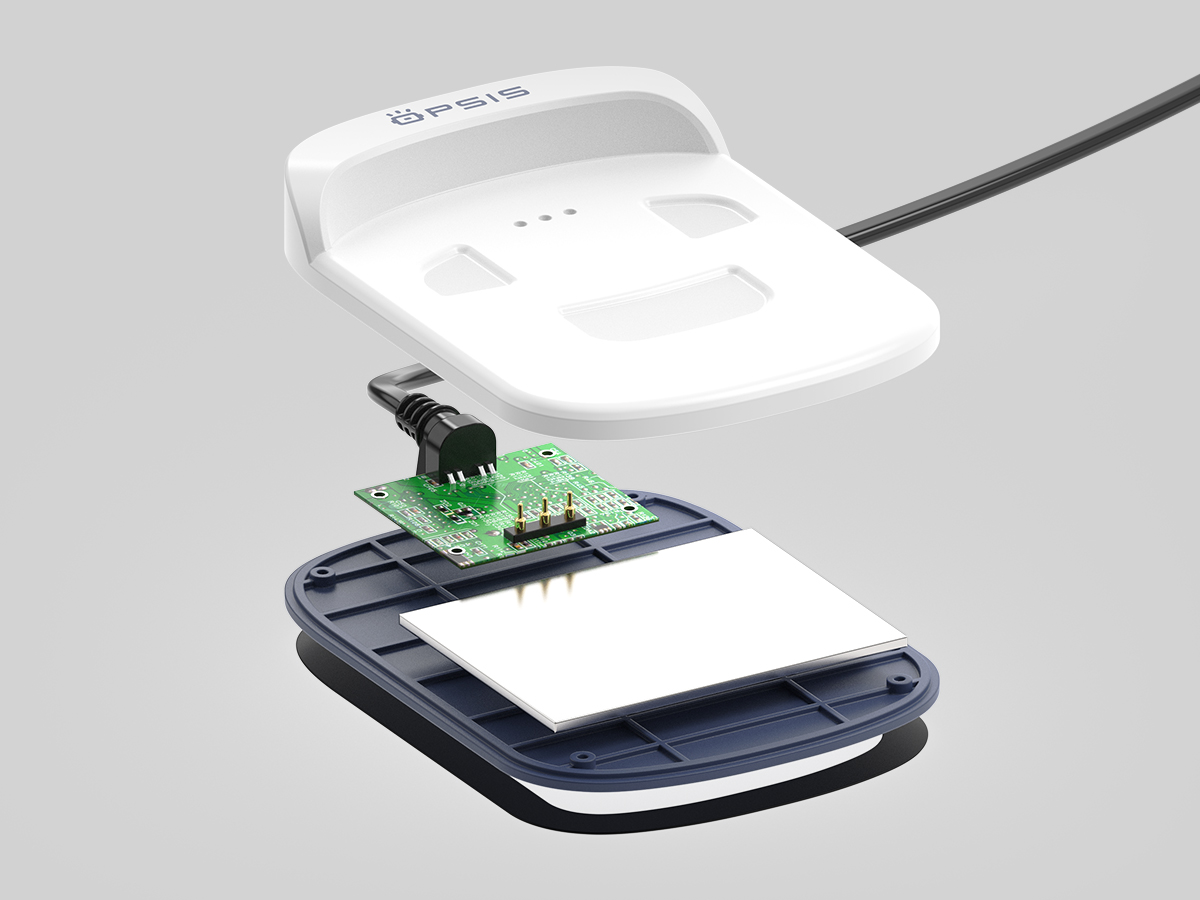
When out of battery, the device can be rested on its charging cradle, allowing it to be charged via pogo pins and corresponding pads – keeping ingress points to a minimum. Important for hygiene in medical settings.
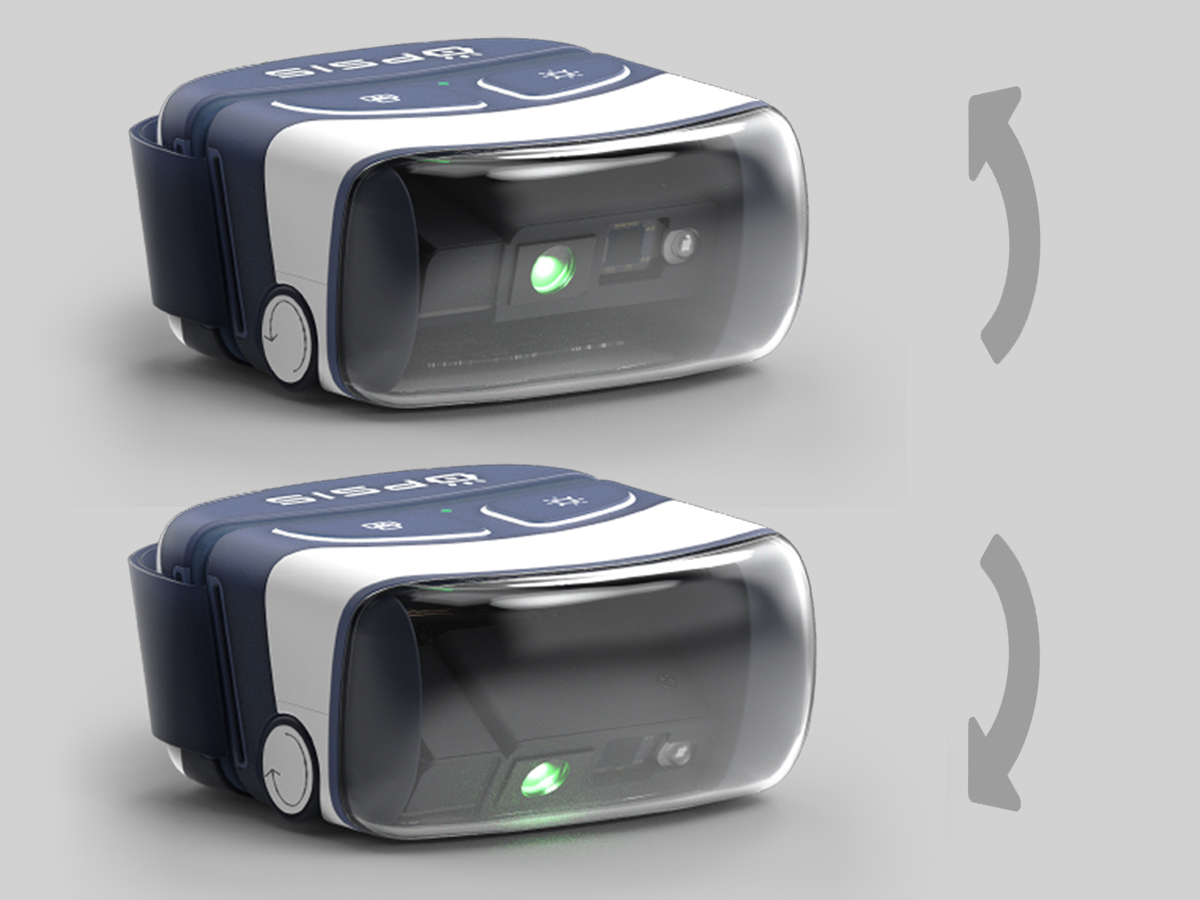
The projection array inside Opsis can be angled to provide a more comfortable experience for doctors rather than repositioning their heads. This angle can be adjusted minutely via the dial.
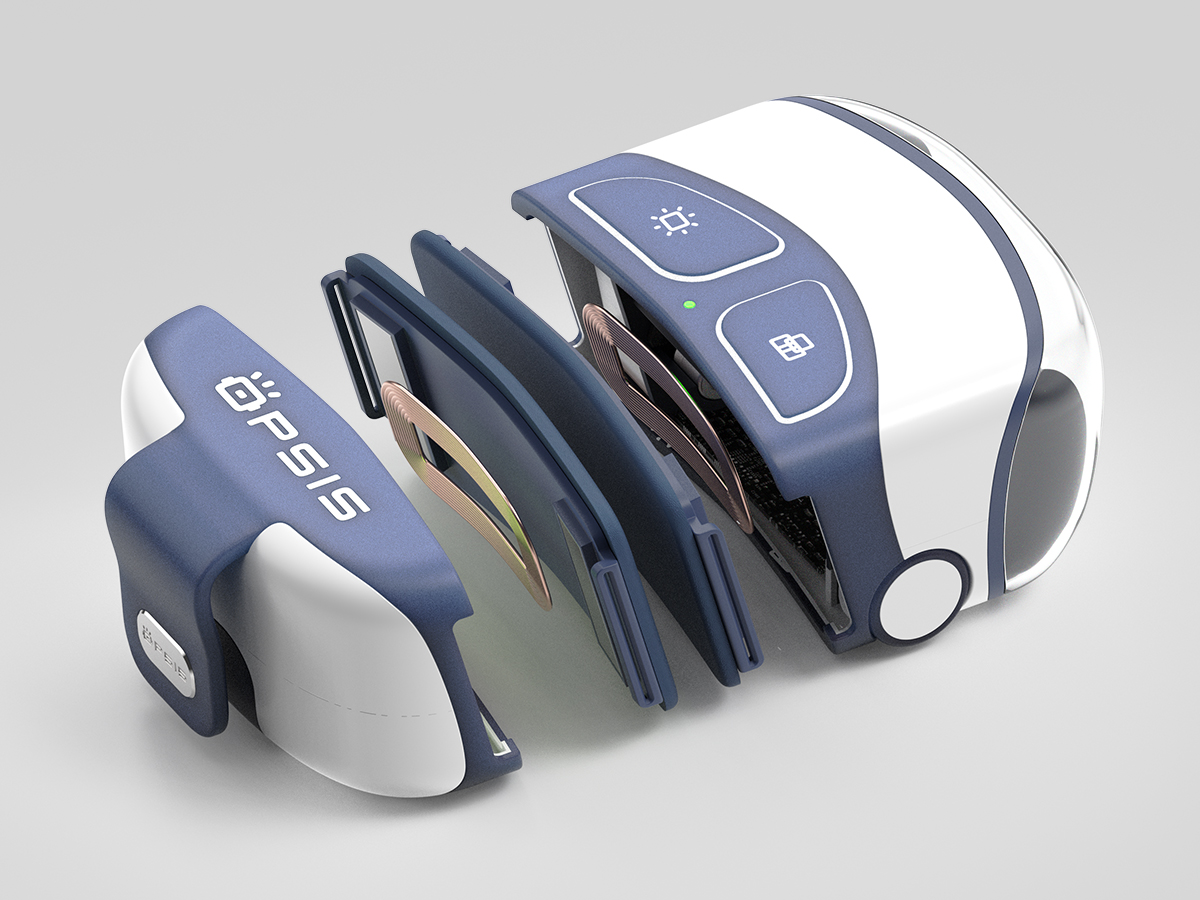
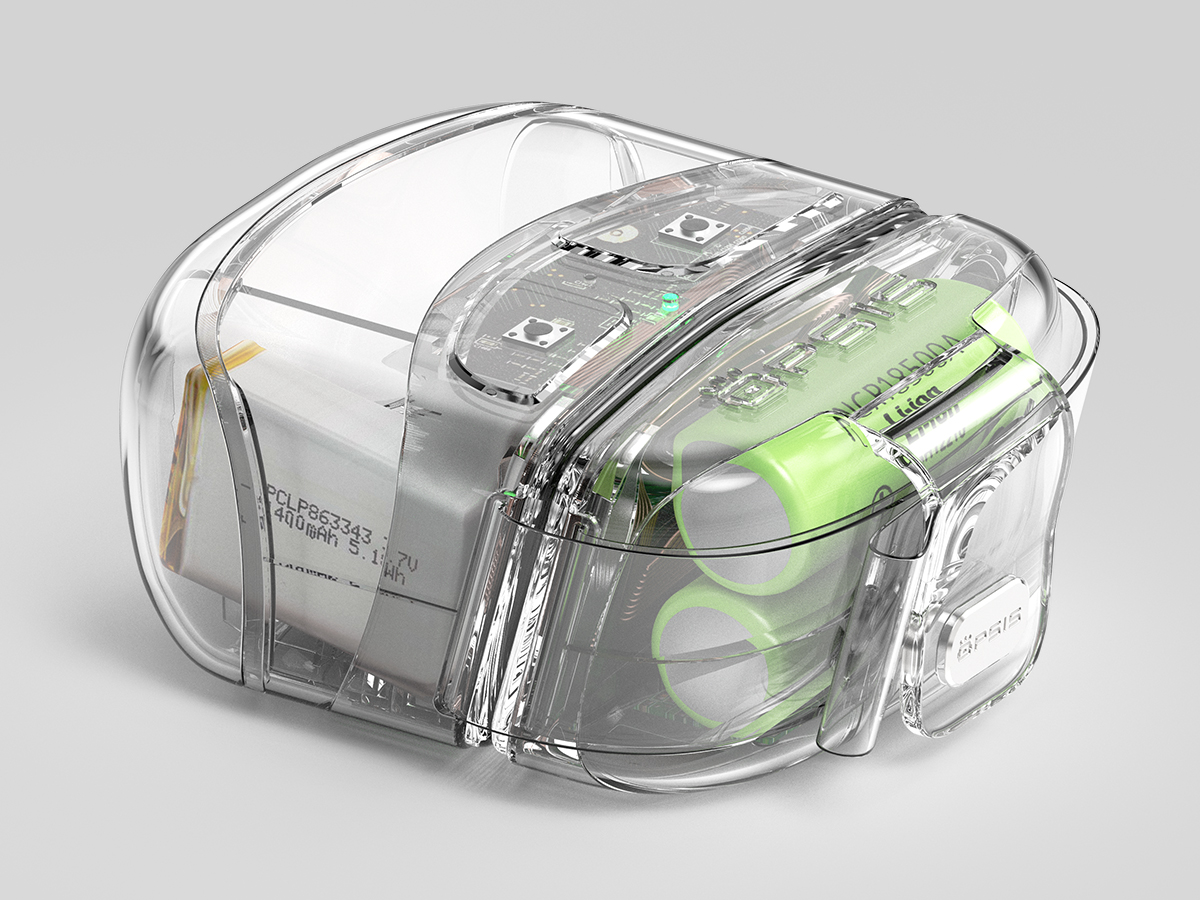
The two halves of the device are held together magnetically. This allows the reserve batteries in the rear portion to charge the main battery in the front wirelessly when not in use – increasing total power-on time (~ 4hrs max brightness)
Internals and considerations
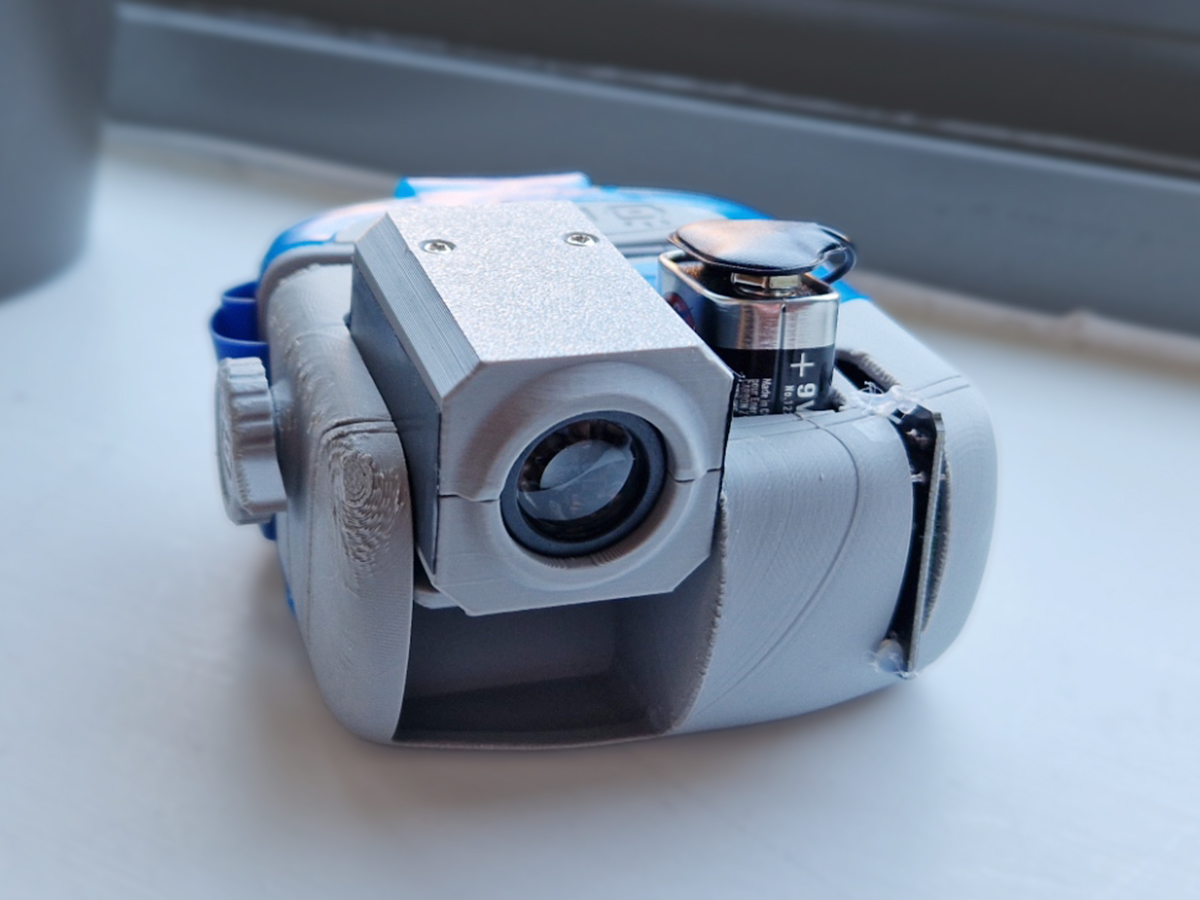
A view of the internal components of the device, including pico projector, rotary encoder and charging coil. Positioned to keep Opsis as compact as possible.
From the rear of the device. Exposing the main and reserve batteries as well as the push switches for the brightness and projection colour toggles.
An exploded view of the charging cradle.
Design for manufacture.
User-led design process and prototyping
Opsis functional prototype, with angle adjustable projector, magnetically attached halves, foam head padding, and functional buttons.
The functional prototype was rigorously tested by a junior doctor, currently working as hospital staff, with in-depth knowledge of venepuncture and blood draw.
Functional prototype in use by junior doctor during testing and evaluation. Accurately performing the steps of the procedure.
A selection of sketches and sketch rendering giving a brief preview of the project’s development. From conceptualization and ideation at the fuzzy front end of design, to major aesthetic decisions.
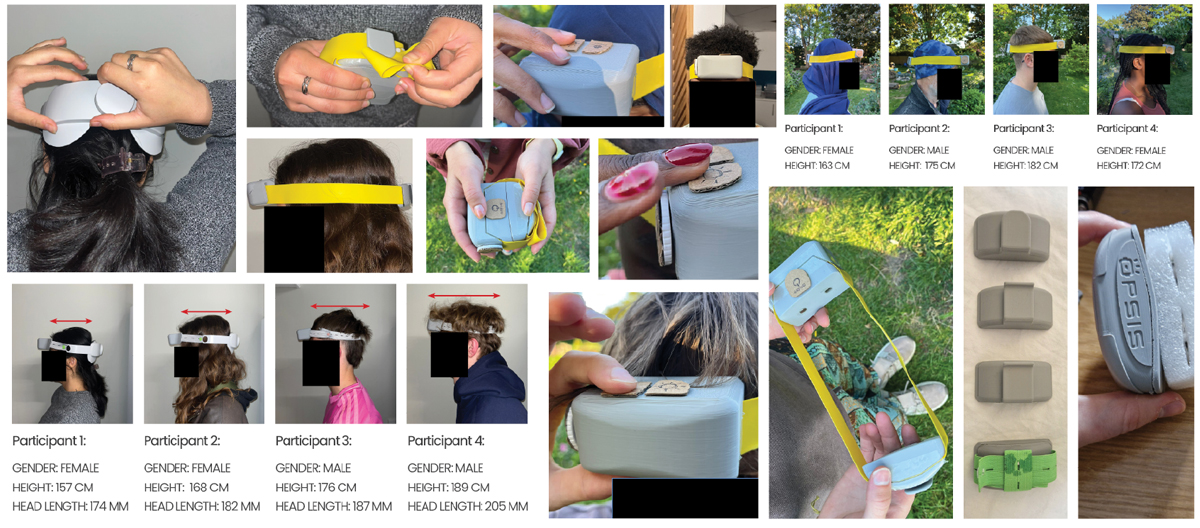
Development was evaluated at each stage using participants with a wide range of measurements to better understand and design for the full spectrum of user body types, ensuring comfort, usability, and inclusivity across anthropometric extremes.
Other examples of my work
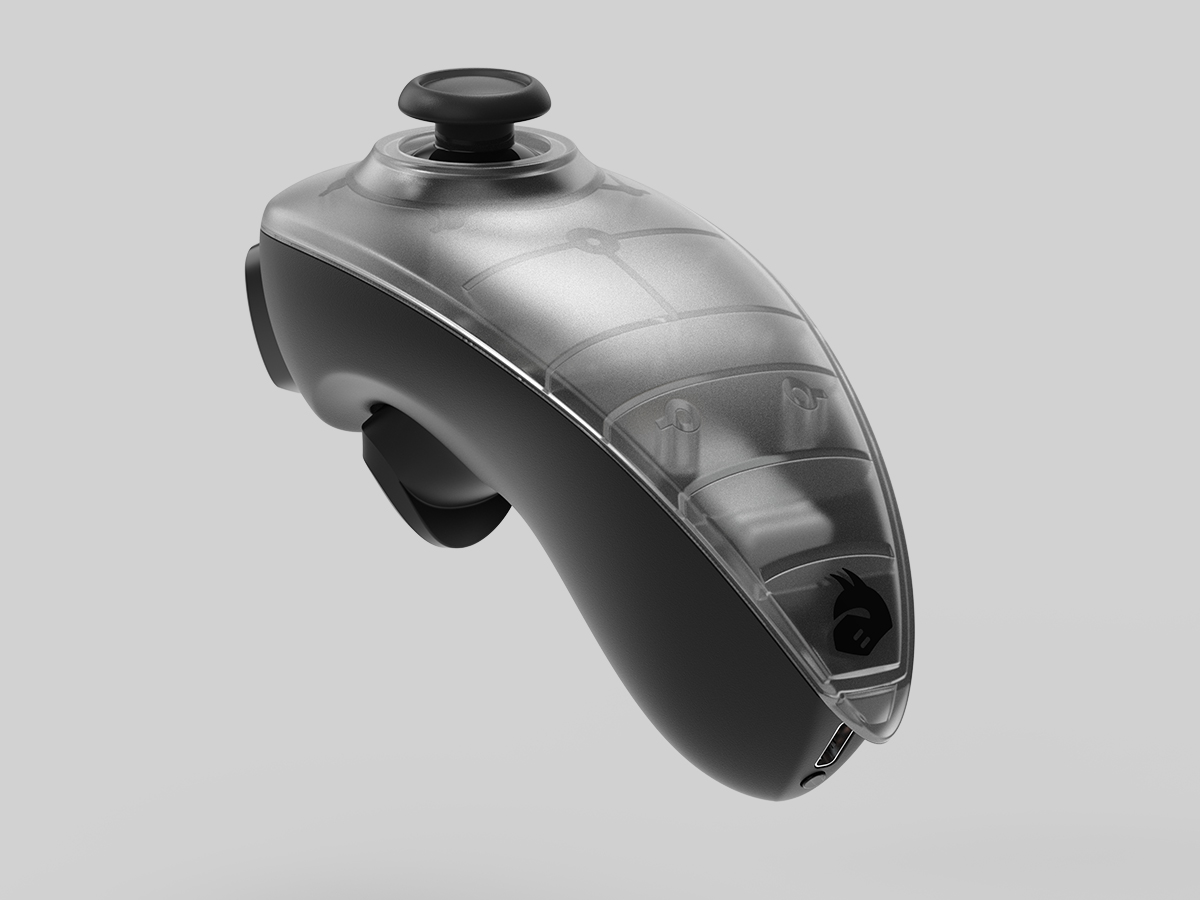
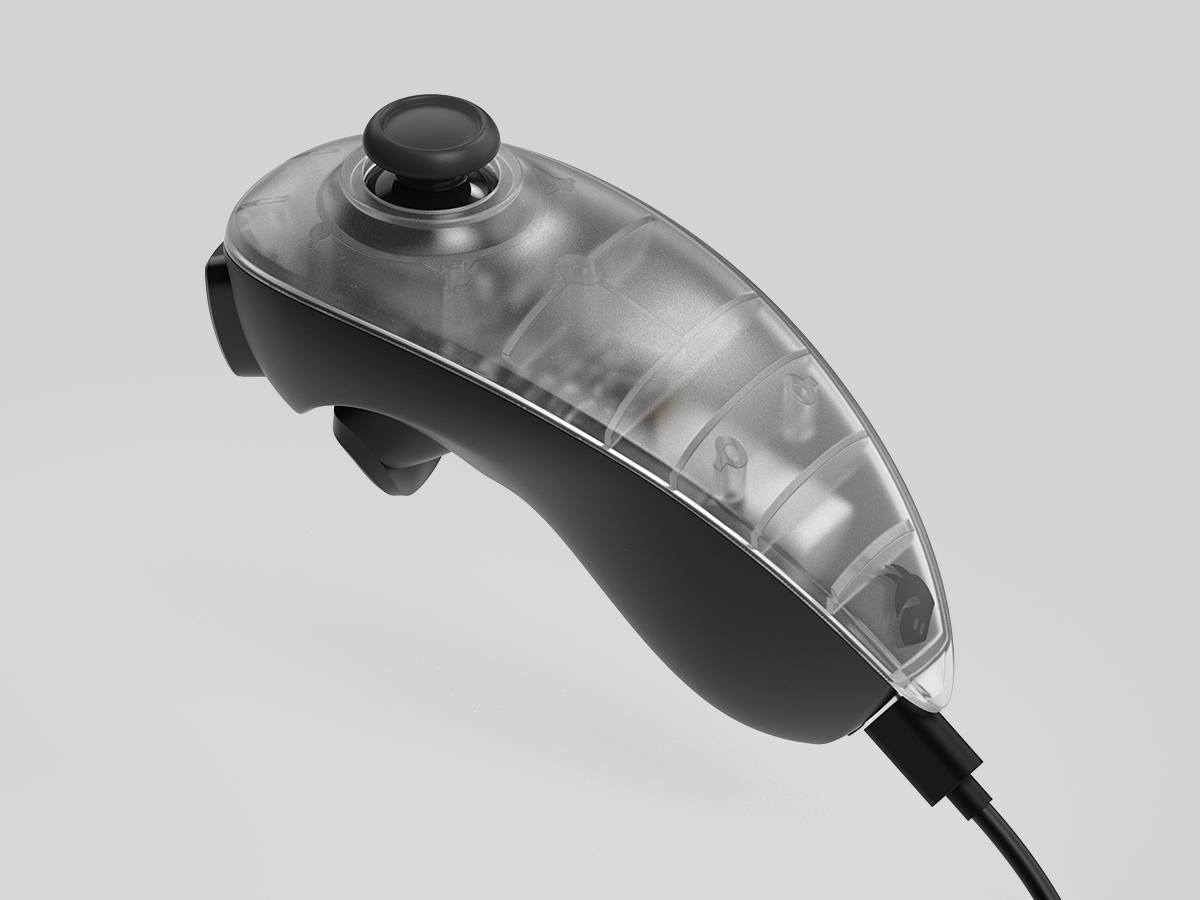
A wireless, nunchuck-inspired peripheral, designed to be used alongside a mouse in place of keyboard WASD keys for movement in PC games.
Surface modeled from scratch in Solidworks, with G2 continuity for a complete look and ergonomic feel. Smoothly supports intuitive, comfortable interaction.
Designed for manufacture. Featuring a 2000’s-inspired translucent top shell, showing off a view of the internal components.
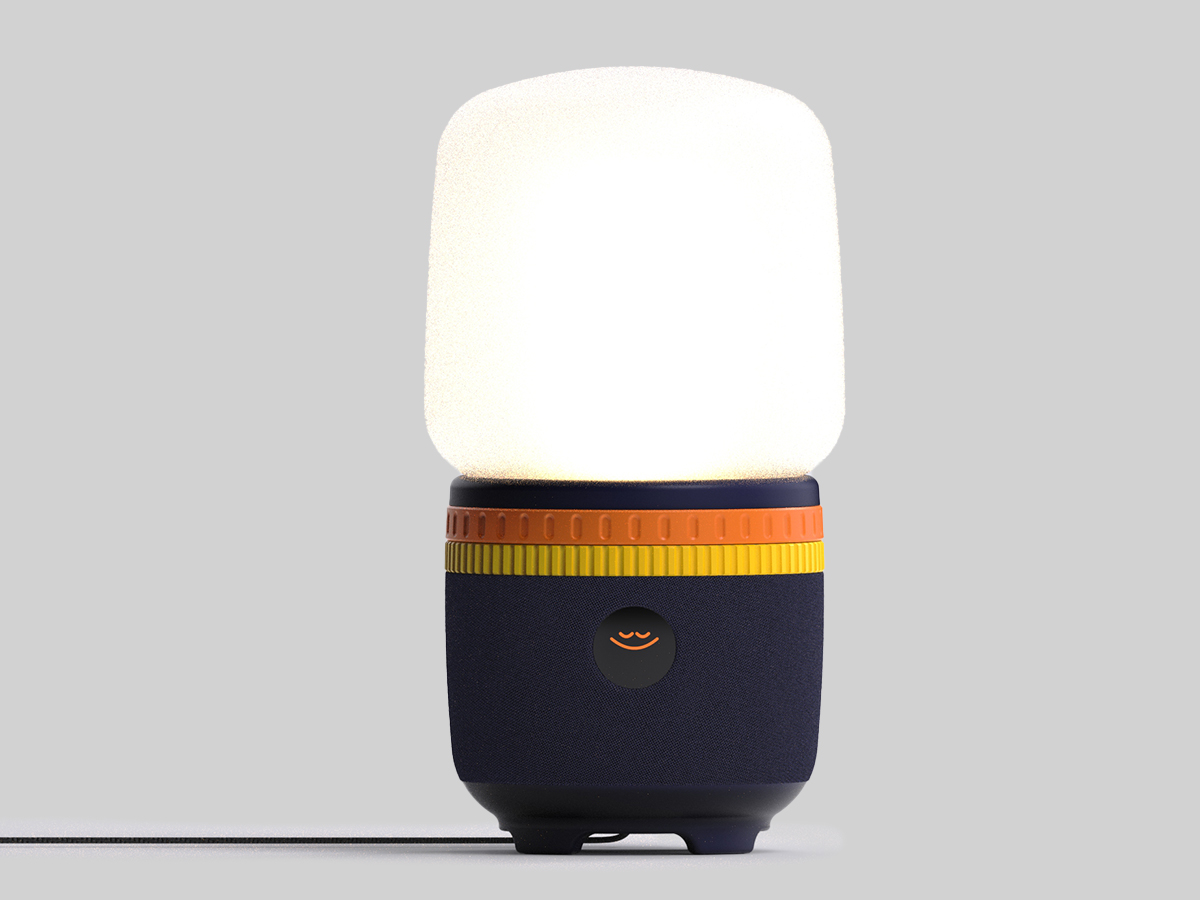
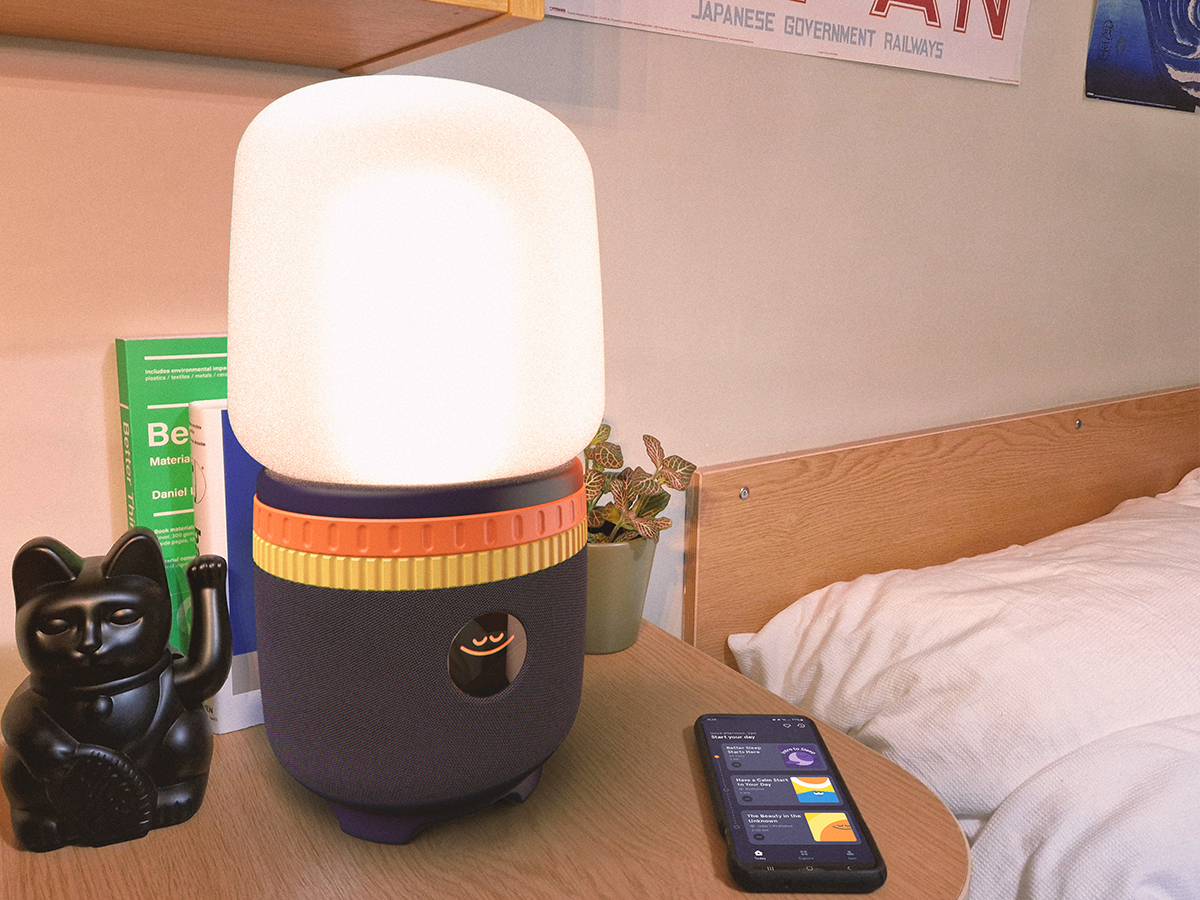
Headspace-inspired smart home lamp/speaker. Designed to reflect headspace’s “sleep” function branding. Features an interactive animated personal assistant – strengthening bond between user and product.
Works alongside headspace app – eg. suggesting mindfulness activities when detecting stress or playing binaural beat tracks and adjusting lighting when working or studying.
Functions controlled by large tactile dials. These are motorised and turn when the AI adjusts lighting colour/brightness or content volume. Can be directly overridden by the user – maintaining a sense of control.