Eva Hesketh-Laird
She/Her


I’m an evidence-driven industrial designer with a passion for user-centred design. I aim to continuously develop my skills and create solutions that truly meet user needs.
She/Her
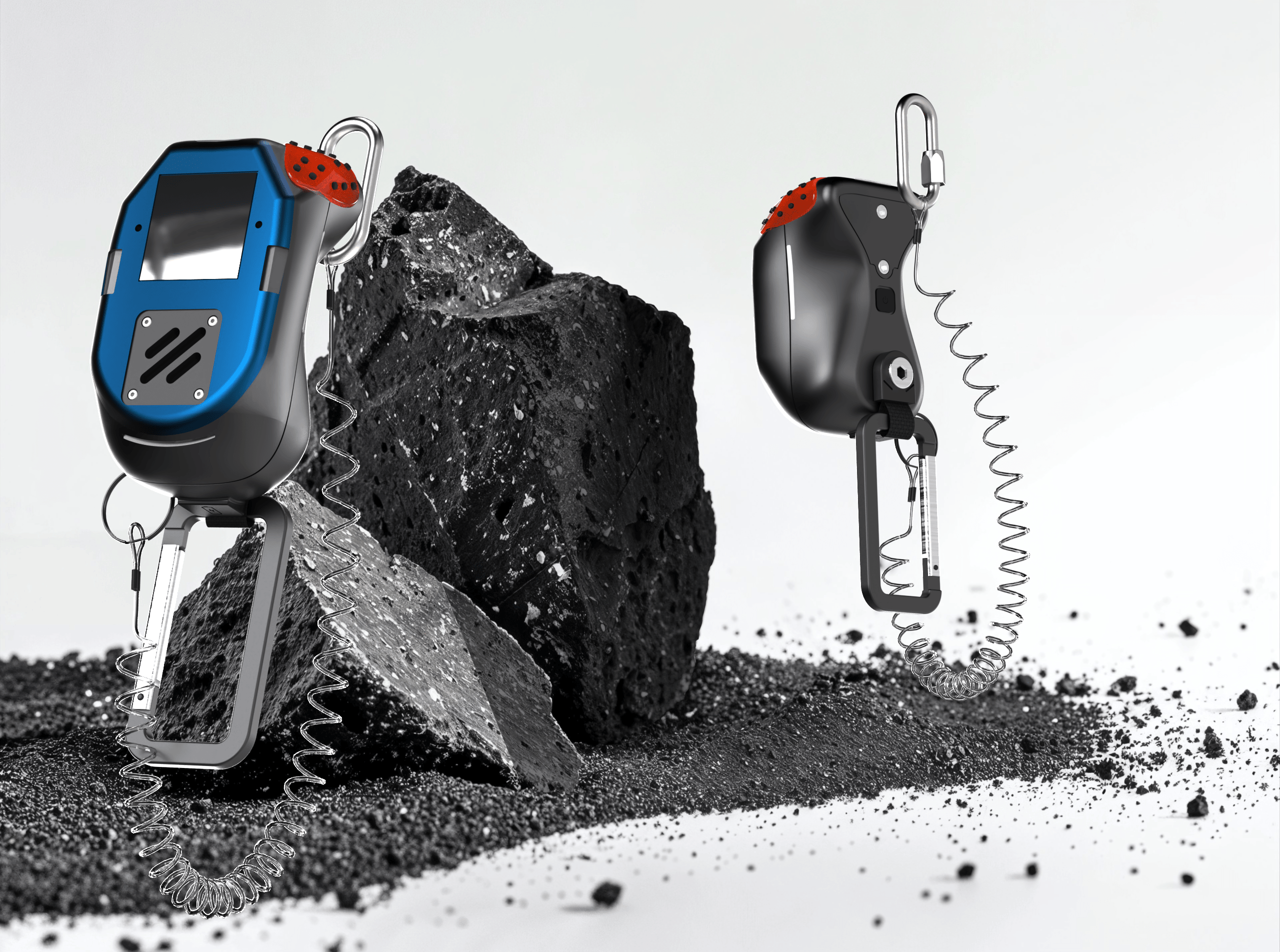
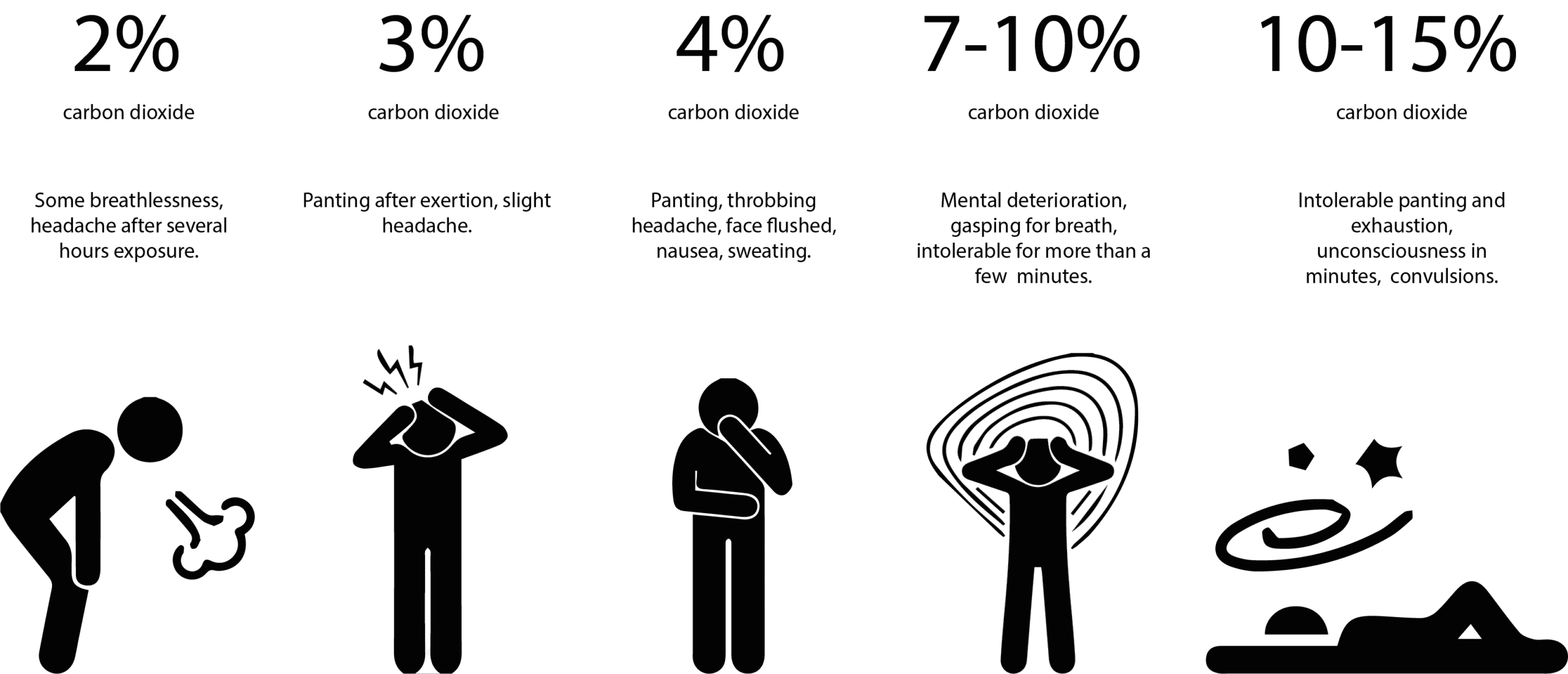
Caving is an extreme sport that involves the exploration of cave systems by walking, climbing, crawling, ascending and descending rope and swimming. It’s a group activity and trips can last multiple hours underground, depending on the length and difficulty of the cave. During caving trips, cavers may encounter bad air, an invisible and life threatening mix of high carbon dioxide and low oxygen. Early signs develop slowly and can be mistaken for fatigue. Mild dizziness or headache may be overlooked. Carbon dioxide (CO₂) and low oxygen (O₂) have no smell or taste, and is therefore hard to detect. Bad Air has led to fatalities in the UK – the very kind of tragedy Titan is designed to prevent.
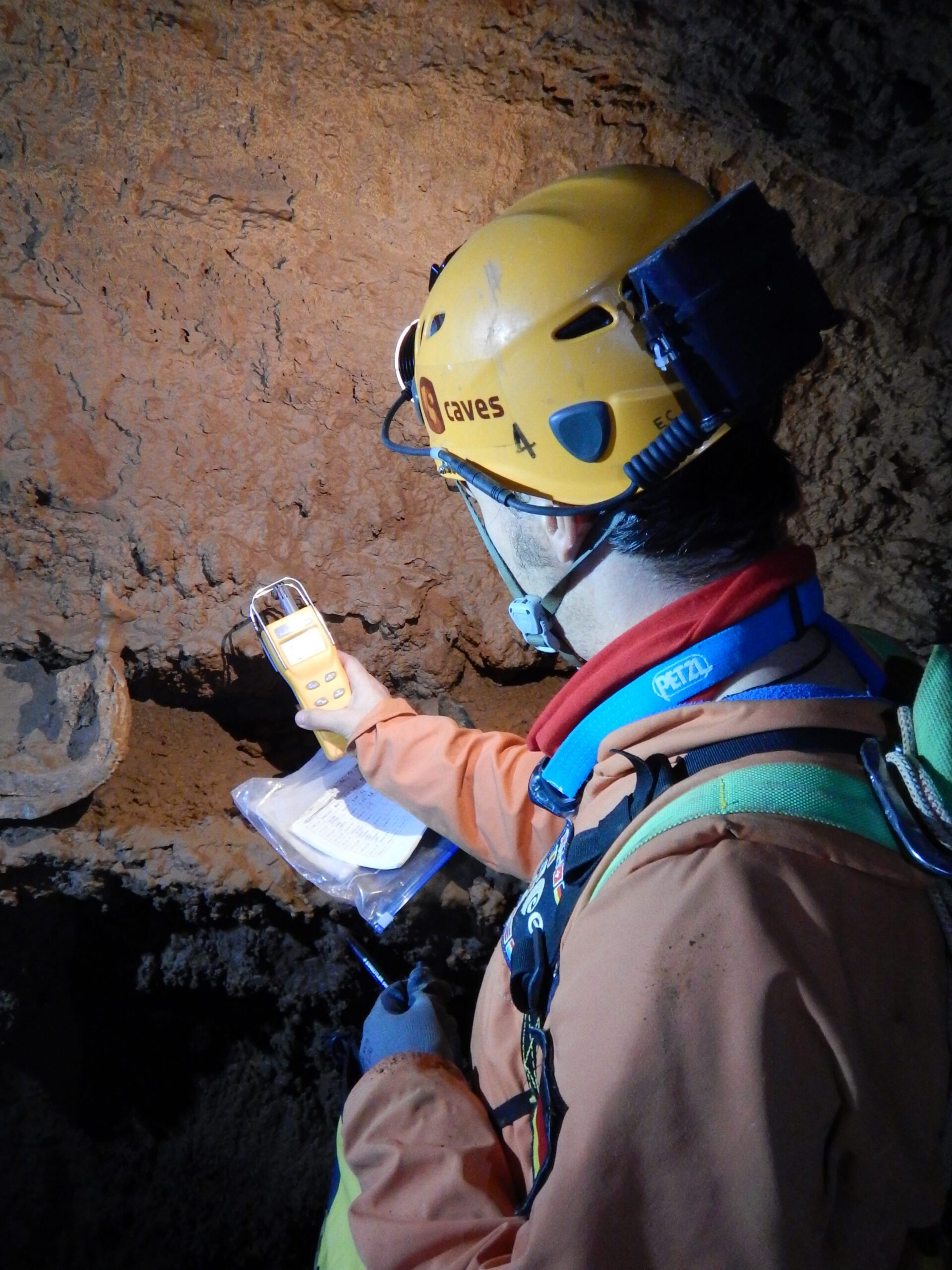
When speaking to cavers with experience using gas monitors underground, they mentioned that:
“I gave up using the monitor because it maxed out at certain levels and it didn’t really provide any more useful information. We would just get out (the cave) if it felt wrong, rather than relying on the readings.”
“You buy an expensive product, and then 6 months later, you need to get it calibrated.”
“Once you’ve experienced CO2 levels which are uncomfortable, you can quite quickly reach whether or not you’re happy to continue doing what you’re doing”
Image source: https://blogs.esa.int/caves/2014/11/19/the-science-of-caves-environmental-science-co2/
Helping cavers recognise and take the threat of bad air seriously is vital for ensuring safe and informed underground exploration.
A Bad Air monitor can offer cavers a solution not only to detect life-threatening atmospheres in real time but also minimises unnecessary alarms that would otherwise be disruptive underground. Titan empowers users to recognise when conditions become unsafe and make the informed decision to turn back, all in a device built to survive the cave environment.

Primary and secondary research was undertaken to create a feasible design outcome, that could overcome current user difficulties when taking a gas monitor on caving trips. User interviews and testing sessions were held with 30 people participants throughout the entire project.

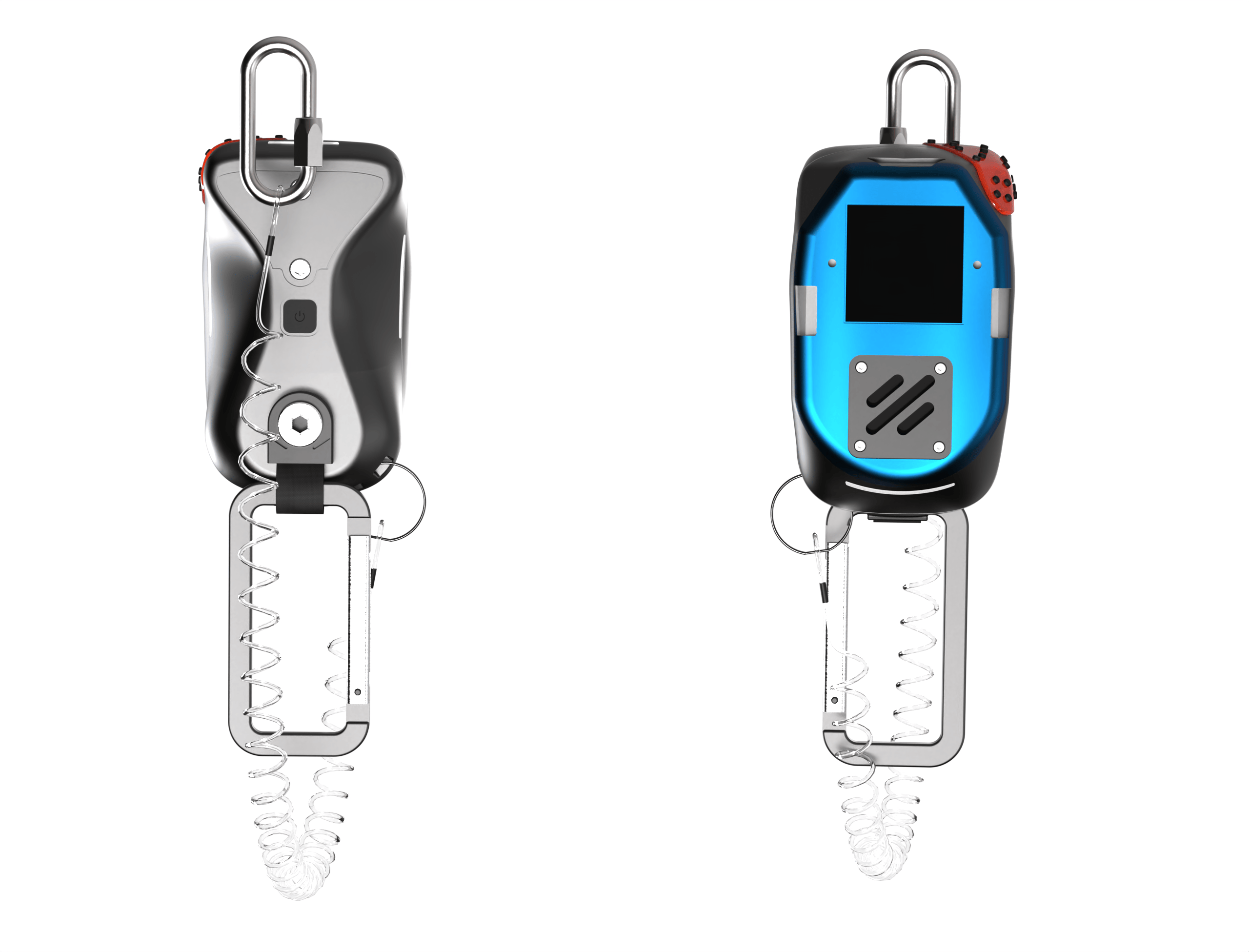
Caving clubs only need 1–2 devices for all their members. Only one caver in the group needs to carry the device on a caving trip.
3-10 year lifespan: The housing’s material has been chosen to survive harsh cave environments.
Replaceable parts: Club kit officers can perform basic maintenance themselves.
No expensive calibration: Many commercial monitors require professional calibration every 6 months, costing £50–£150 each time. Titan’s sensors remove the need for regular external calibration.
Various pricing tiers cater to the needs of both adult and university caving clubs.
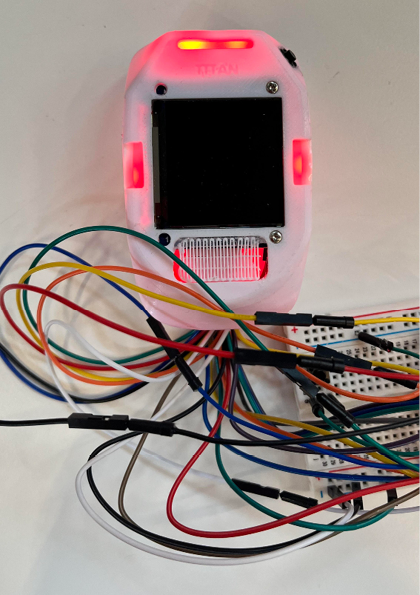
Titan uses EWMA (exponentially weighted moving average). Unlike a normal average, where every point has equal value, EWMA gives more weight to recent readings. It looks at the past 10 minutes of data and gives greater impact to the newest readings over older ones. Let’s say a group walks through a small pocket of bad air. Maybe the CO2 spikes for a minute or two. Titan won’t sound that alarm immediately because short exposure to a small pocket doesn’t present the same risk as long-term exposure. But if the group stays in the area with high CO2, the readings build up. The more sustained the exposure, the higher the average, and once it crosses the threshold, the alarm sounds. Titan doesn’t just say that “the air is bad”, it says “the air has been bad for long enough to pose a real danger”. Titan also uses a point alarm, which causes the alarm to sound when a life threatening atmosphere is encountered. The alarm will stop sounding when the caver leaves the area to a safe environment.
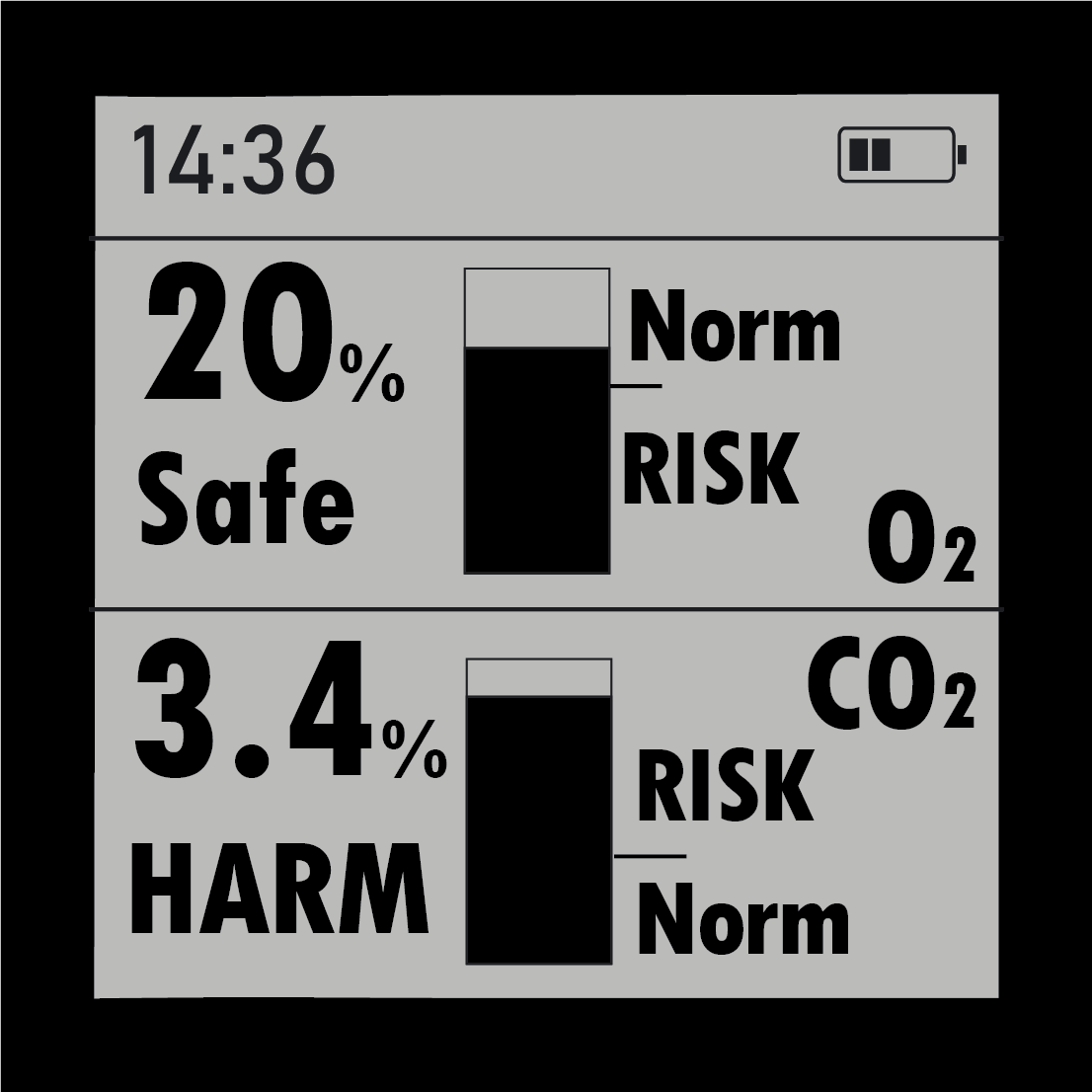
The screen only shows what matters: CO₂ and O₂ levels on the primary screen, and a bar showing both gasses’ air quality status. Titan also measures air pressure, temperature and humidity which are helpful for predicting bad air. Readings update every second in real time.
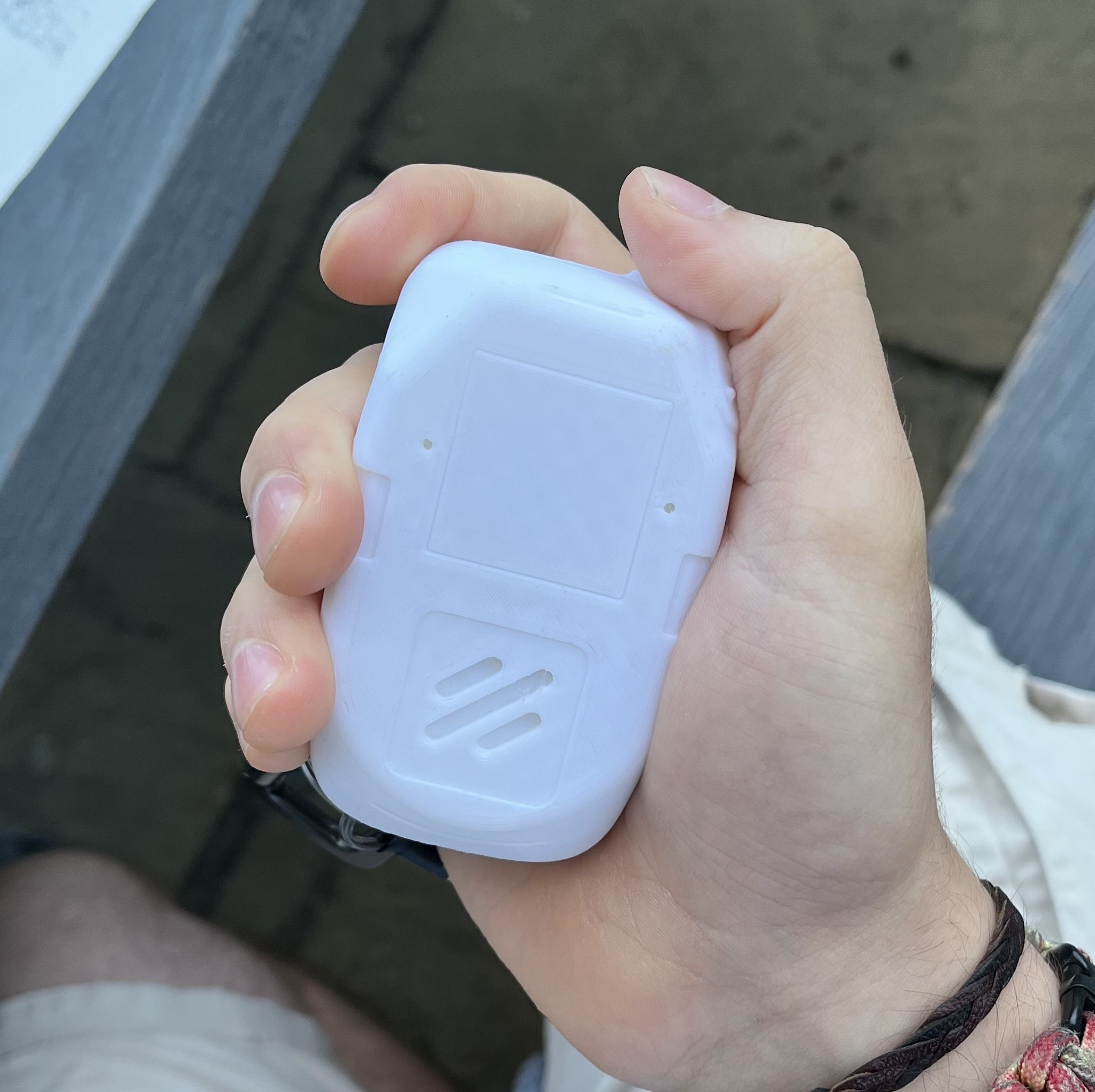
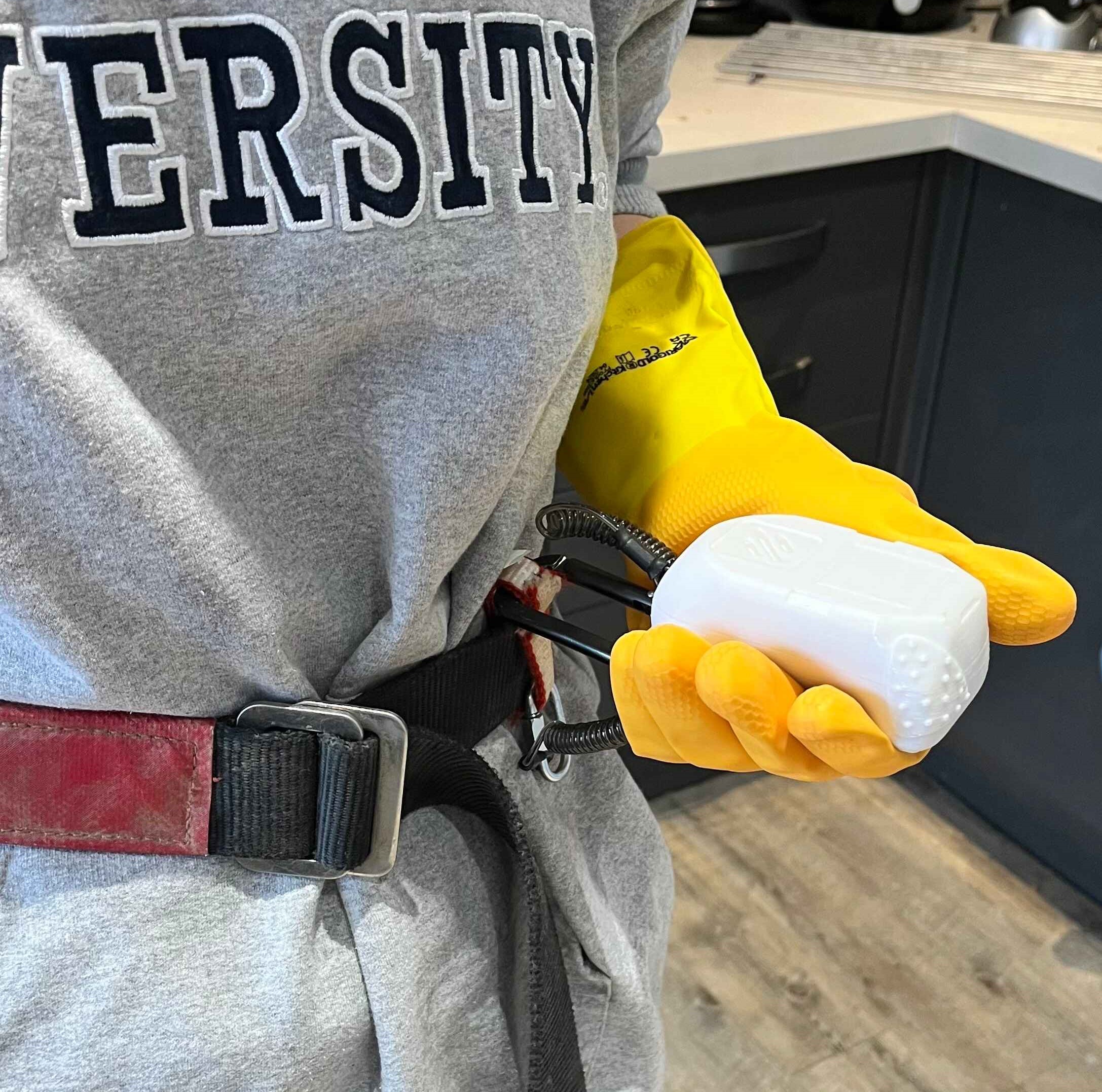

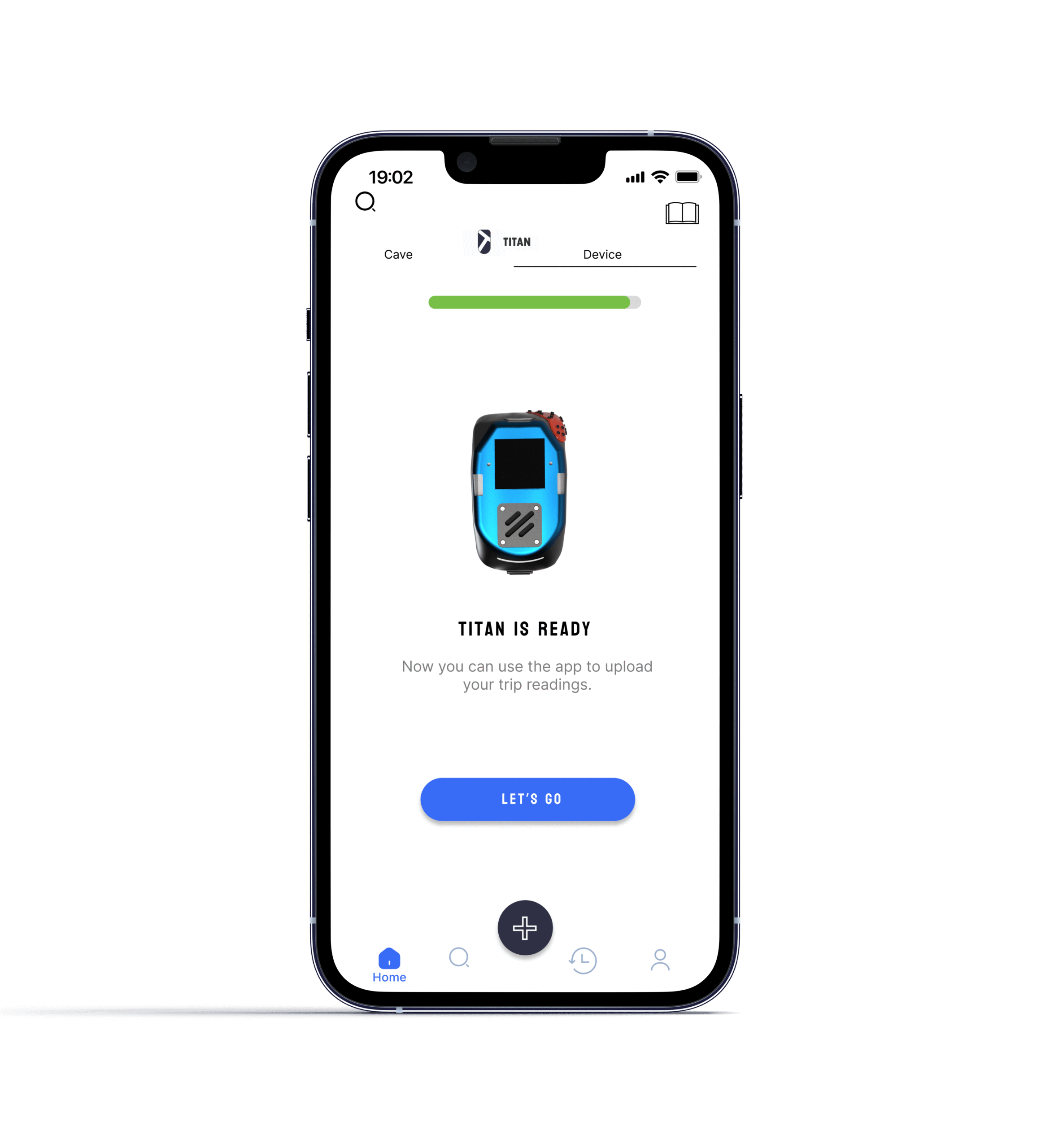
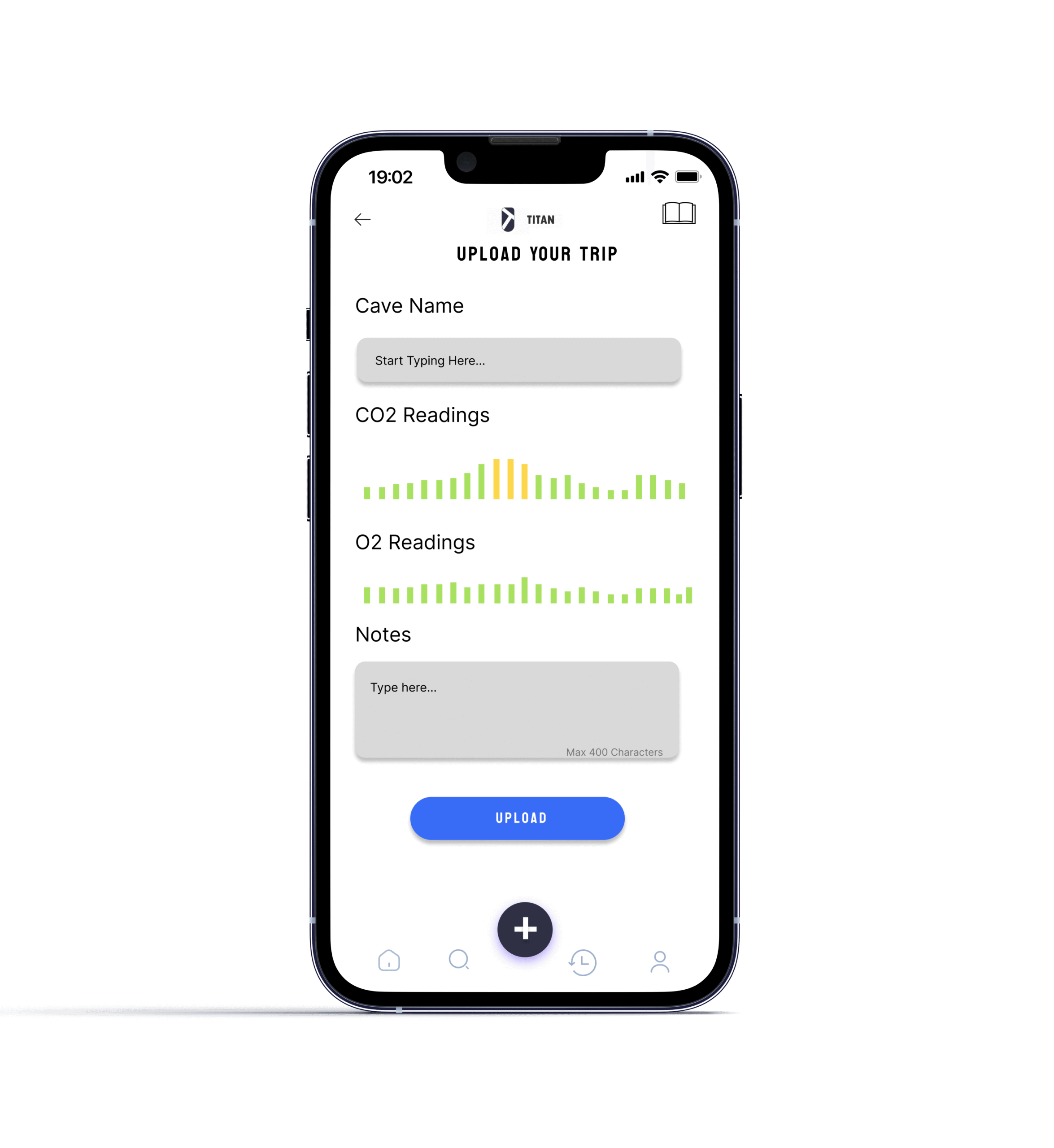
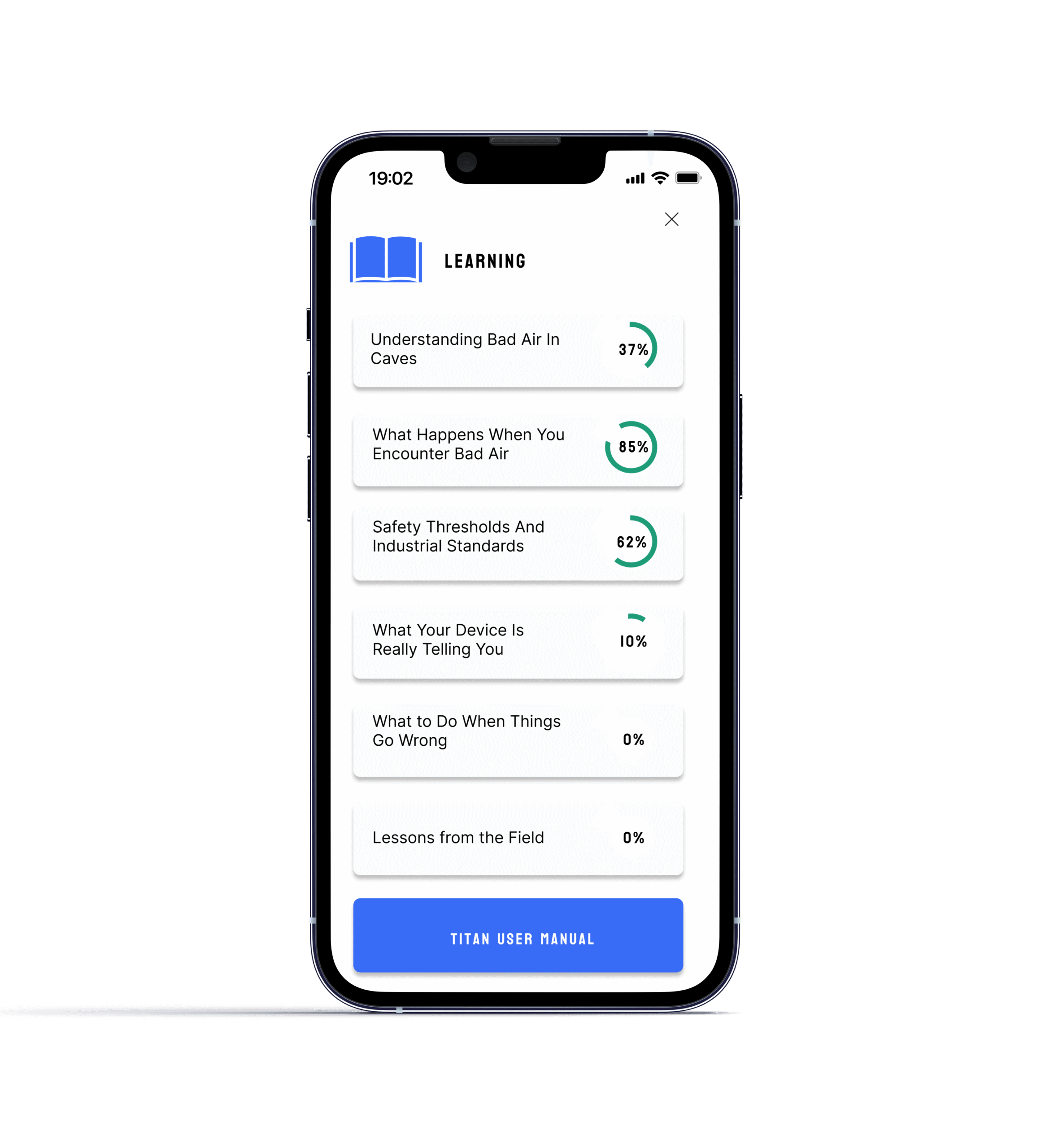
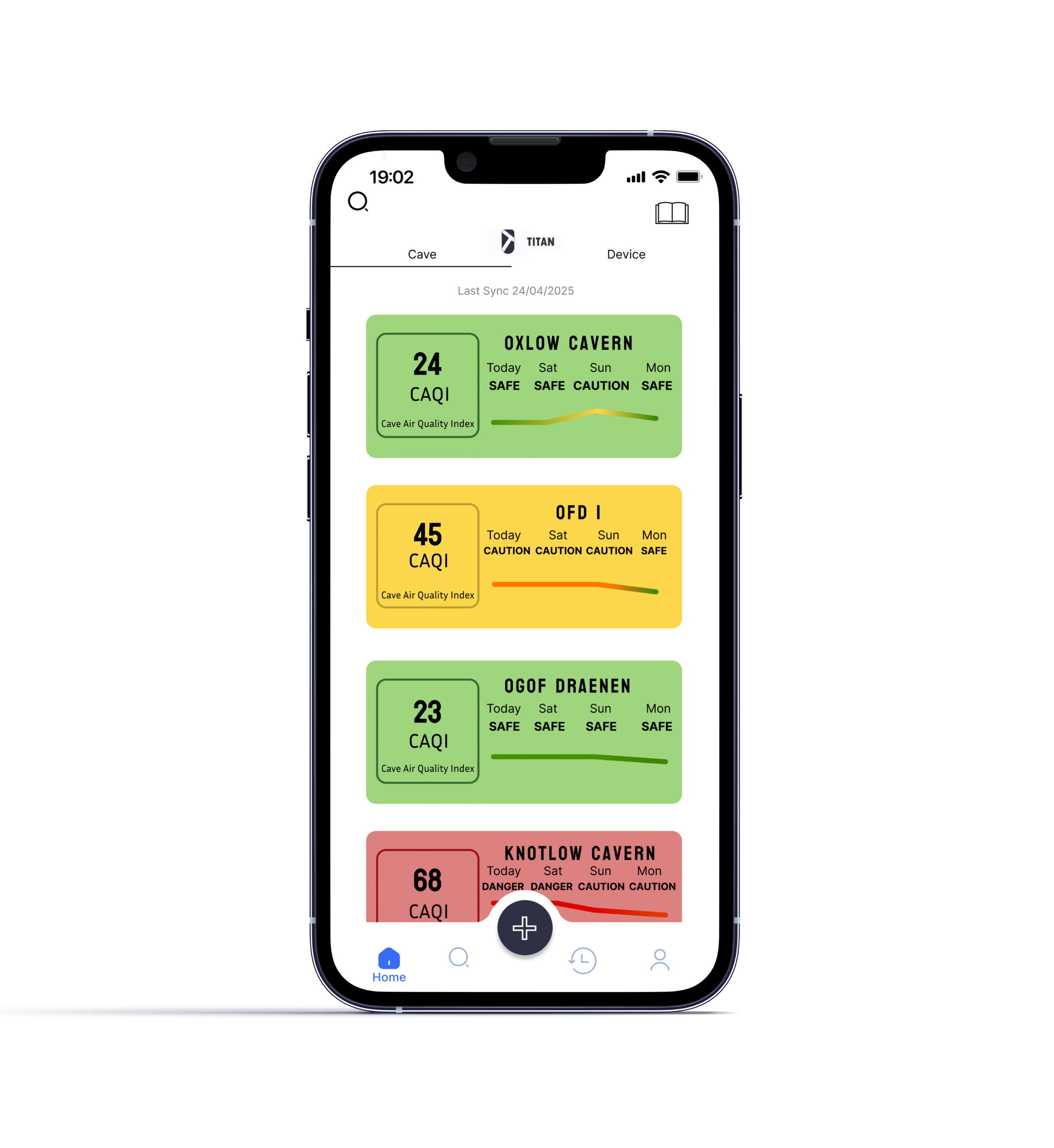
At the end of a caving trip, Titan can be connected to a mobile app. This app maps air quality in caves across the UK and worldwide. Every Titan user can contribute to a shared database that helps future cavers prepare better. Users can also leave notes about cave conditions.