Joy Brixey


Joy brixey is a Christian interdisciplinary installation artist exploring the concept of ‘human brokenness’ through video, sound and sculptural elements.
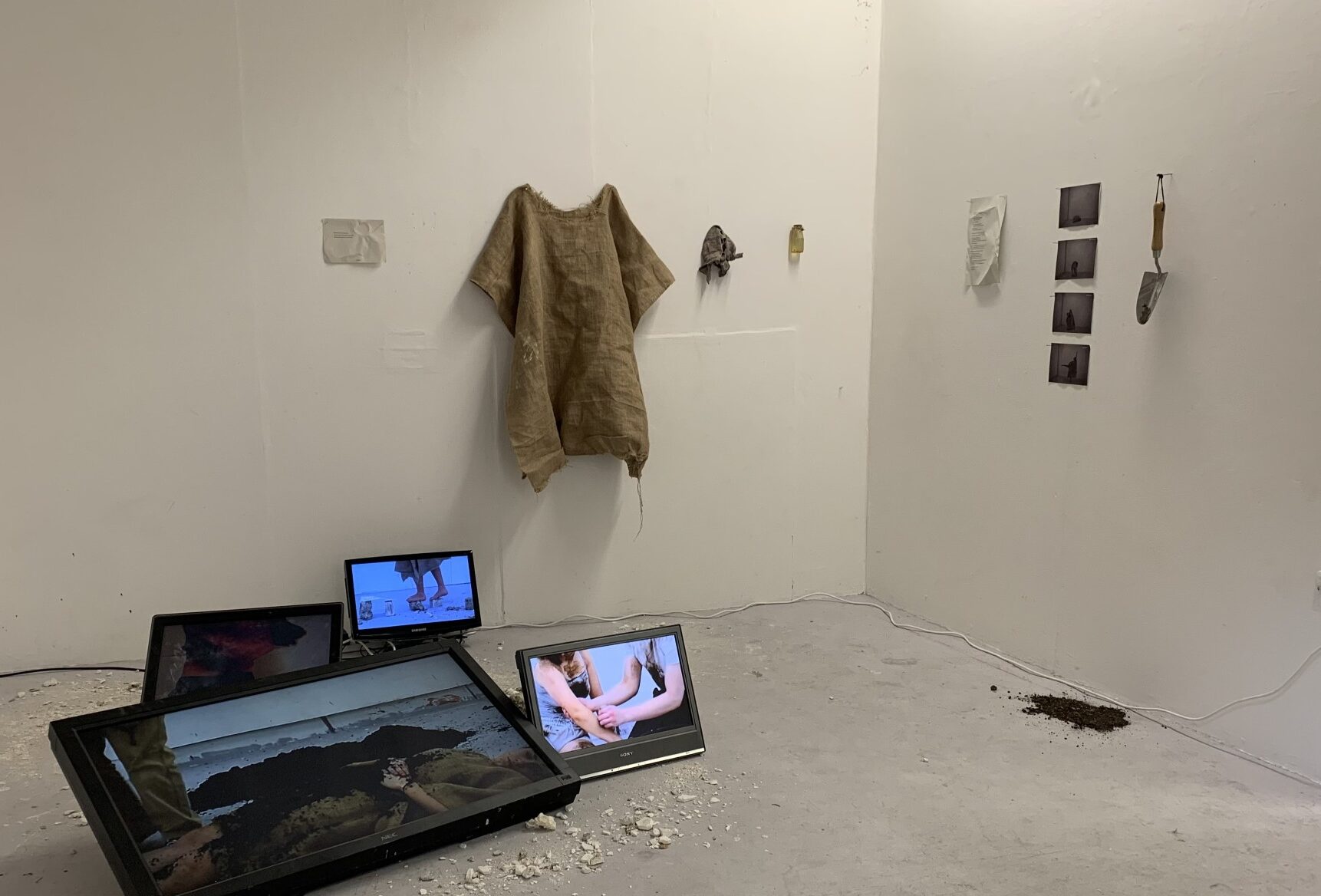
Joy Brixey’s practice aims to make sense and shed light on the concept of brokenness through performative video and mixed-media installation. Through creating these spaces using video, sound, and sculptural elements, the work invites the viewer to confront and reflect.
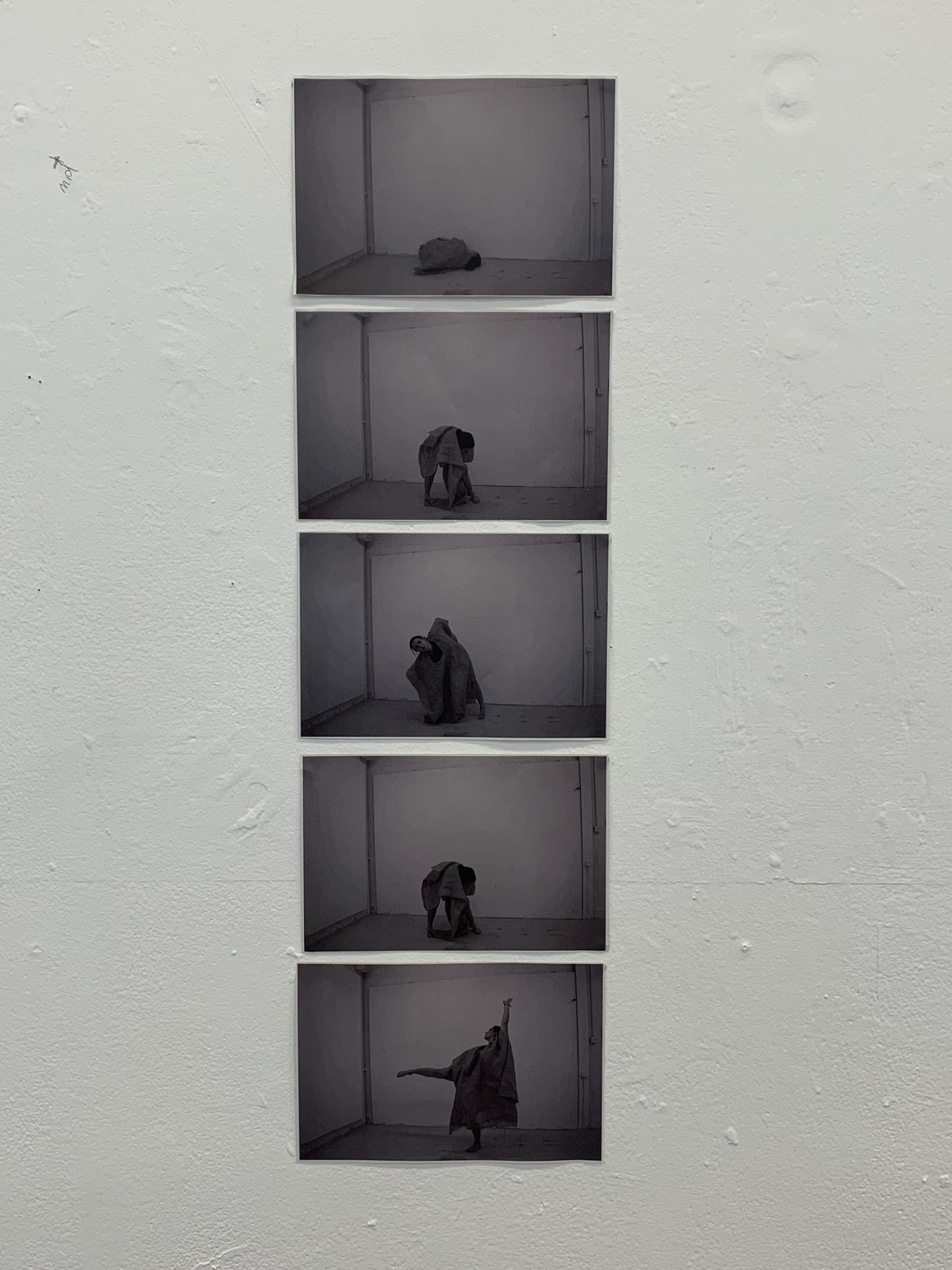
This body of work investigates brokenness through diverse creative languages, encouraging reflection and dialogue. The work sits within a contextual framework of performance, using tangible bodily performative movements to express the intangible struggle of humanity’s brokenness. Inspired by imagery from scripture, her Christian faith, and personal grief, Brixey incorporates the recurring motif of ‘sackcloth’ featured as a symbol of grief. As the sackcloth is worn and movement is created, grief is personified and explored. The garment, rich with connotations of suffering, grief, and humility before God, serves as a metaphor in her conceptual work. Relating to the theory of transformative therapeutics, the process by which art practice facilitates healing and recovery, the artist hypothesises that “engaging with art can provide the transformative therapeutics that define our making sense of the world” (Collins, 2016), The artist makes sense of not just the universal aspect to humanity’s brokenness, but her own individual personal sufferings and spirituality.
By intertwining ritualistic performance, biblical symbolism, and transformative therapeutic principles, Brixey’s installations not only depict the raw reality of human brokenness, but also invite viewers to engage deeply with their own narratives of struggle and resilience, as well as to encounter Christianity. Brixey’s art practice becomes a form of transformative palliation, inviting viewers to ask: What does brokenness mean? Is there hope?
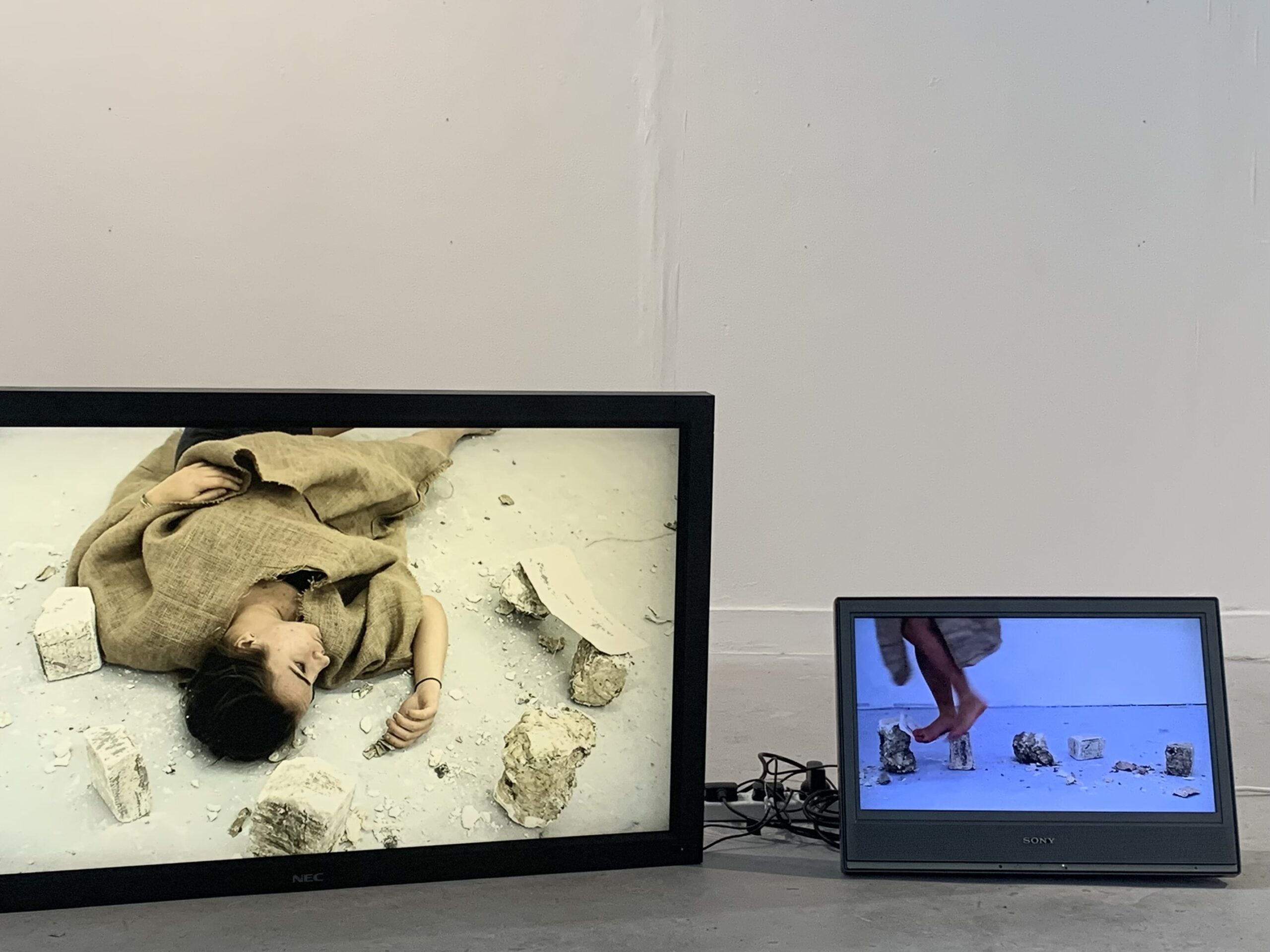
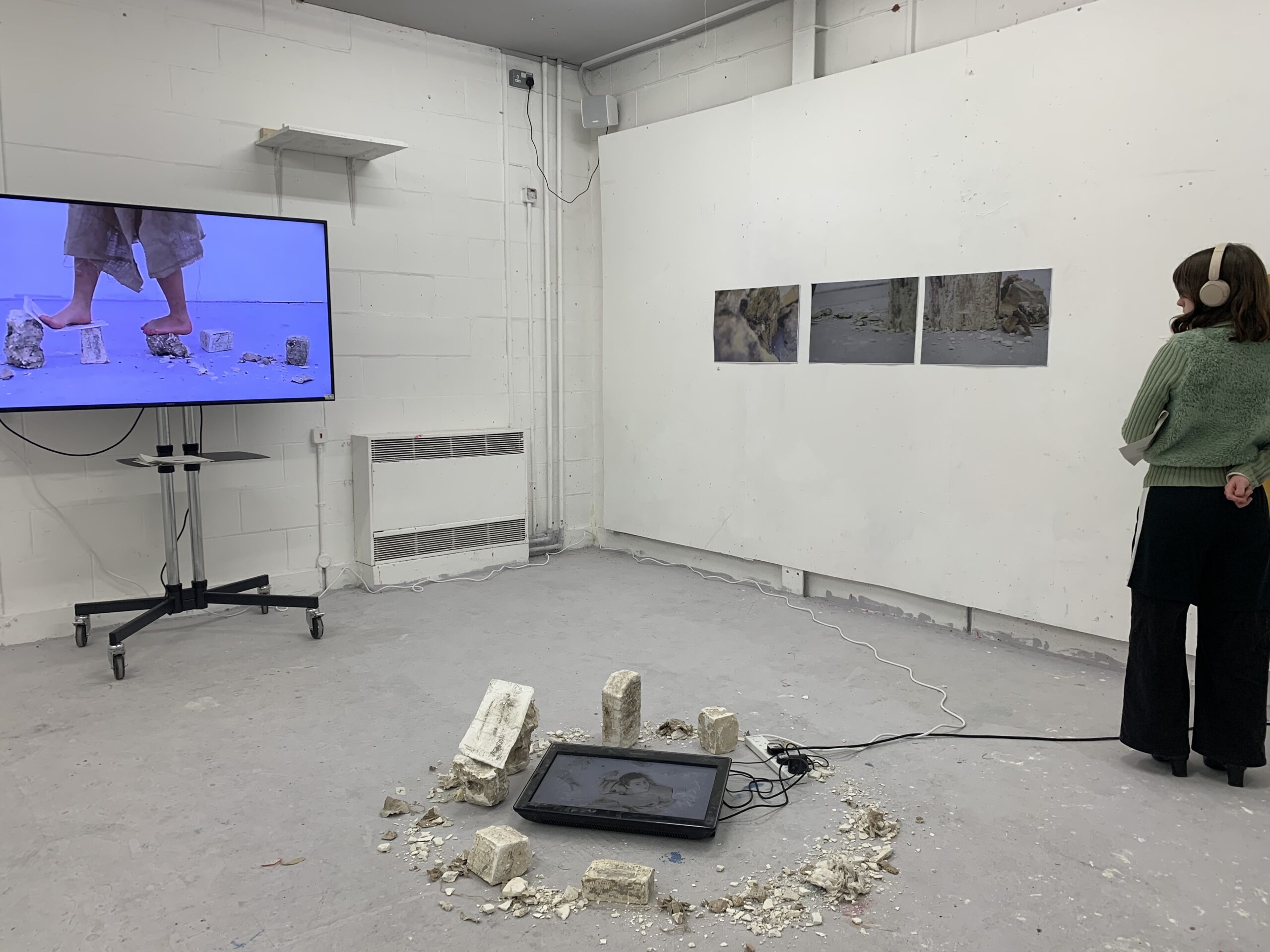
Inspired by the current brokenness seen within our world, Out of the Ashes is an interdisciplinary installation incorporating video, sculpture and sound to address the dichotomy between death and hope. Through performative action-based movements, this dichotomy is expressed and faith is explored.
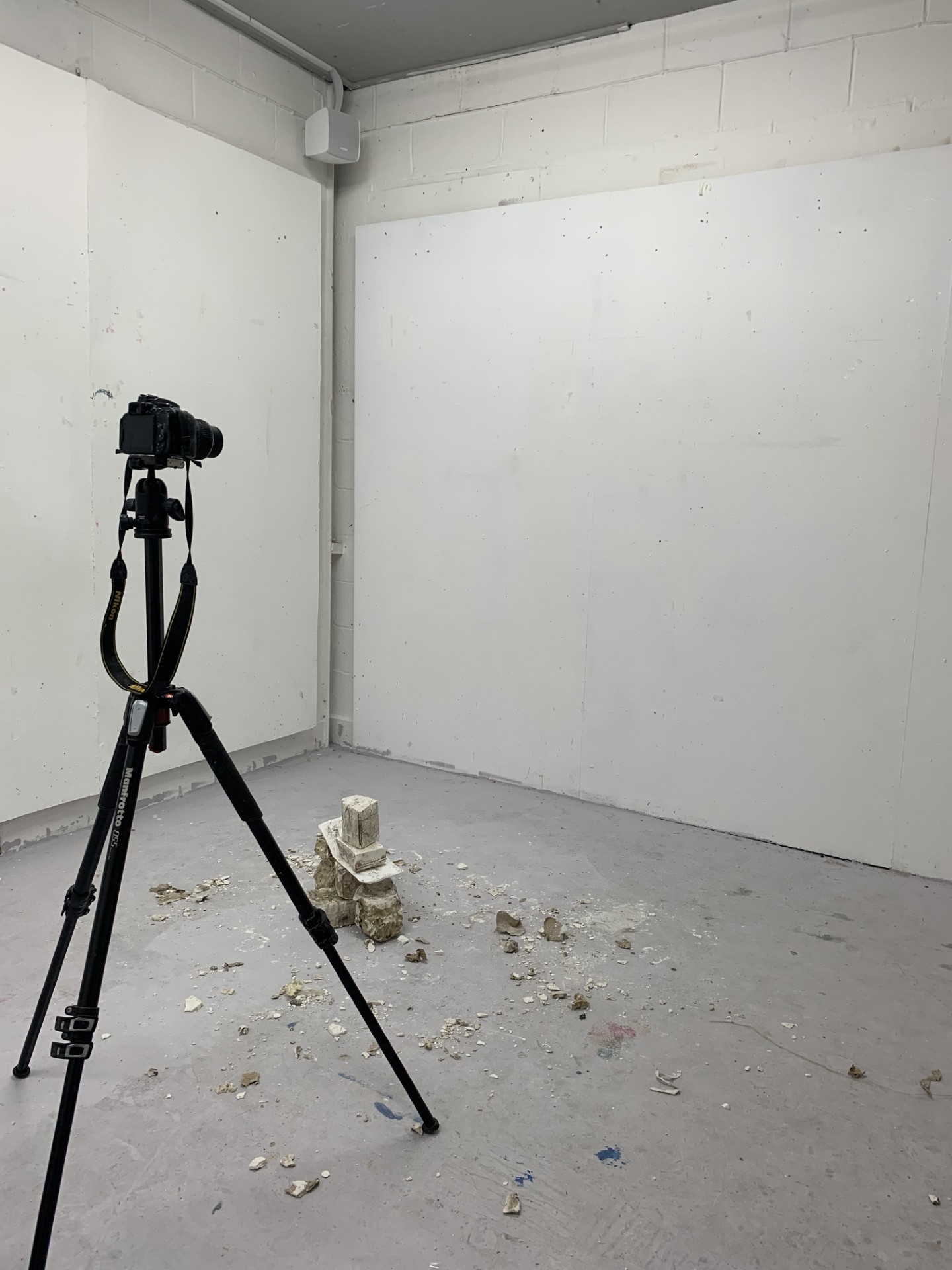
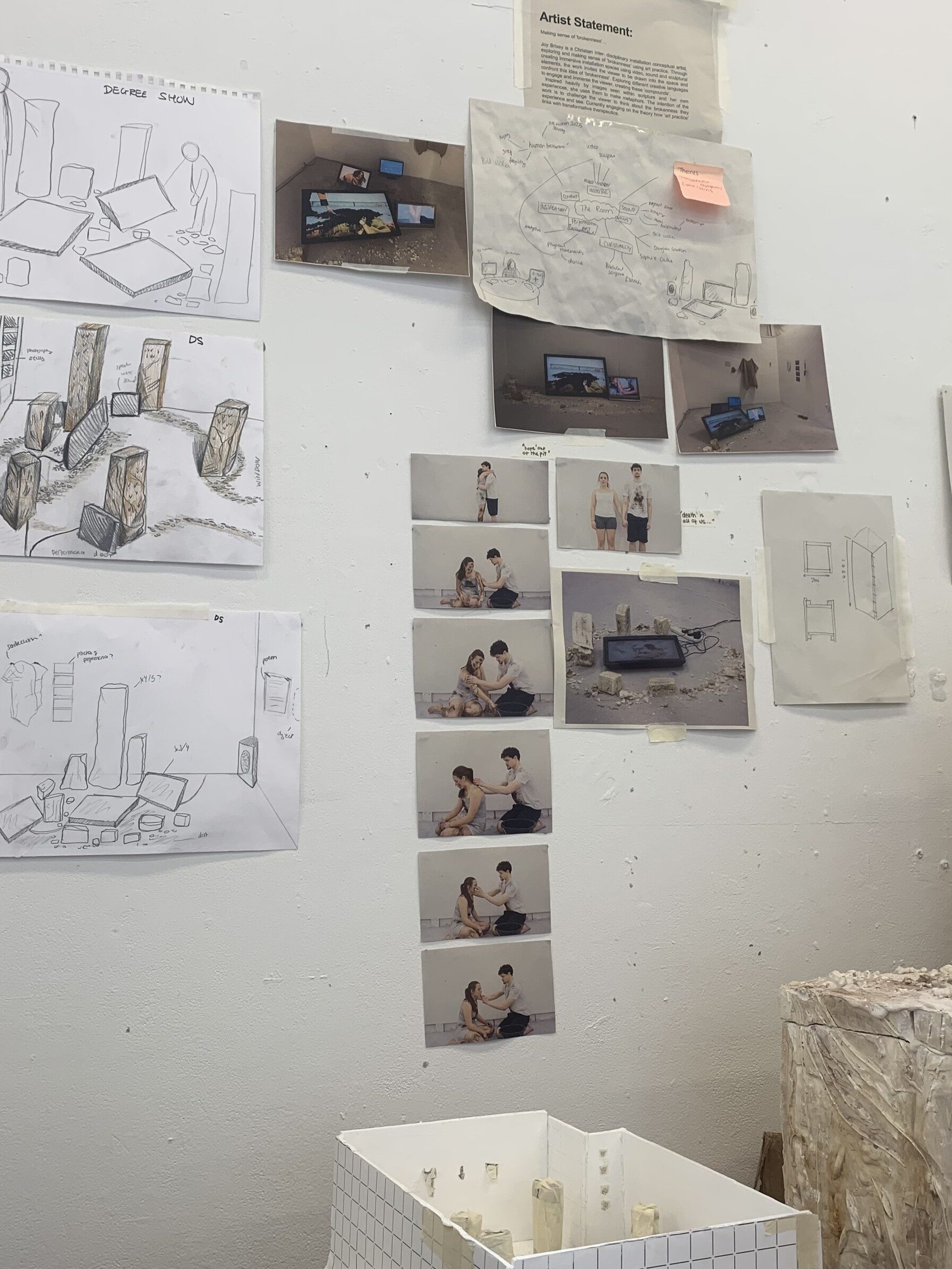
The crumbling plaster sculptures stand still around the performative videos, creating this new but familiar ruined environment. As the viewer walks around the space, sound is used to draw the viewer in, each sound scraping the ruins. Seen within the two-part performance, a burial and cleansing take place. As the male figure washes her, we see the dirt slowly transfer onto him. This performative yet symbolic act references the gospel and the hope found within the brokenness. The work investigates brokenness through diverse creative languages, encouraging reflection and dialogue. Contextually, sitting within performance art and installation, the intangible struggle can become a tangible experience. Inspired by imagery from scripture, her Christian faith, and personal grief, Brixey incorporates the recuring motif of ‘sackcloth’ featured as a symbol of grief and brokenness. Out of the Ashes aims to shed light on the universal brokenness experience and bring it into the gallery.
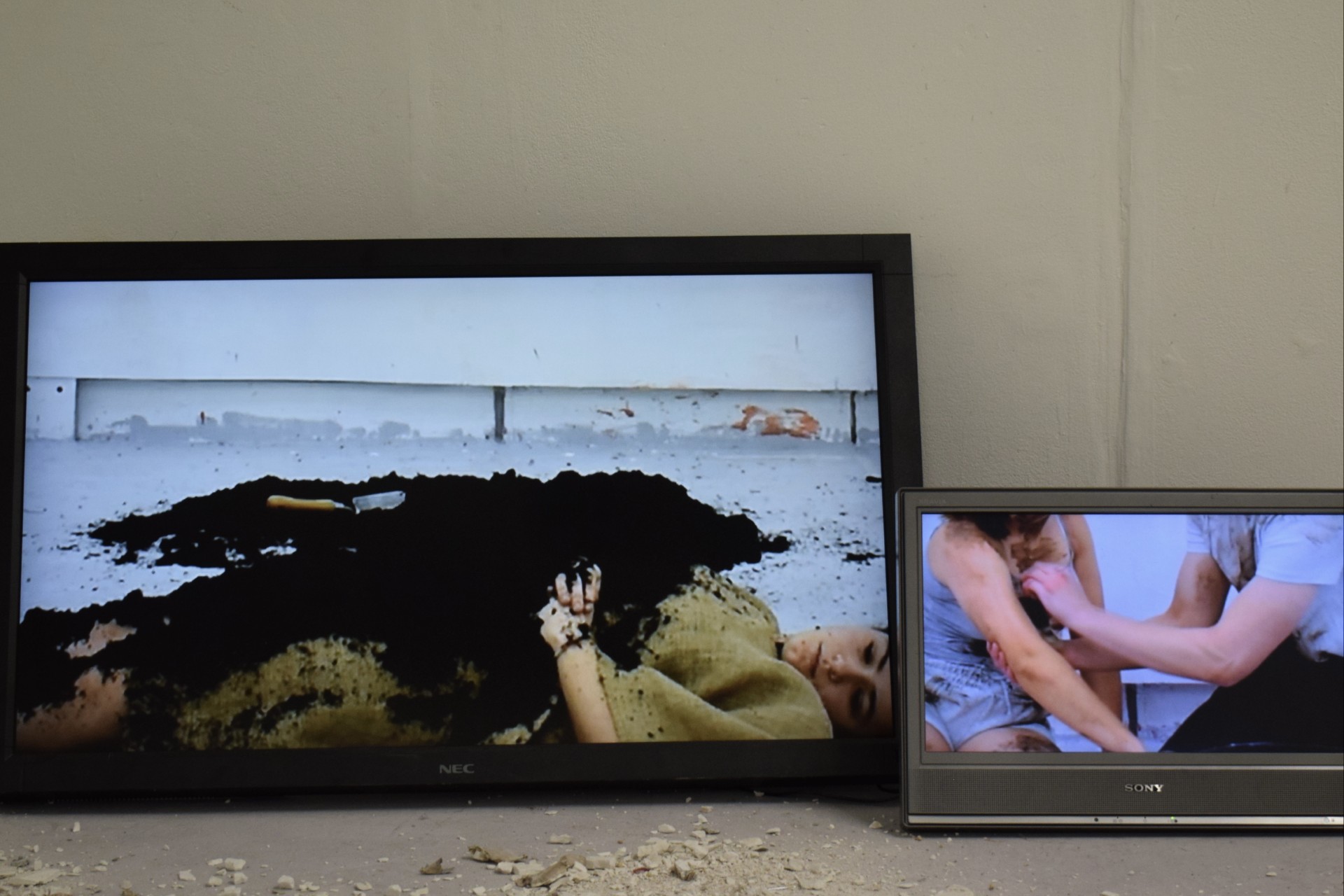
The creative process starts in engaging with biblical scripture, taking inspiration from the images within the text, from which the performative concepts emerge. Curation is a crucial part of the artistic process, as all the different components of sound, sculpture, and video are synthesized together to create one overall experience. The relationship between space and viewer is critically considered and explored.
These concepts are filmed and then edited through adobe software. These performative videos, which where once single fleeting performative moments, become digital archives frozen in time.
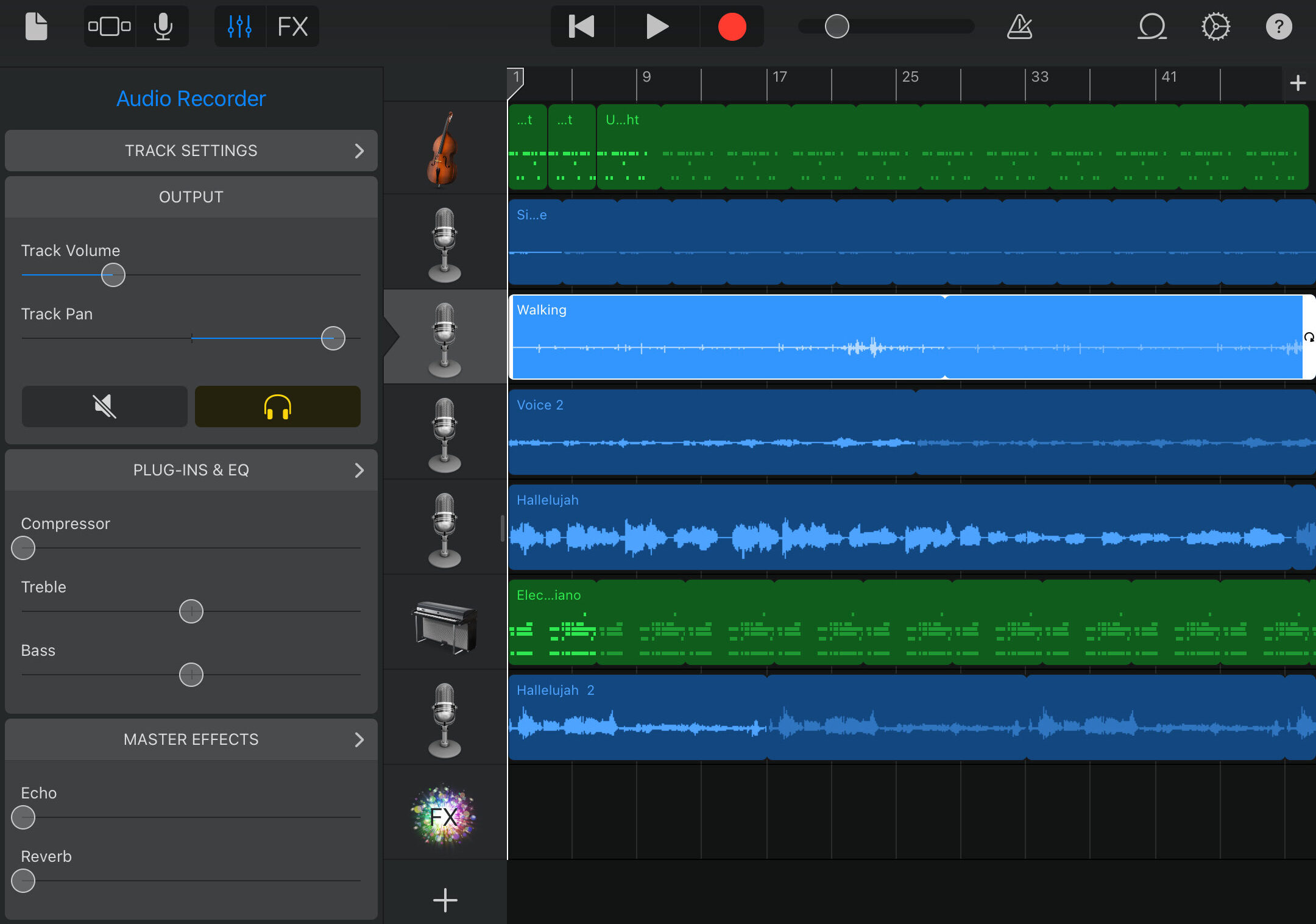
The sound scape that is part of the show is developed through recording different organic sounds and distorting them. Through multiple recordings each one is compiled to create these distorted broken, immersive soundscapes.
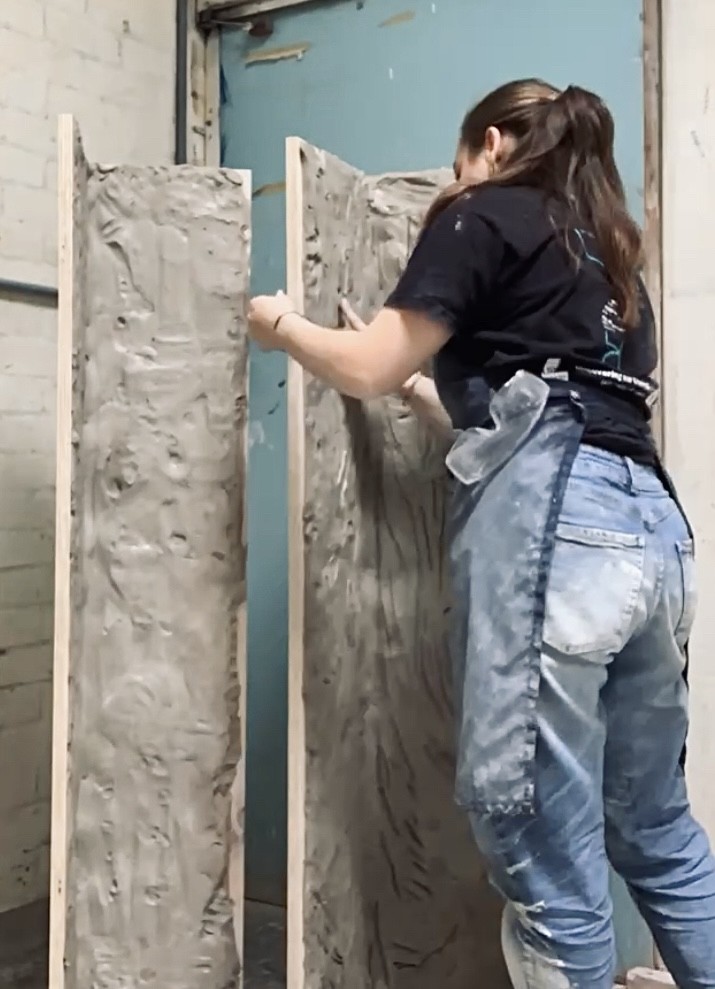
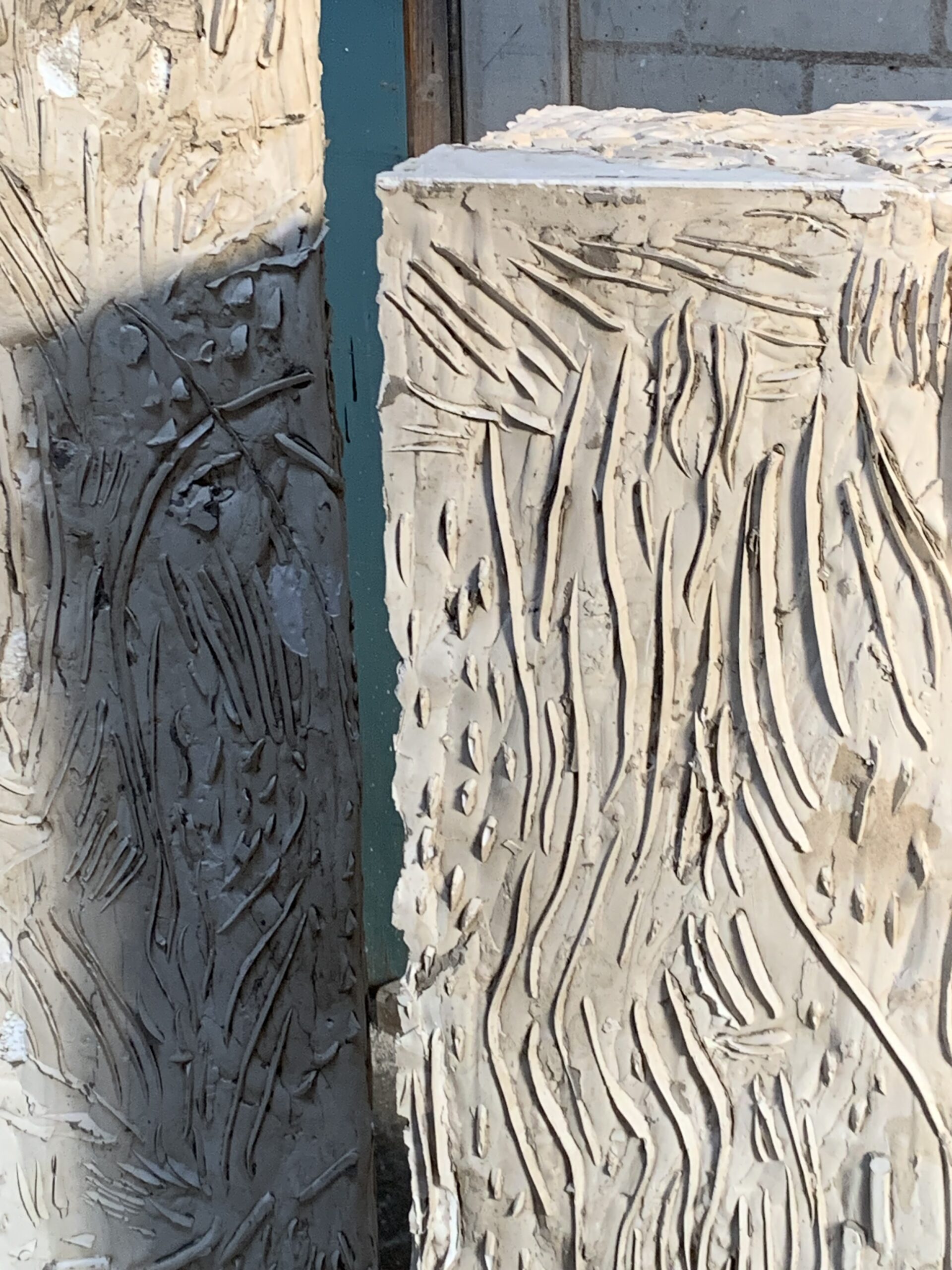
Each sculpture is made from creating a plaster cast from a wooden mold. First, the plywood walls are lined with clay and marks are drawn in to imprint onto the plaster, then plaster is mixed and poured into the mold. Then, once it is set, the wooden structure is dismantled leaving the plaster form. The tangible materiality of the collapsing plaster-cast sculptures alludes to ruins perhaps of a war or disaster, and more implicitly the intangible concept of human brokenness. These sculptures inhabit amongst the rubble and tv monitors, and on the surfaces retain expressive marks inspired by the distorted soundscapes.