Creative and conscientious individual with strong problem-solving skills and a practical mindset. Passionate about motorsports design, I thrive on turning complex challenges into innovative, effective solutions and excel in fast-paced environments where punctuality and precision are essential.
Final Year Design Project – Amateurs in Motorsports
Making learning on track accessible for all without breaking the bank
Motorsports is one of the most expensive hobbies, with track days priced between £200 – £999 depending on the season and track location. Users must also budget for car consumables (fuel, tires and brake pads) setting them back a further £300-£1200.
Making the most of the money spent on the track day is of high importance, so it is helpful to have a coach to show them how to drive the correct line and when to brake, however an instructor can come at a cost of £1000+ per day depending on their experience.
Opportunity – A product to teach and provide feedback like an instructor without the large cost.
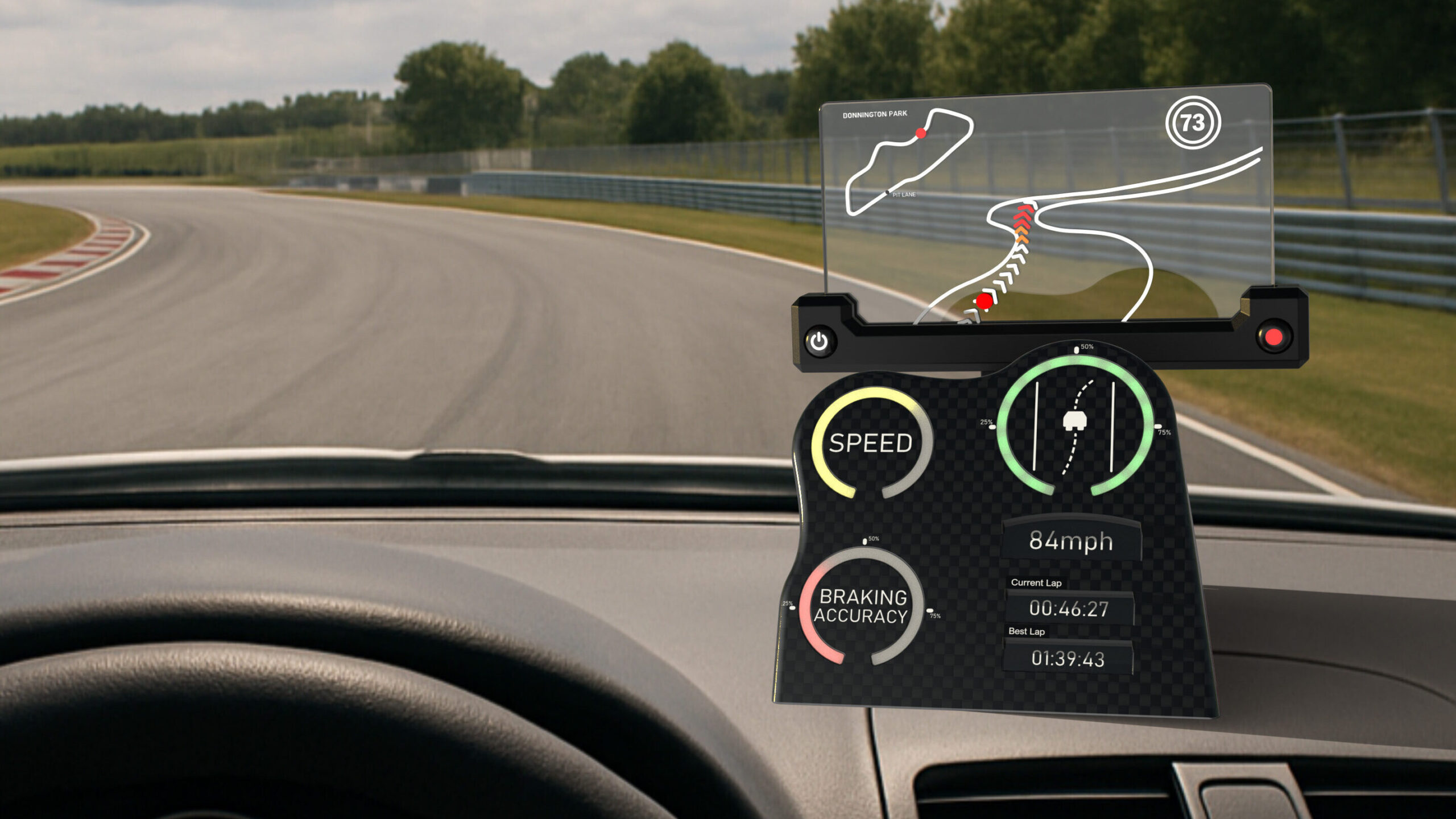
Lighting live feedback system
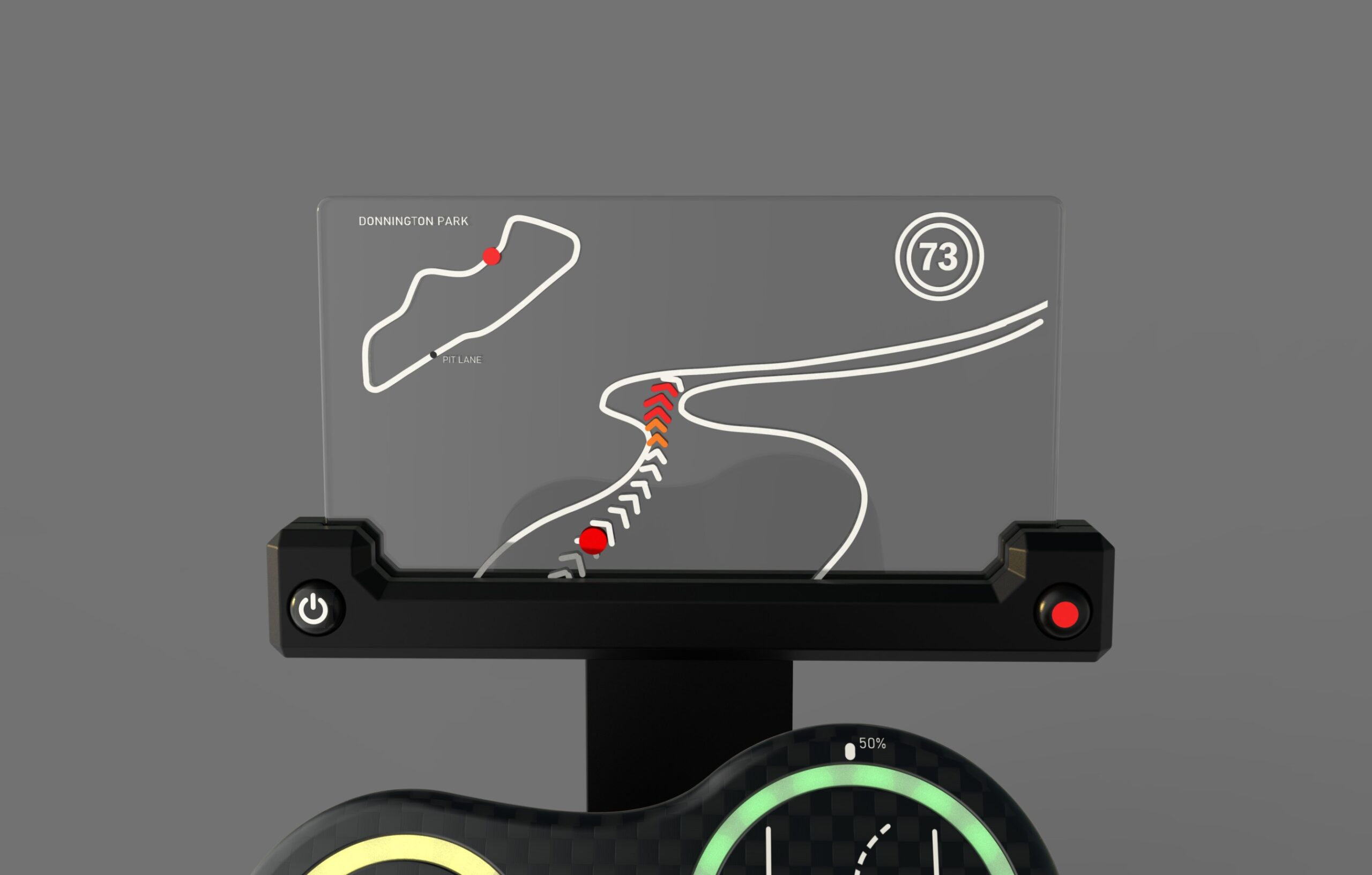
OLED screen to teach racing line
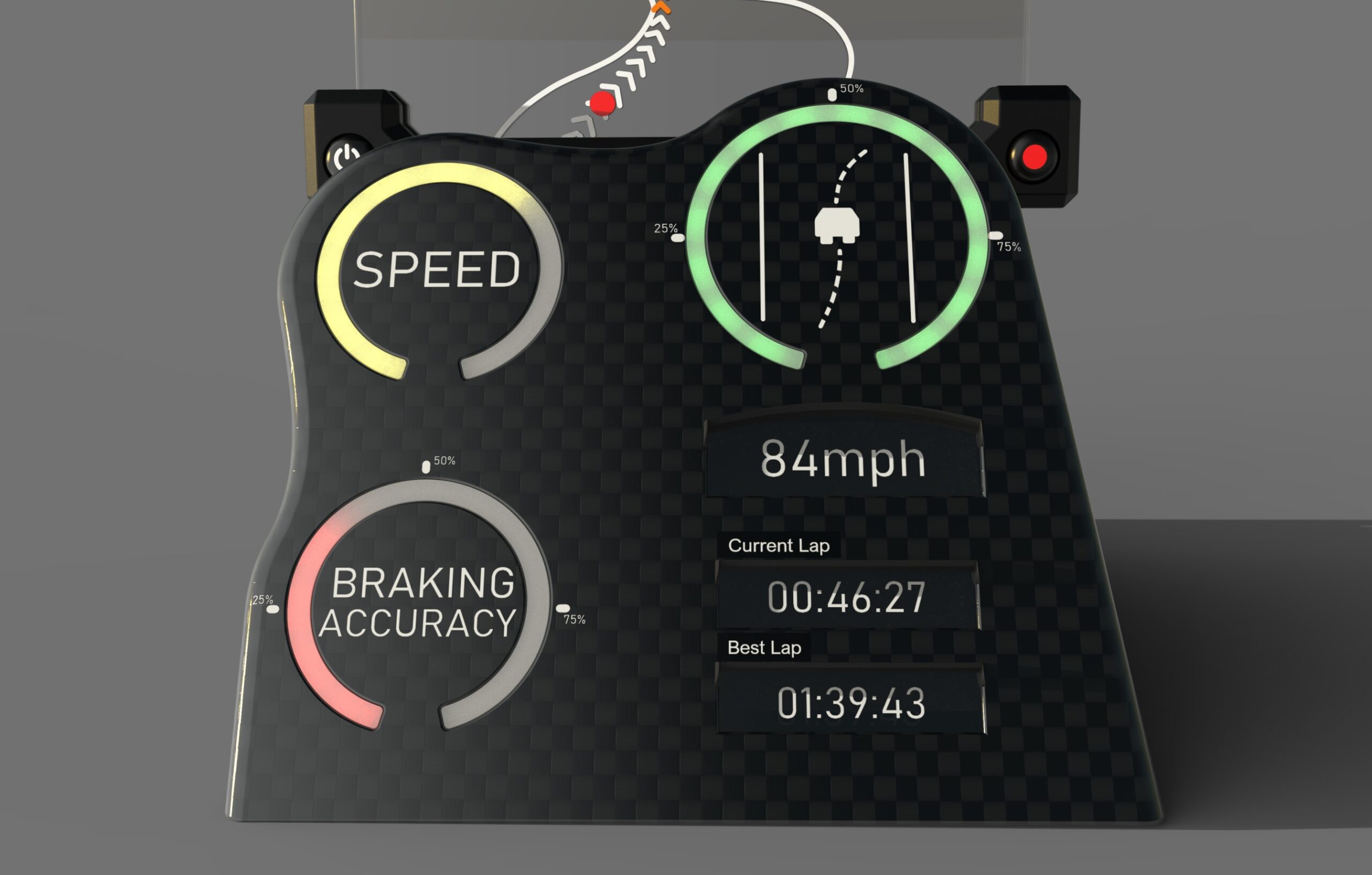
GPS is used to calculate the distance between the car and the racing line. This distance compared to the track width is used to provide the coloured lighting feedback. The coloured system is derived from pre-existing meanings of colours, e.g. red connotates a bad outcome or a warning, and visa versa green connotates a positive one.
The racing line is provided with a perspective view so the user is able to see what is coming up ahead to better prepare. Previous top speed in the current section of track is also provided to quantify what they are aiming to improve upon in regards to their speed.
Key Features:
Touch screen OLED screen which provides the racing line and changes colour to indicate braking points
Track map with live location
Racing line accuracy, speed improvement and braking point accuracy feedback lights
Accurate speedometer and lap timer
Improvement advice provided mid-session during racing breaks
20Hz GPS module and 600MHz microprocessor
Mounts to the dashboard and can undergo up to 5 G-force
Post track day data analysis provided on a website available via a login
Plug and go – powered by in-car cigarette lighter port / USB port
Rentable from track venues for a small fee on top of the track day price
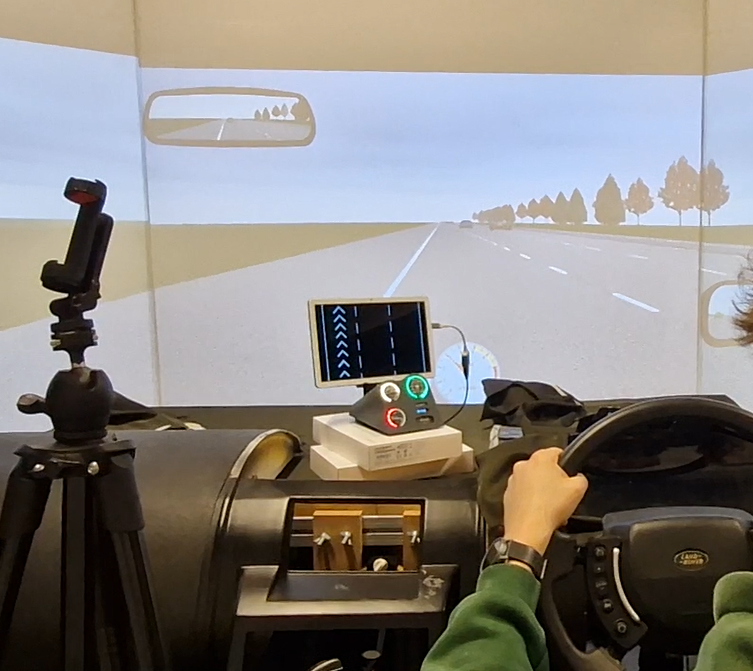
A driving simulator was used to test the feedback lighting system, this simulated the distraction of driving while the participants verbalised changes noticed to assess whether the system was effective or not.
Product Parts
Other work
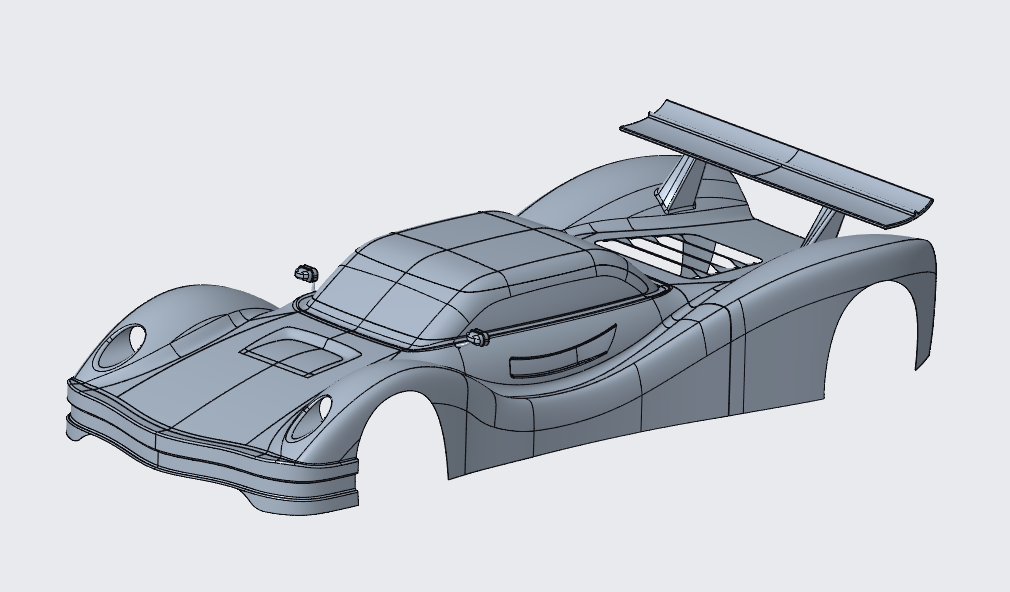
CAD Module: The task was to produce a CAD model of a unique object to a high surface quality. In this module I produced a unique racing car using Creo Parametric which utilised the skills I learnt during my placement year.
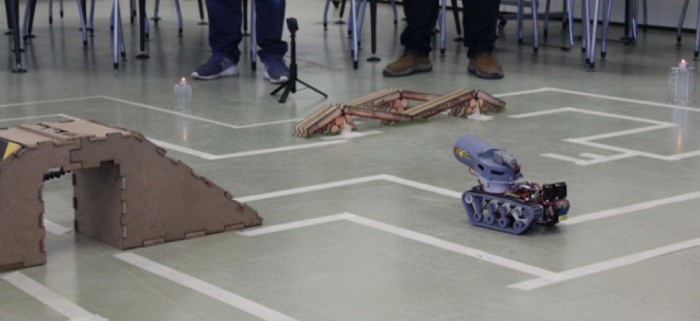
Mechanics and Electronics Module: Worked in a team to build a fire-extinguishing robot using stepper motors, tank tracks, and a piston to blow out candles. Discovered a knack for soldering. The robot was tested on an obstacle course against a 15-minute time limit.
Placement Year Industry Experience
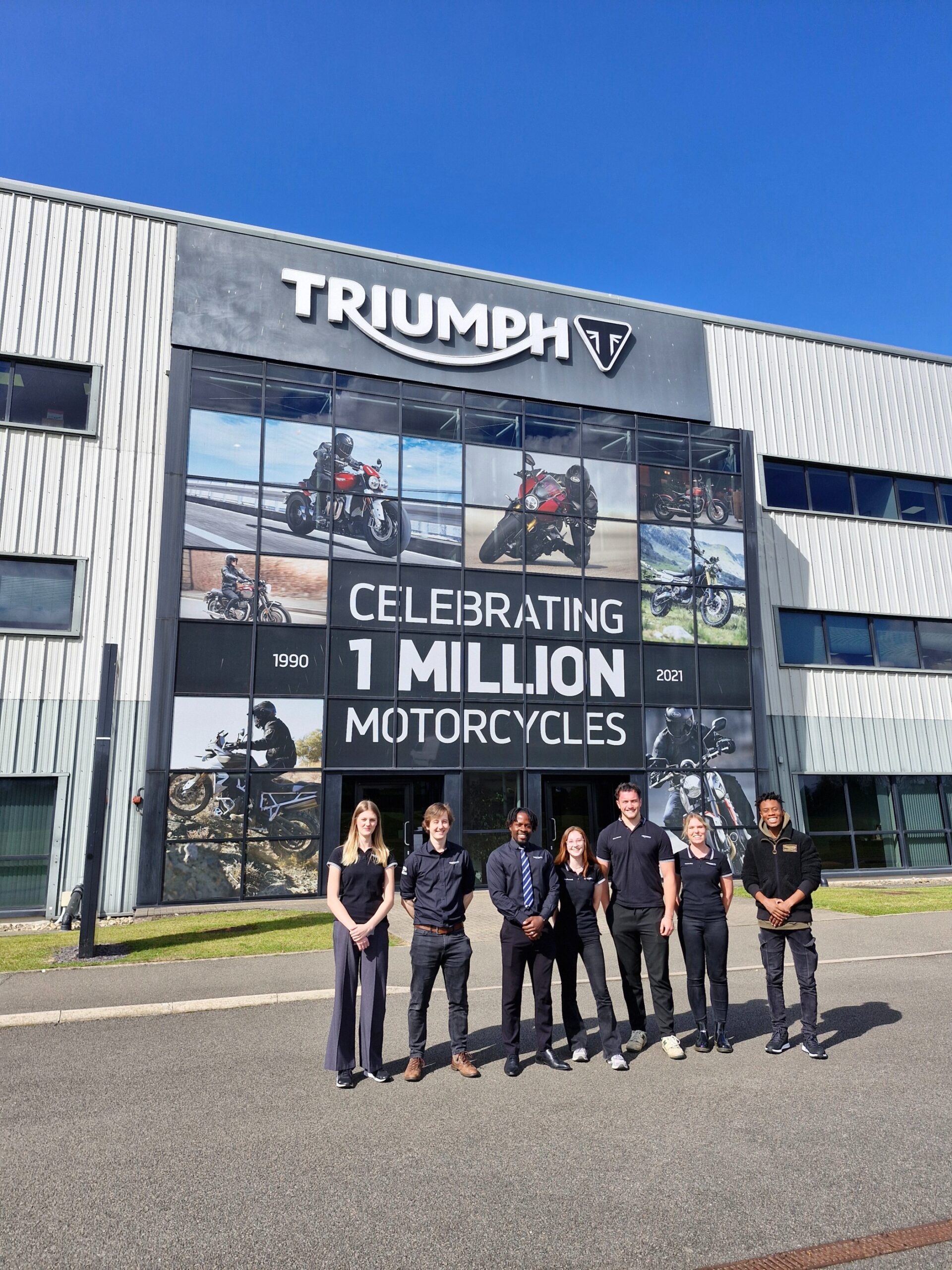
Triumph Motorcycles Ltd
I spent my placement year on the surfacing team at Triumph Motorcycles were I developed my CAD and professional working skills.
I hosted meetings and communicated regularly with engineers about projects I was working on.
I produced A-surfaces from 3D scan data, completed design changes and fixed clearance surfaces using Creo Parametric.
This experience has shaped the designer I am today and will continue to impact my future career.