
Beth Chatfield
She/Her


A fine artist specialising in large-scale realistic portraiture. My oil paintings explore themes of apostasy, using my body to express my spiritual rupture, and emotionally challenging myself throughout the process.
She/Her
Note that this work contains images that some may find distressing
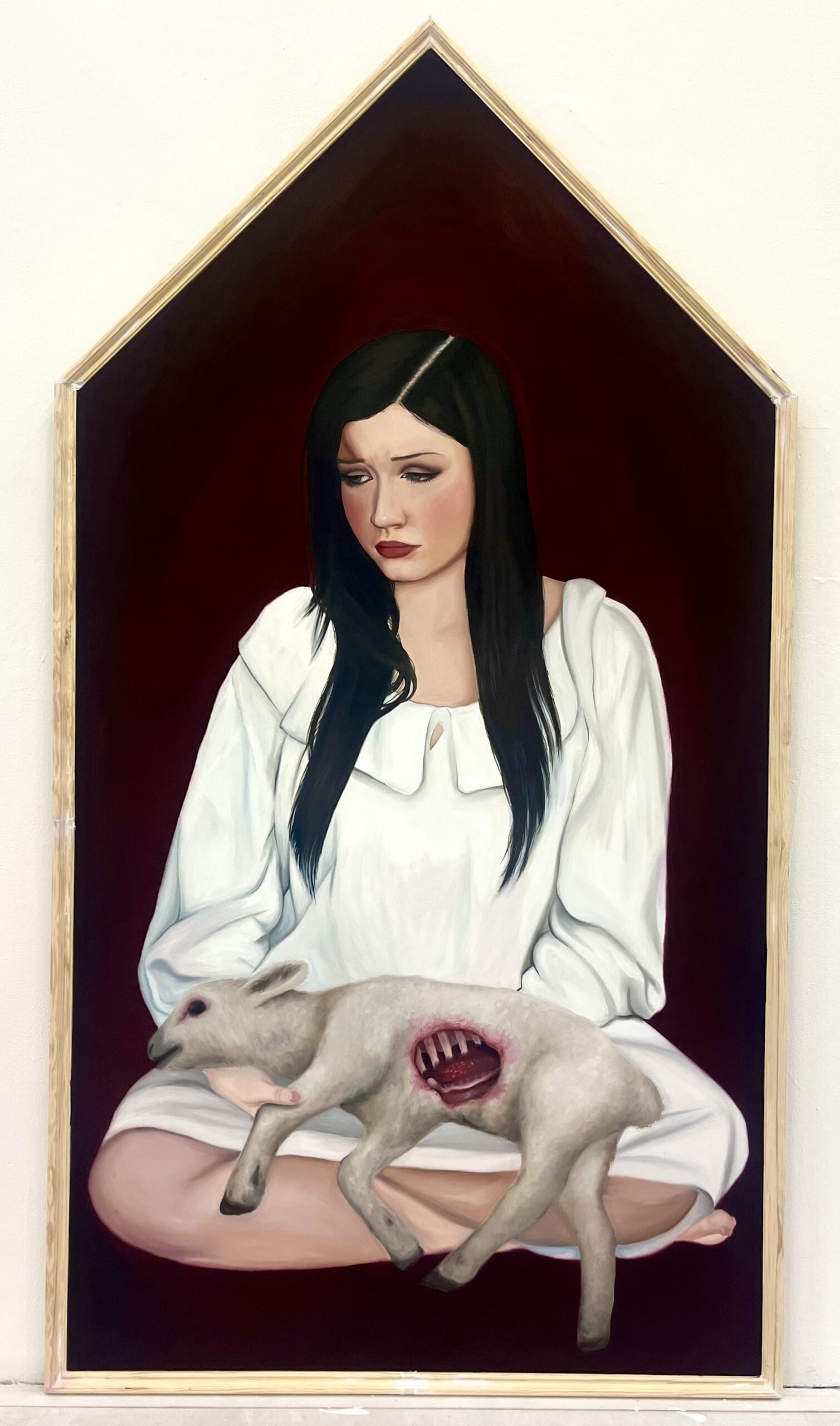
I paint to make sense of what once was sacred. A decade ago, a traumatic family event led me to lose my faith, that drastically changed my understanding of the world. This loss still haunts me and has permeated my practice, and my paintings help me confront and dissect it. My work acts as a visual insight into my consciousness, examining my grief, guilt and new understandings. I aim for the viewer to feel what I felt, but also to find their own questions.
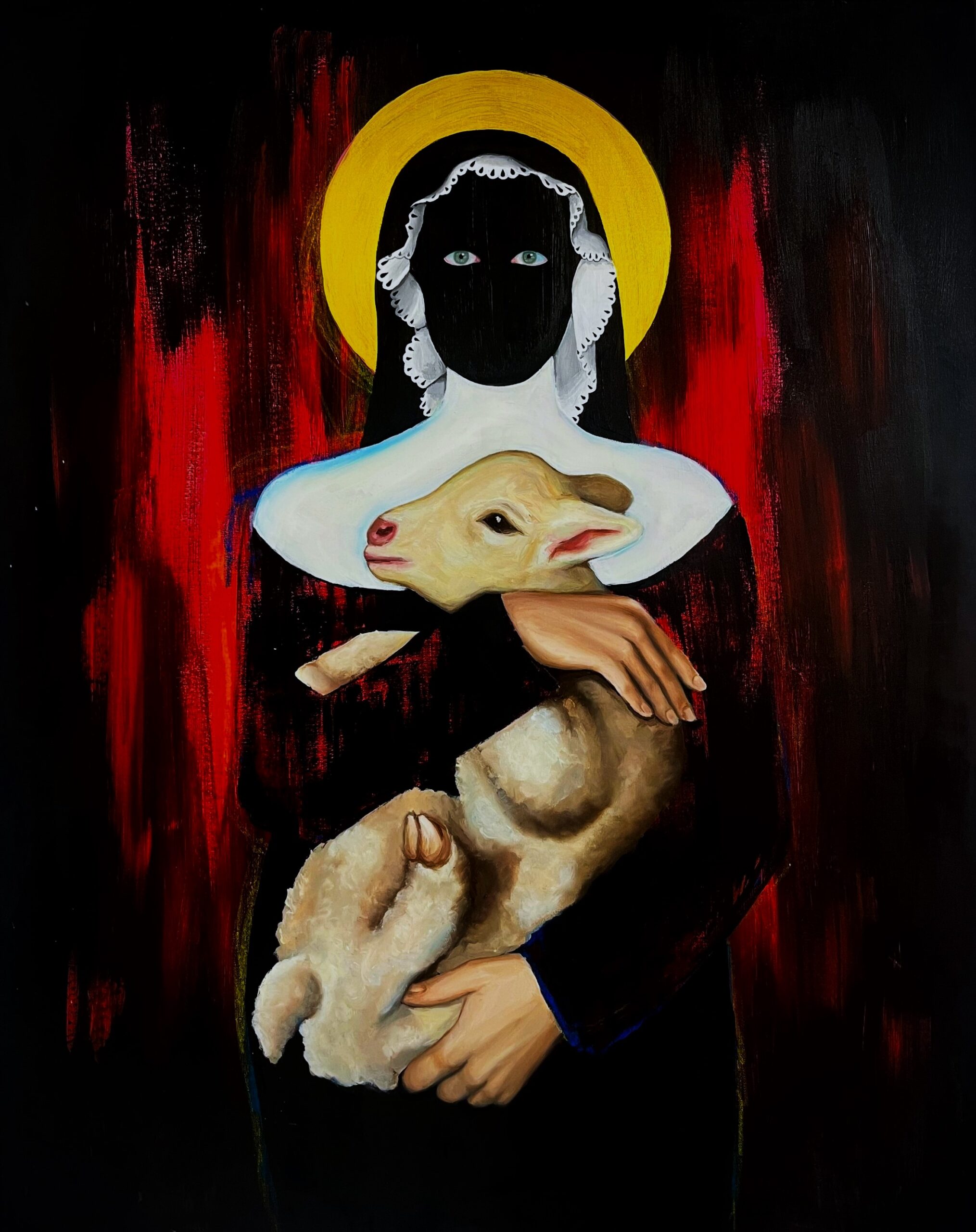
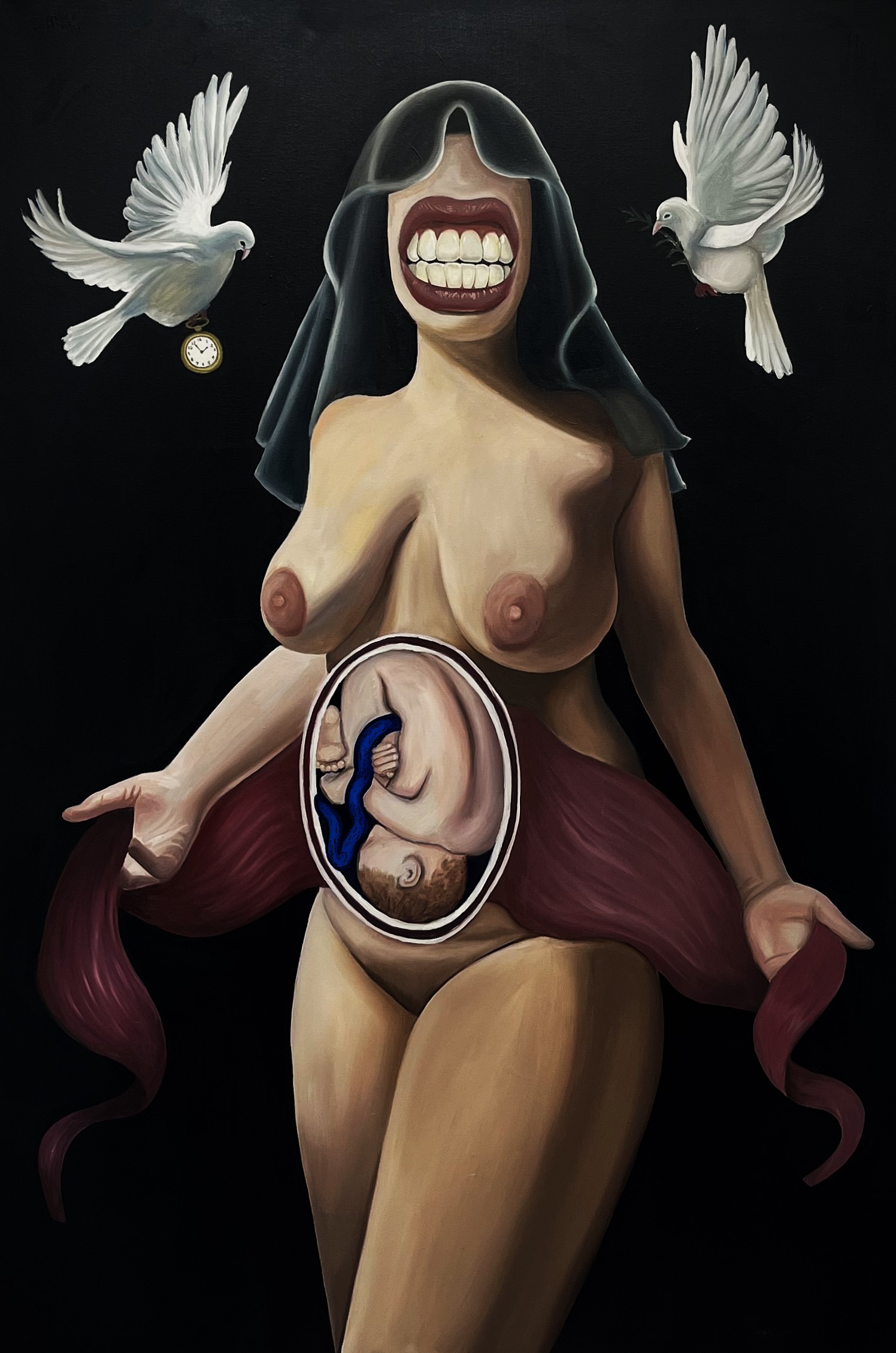
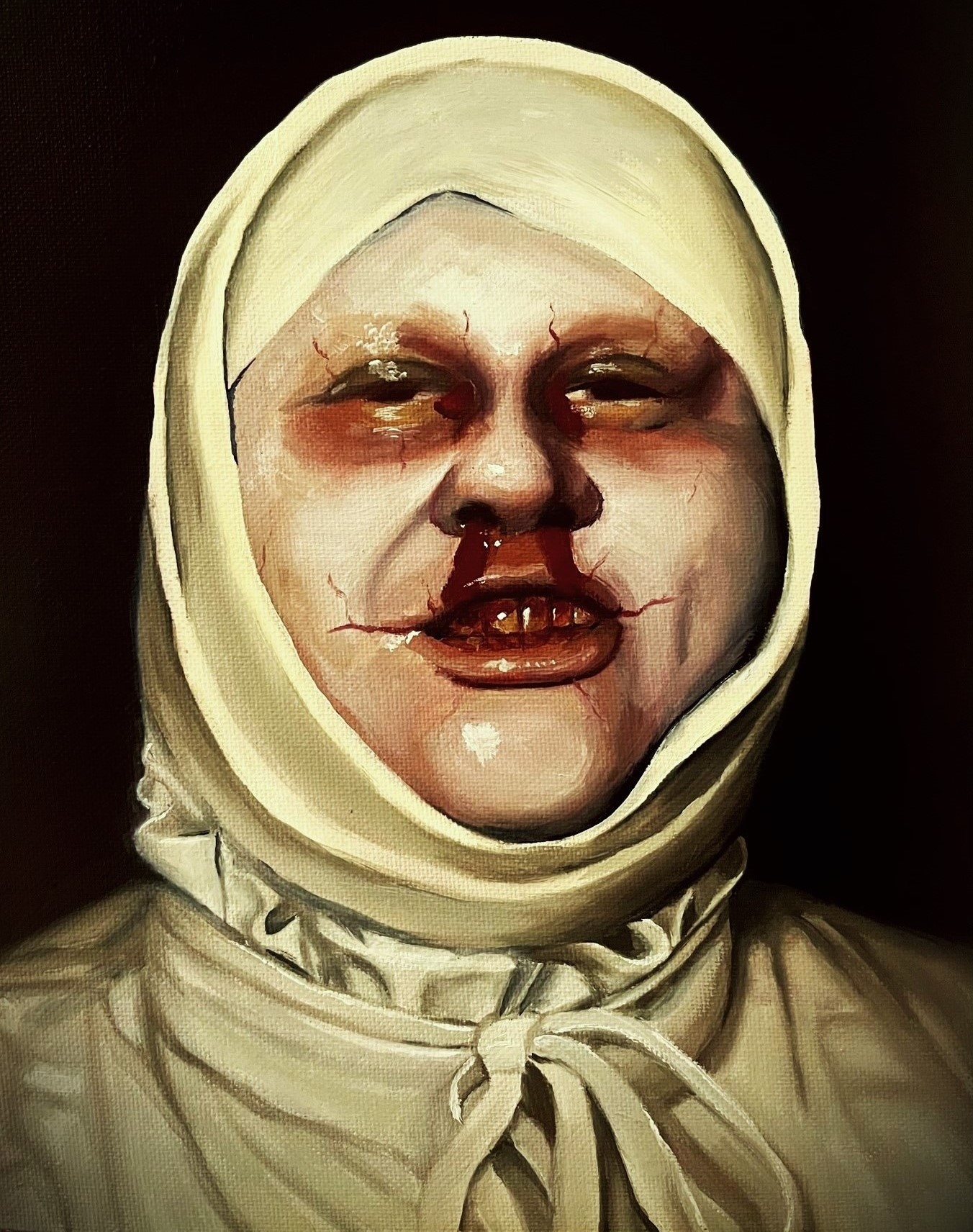
Using large-scale self-portraits as a vehicle, I explore and confront the disconnect with my previous certainty in my religious beliefs. Realism has proven to be the most poignant style when exploring the complexities of being an apostate, mirroring real life and traditional religious oil paintings. By painting myself, I am both subject and witness, documenting the evolution of myself, untethered from religious certainty, yet still marked by its psychological imprint. The vulnerability of showcasing my body expresses the emotional burden this change in belief inflicted, and the macabre depiction of the exposed human anatomy, such as the blood eagle, signifies how intertwined the trauma of my experiences have become with my identity. Creating a heavy focus on evocative facial expressions, with symbolism rooted in the direction of the eyes in all five pieces, as well as skin tones, my work challenges the viewer to contemplate their own emotional connection with the spiritual. Religious symbols are depicted in my work, but are fractured and reinterpreted, such as the injured lamb. My paintings’ intense irrefutable imagery creates an atmosphere of religious trauma while giving space through the quiet backgrounds for the viewer to produce their own interpretation. The continual reference to lambs is not only reminiscent of Jesus being compared to a lamb in the Bible, but also inspired by the work of Quinyao Dai, which I viewed at the Saatchi Gallery, London, and their haunting lamb paintings, including Eat The Consequences (2024).
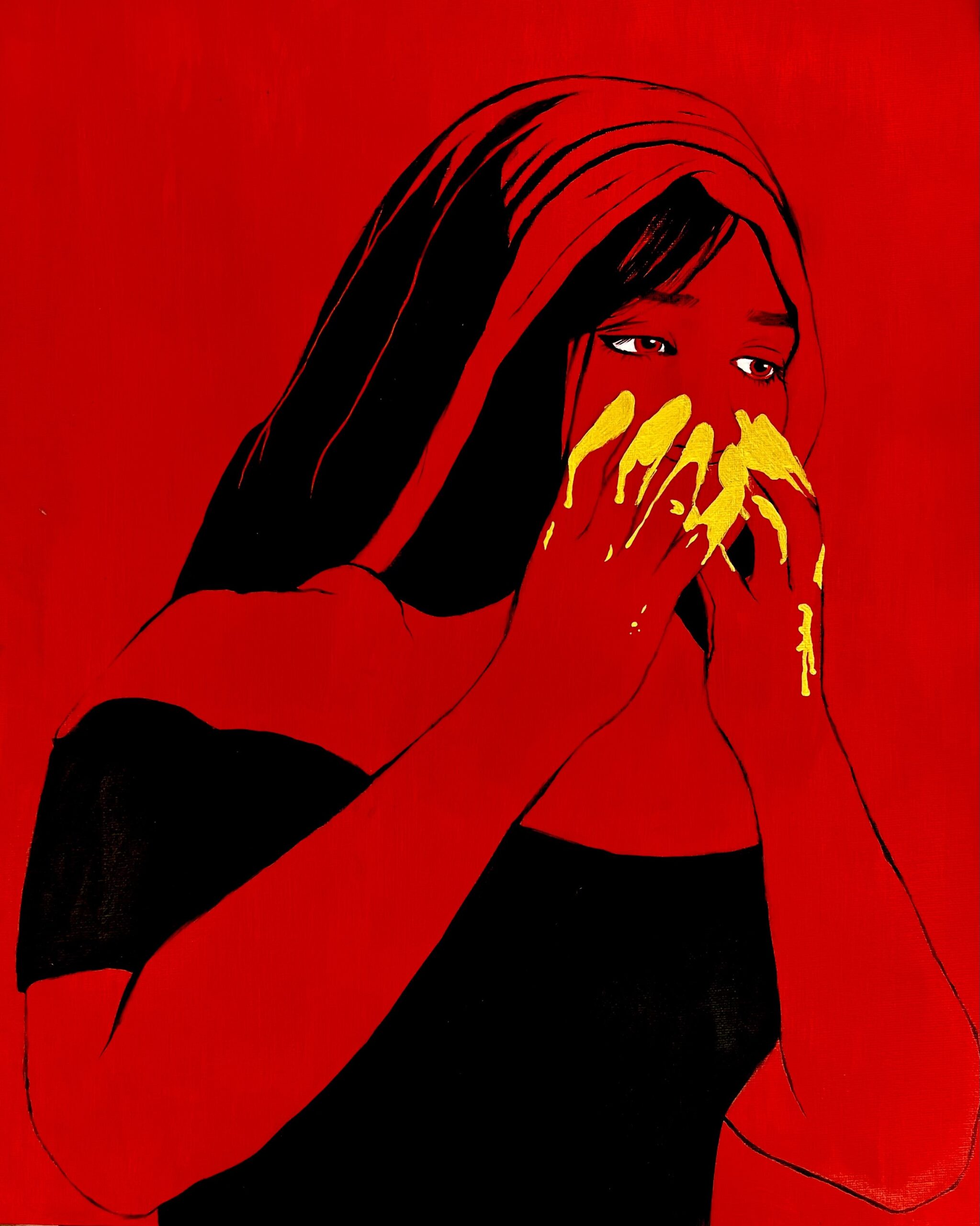
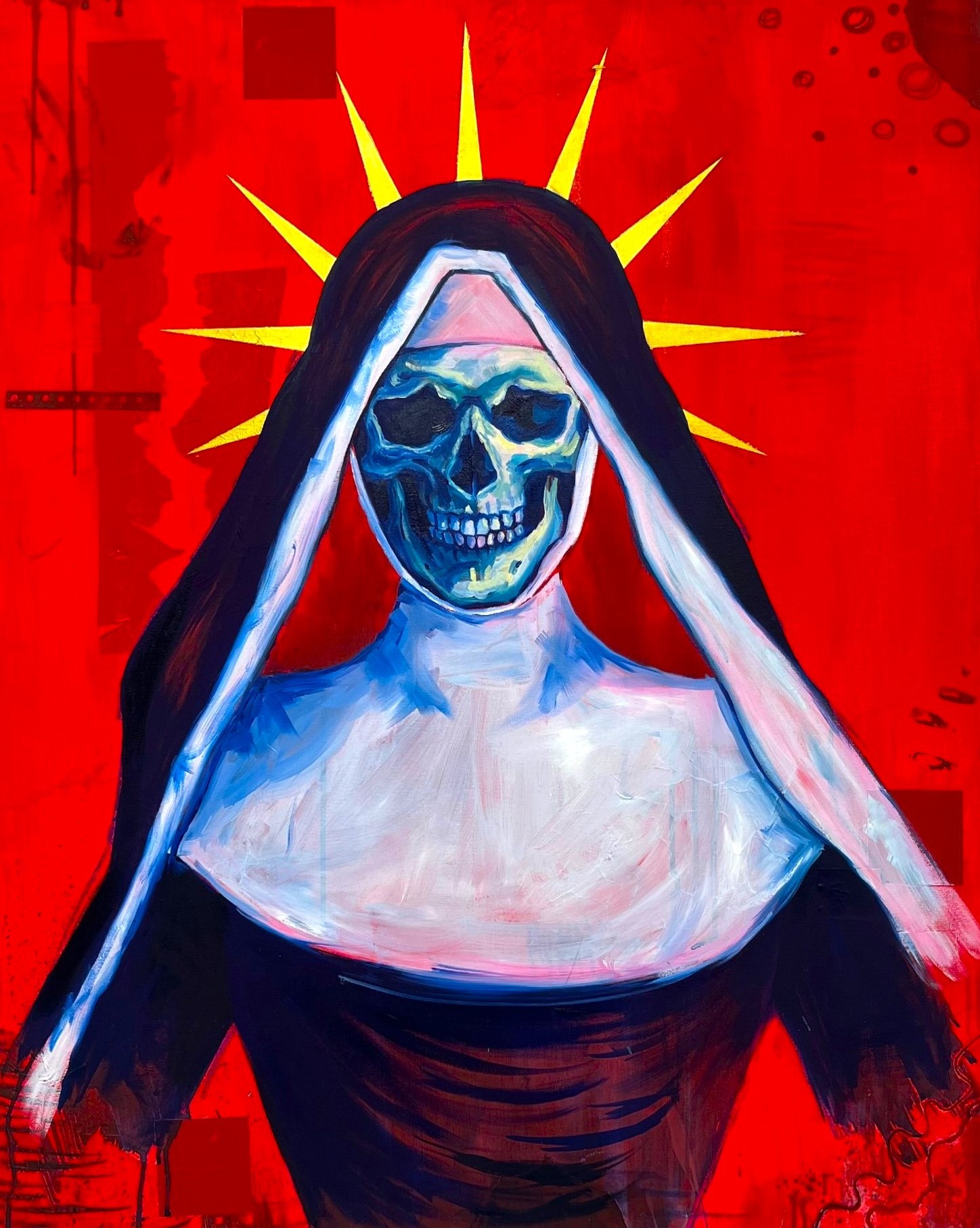
Within my practice, I have experimented with different mediums, but oil paint has been a constant. It is the main medium used in religious depictions, such as by Phoebe Anna Traquair, and thus complements my visual imagery. Traquair’s artwork has influenced my practice through their full body depictions of religious figures, as well as their curatorial choices for canvas shapes and framing, such in the series of four pieces, The Progress of a Soul (1895), which I saw in National Galleries of Scotland, Edinburgh, that creates a church window-like shape through the extended frames. My canvasses are also intentionally immersed with religious iconography, influenced by Traquair’s series. Additionally, the frames and positioning of the pieces imitate religious golden folding triptychs. Reflection on one’s connection to faith is encouraged by the scale of my canvasses, standing roughly six feet tall, looming over most audiences, that replicates my emotional response during their composition process of making them. The dramatic change in scale from the triptych to the two miniatures replicates the scale of religion in my life. Each detail of the three large canvasses and the two miniatures are a visual record of my journey through my loss of faith. My aim is not to resolve, but to visually articulate the pain I cannot express in words.
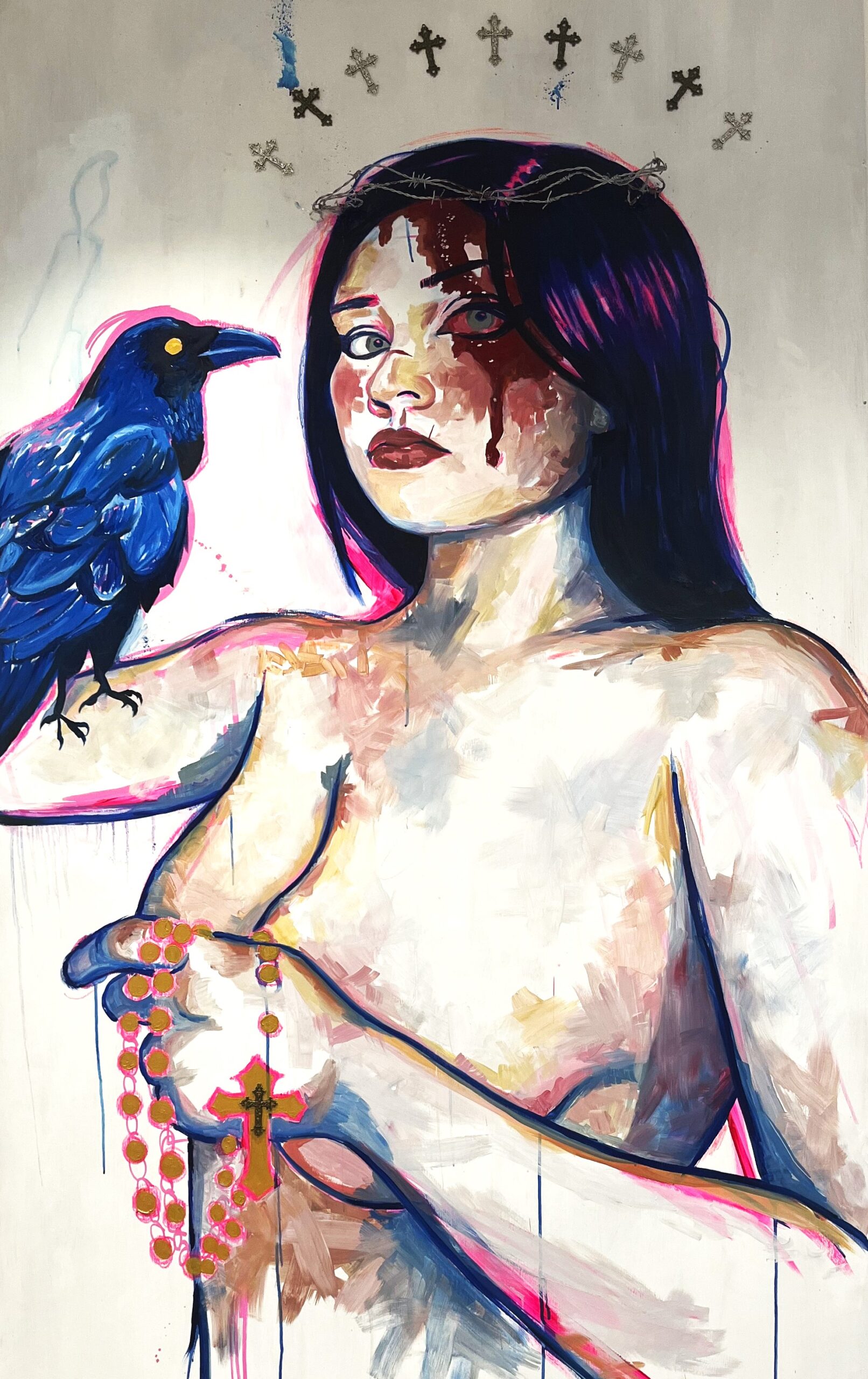
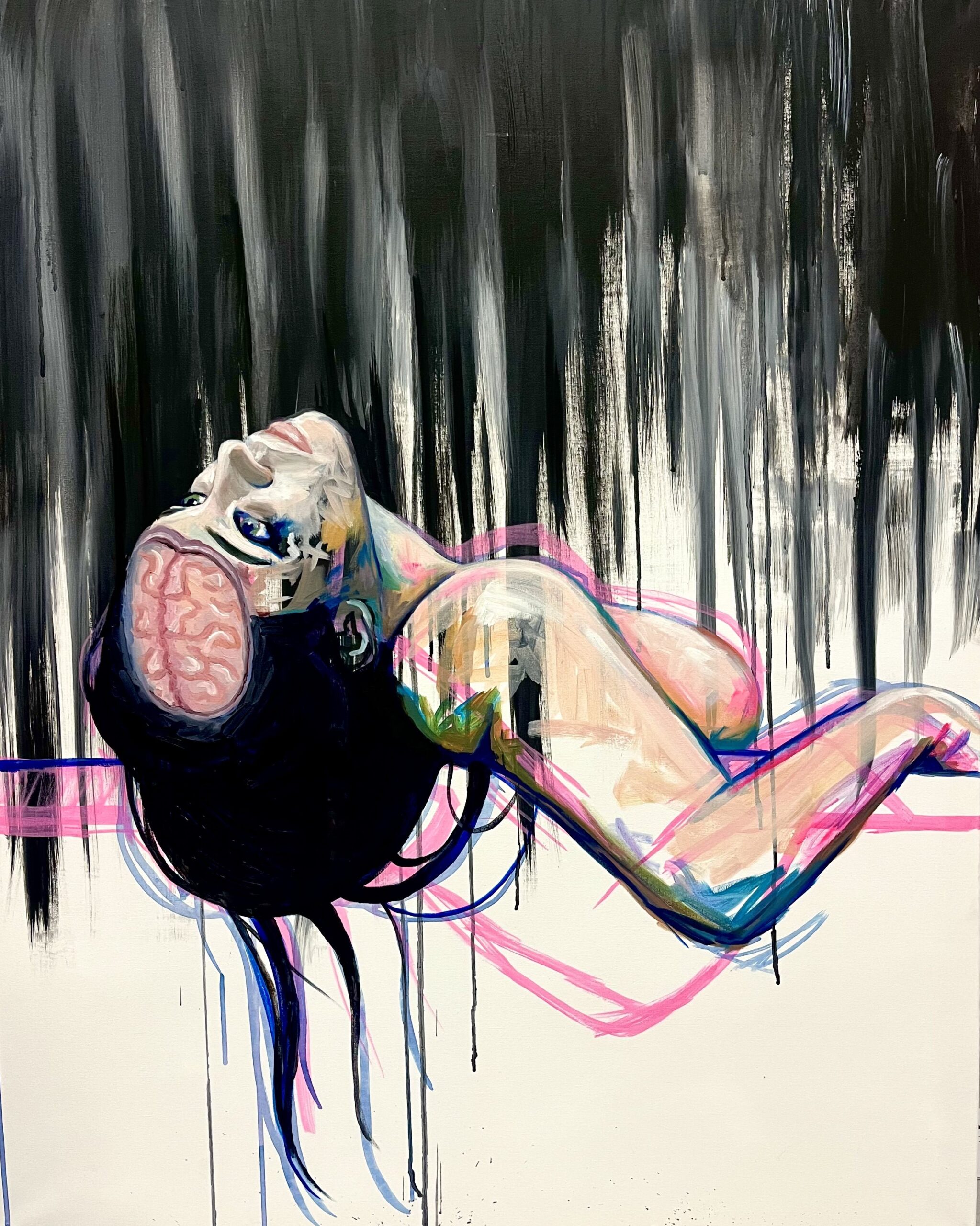
After graduating from Loughborough University, I will be attending Sheffield Hallam University to attain a PGCE in Art and Design, continuing my artistic career by teaching secondary school students the possibilities of artistic expression.