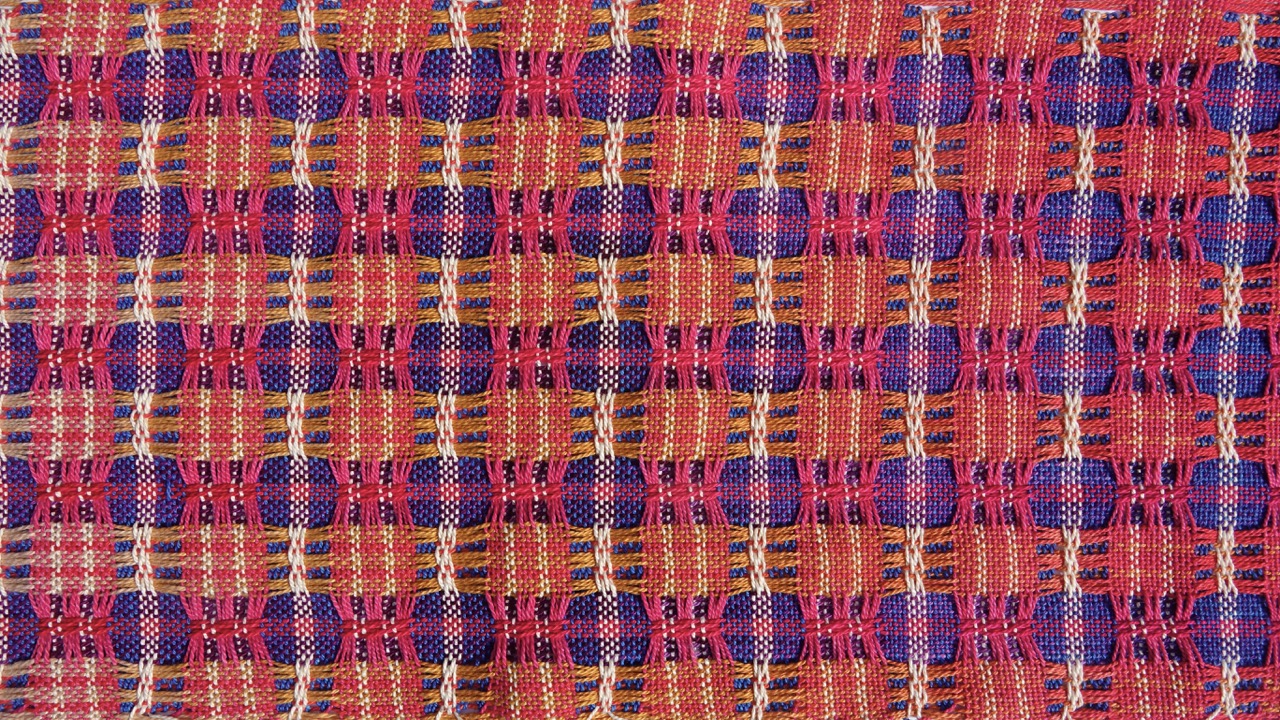
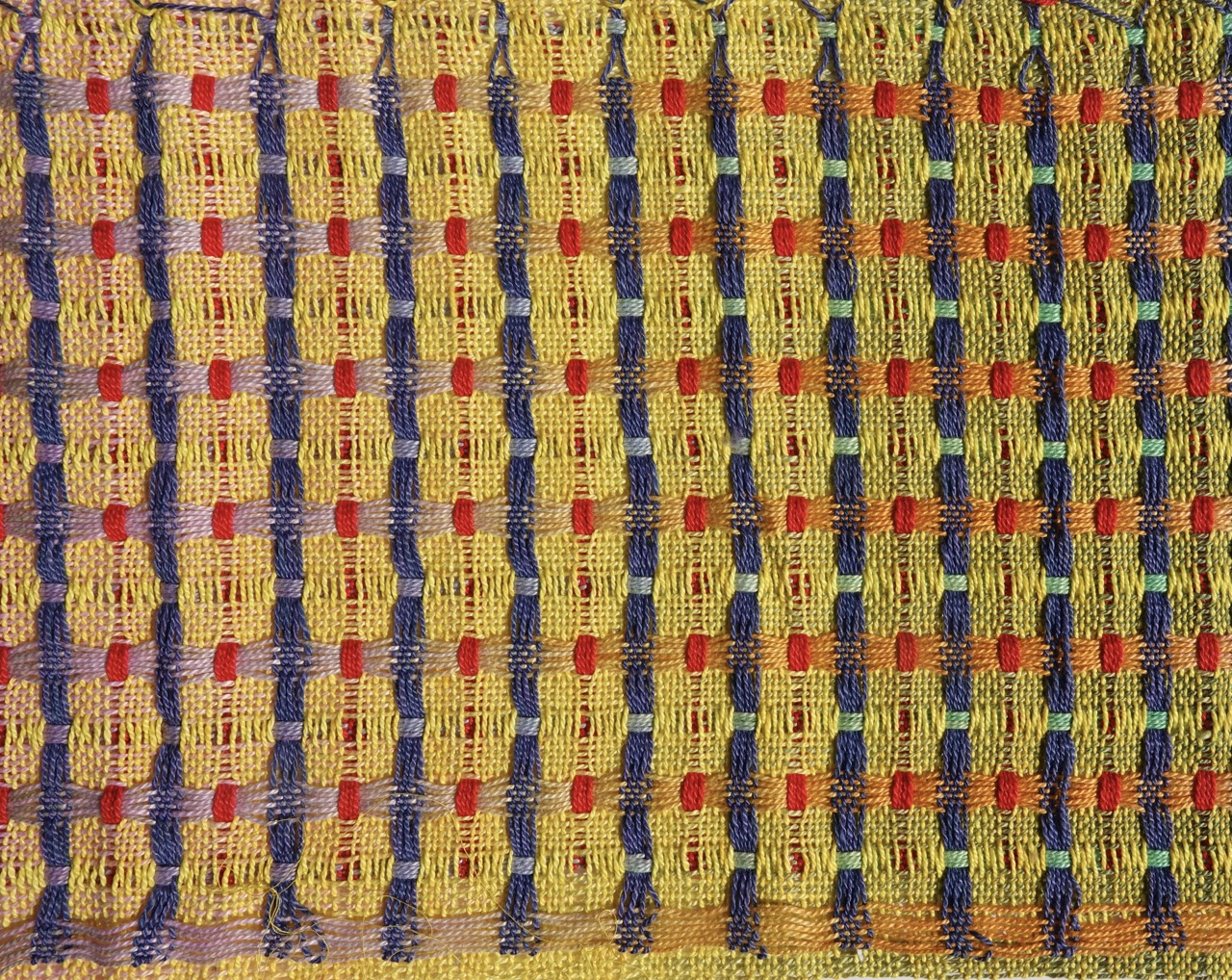
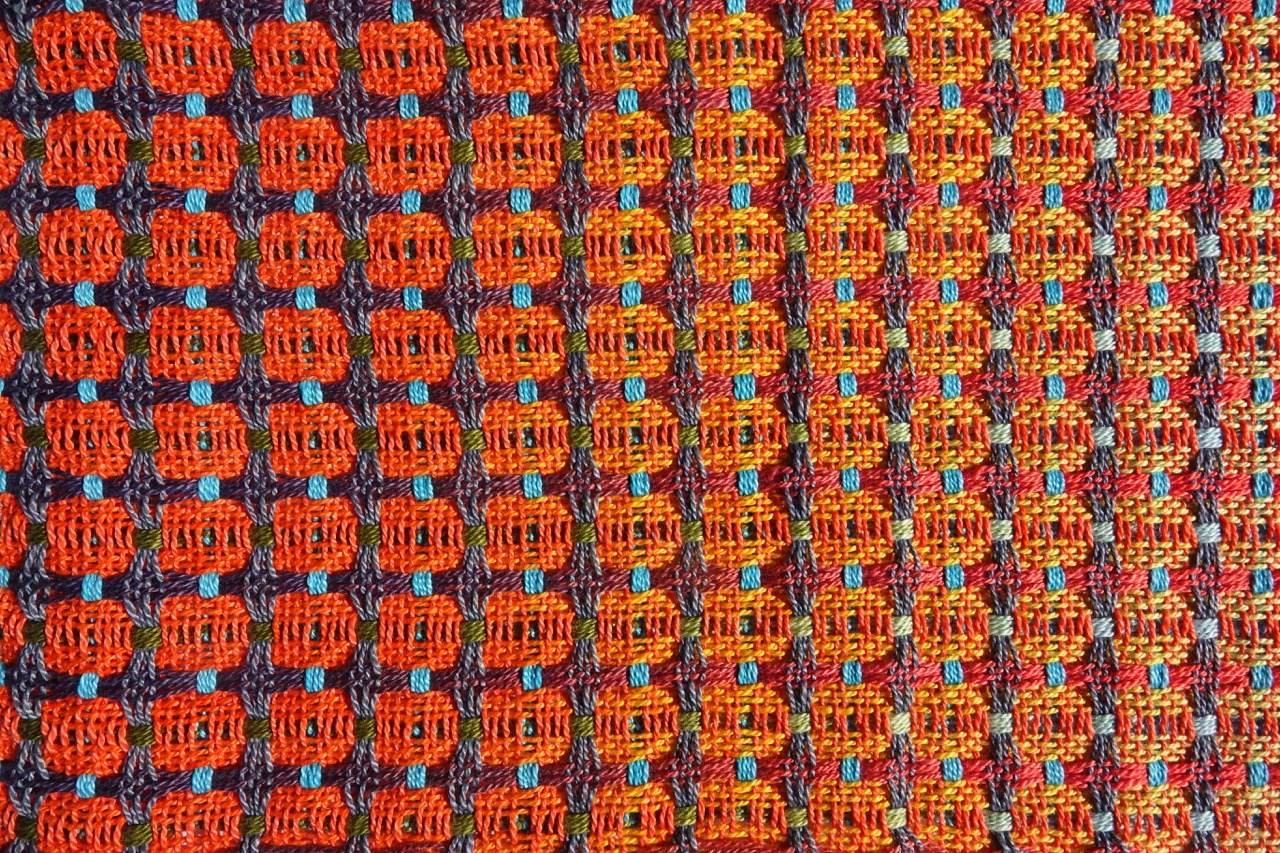
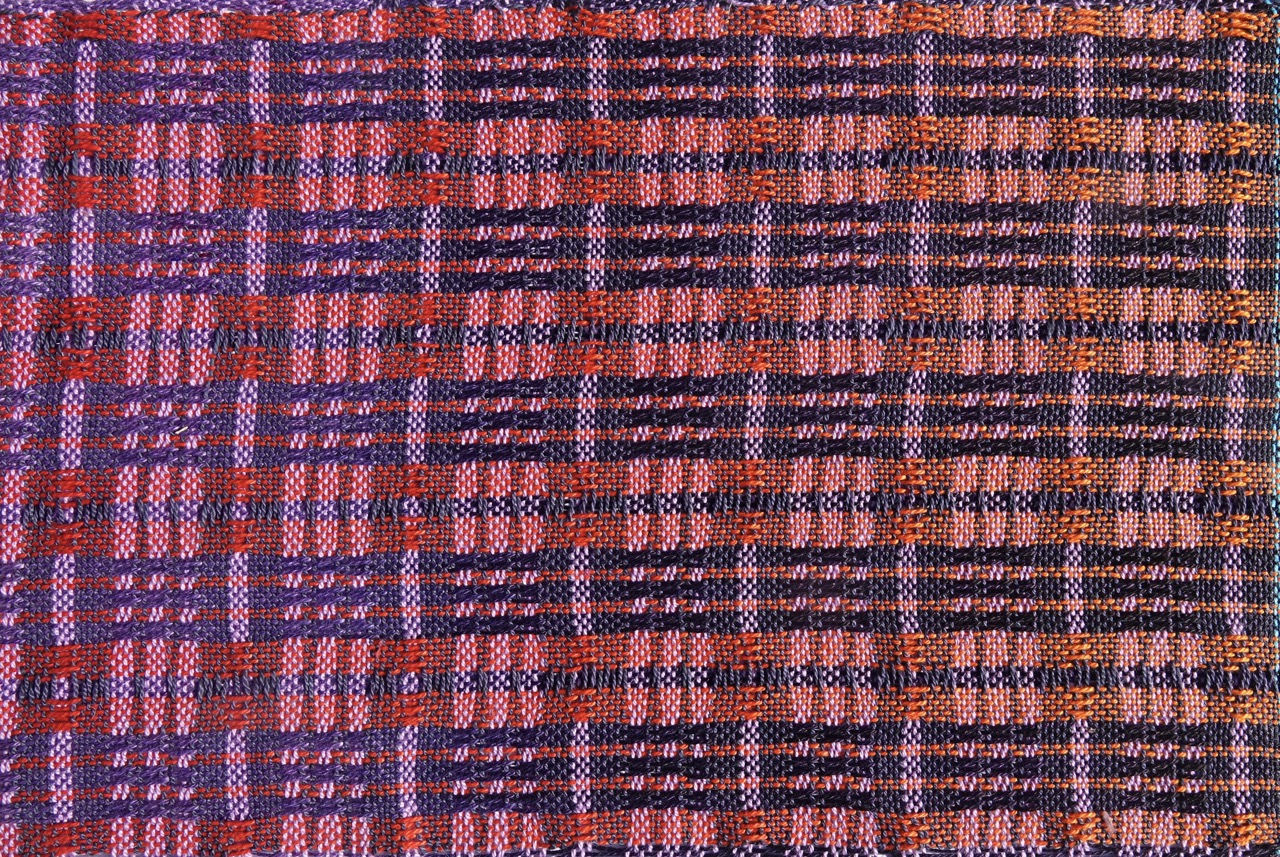
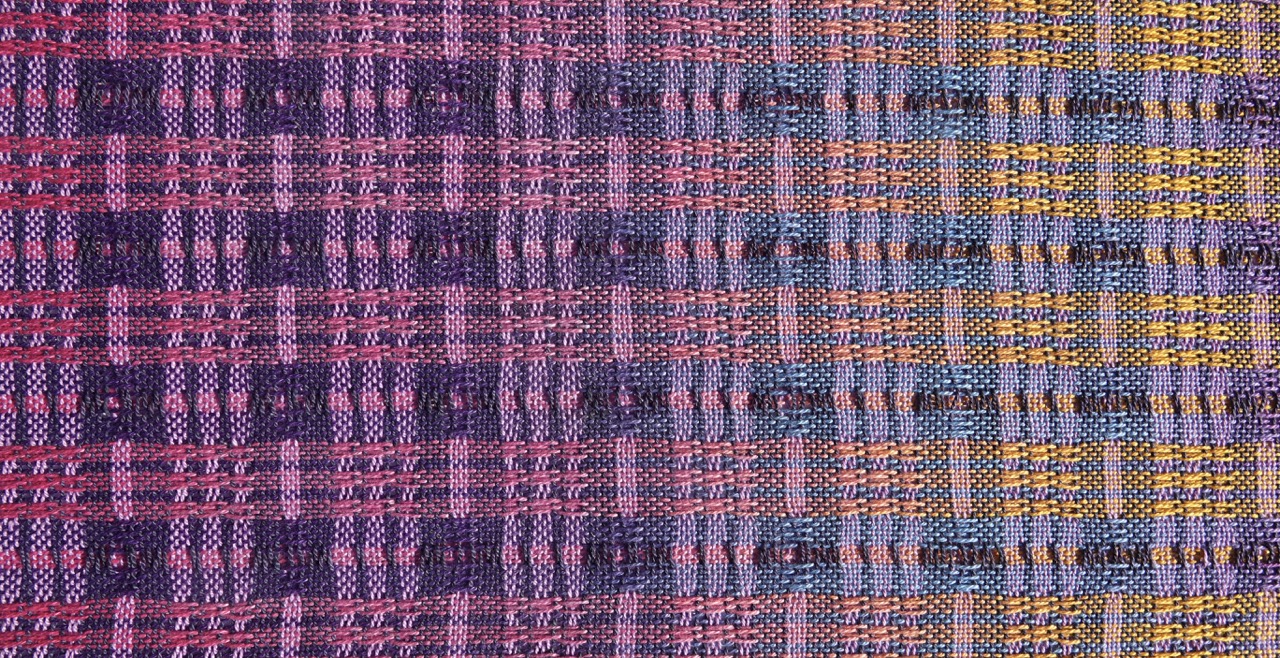
My practice explores the relationship between self and space through woven textiles. Examining urban environments, my hand-dyed, handwoven installations reflect on how we move through the world, how we build it, and how it, in turn, shapes us.
My Practice
Observation
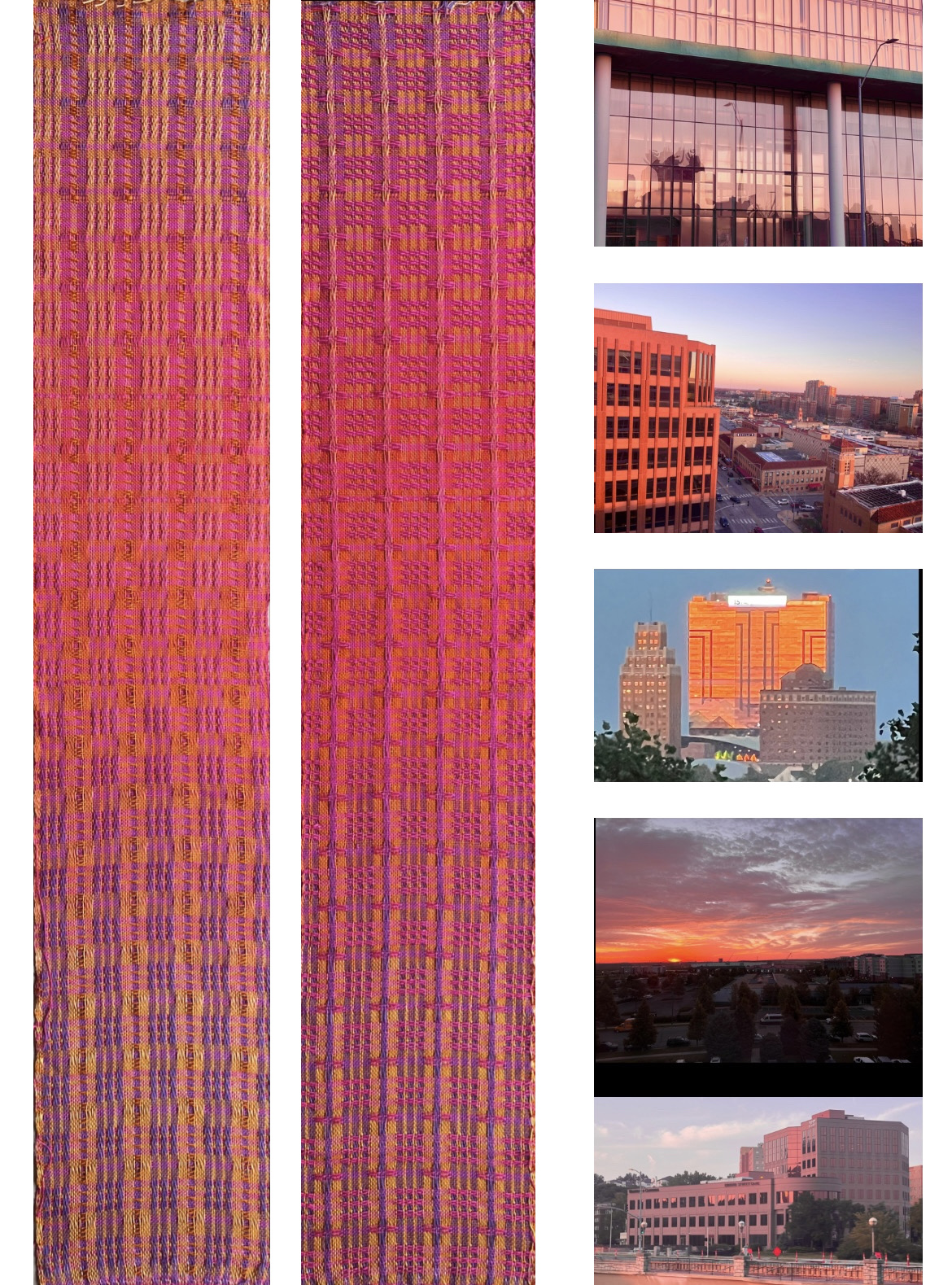
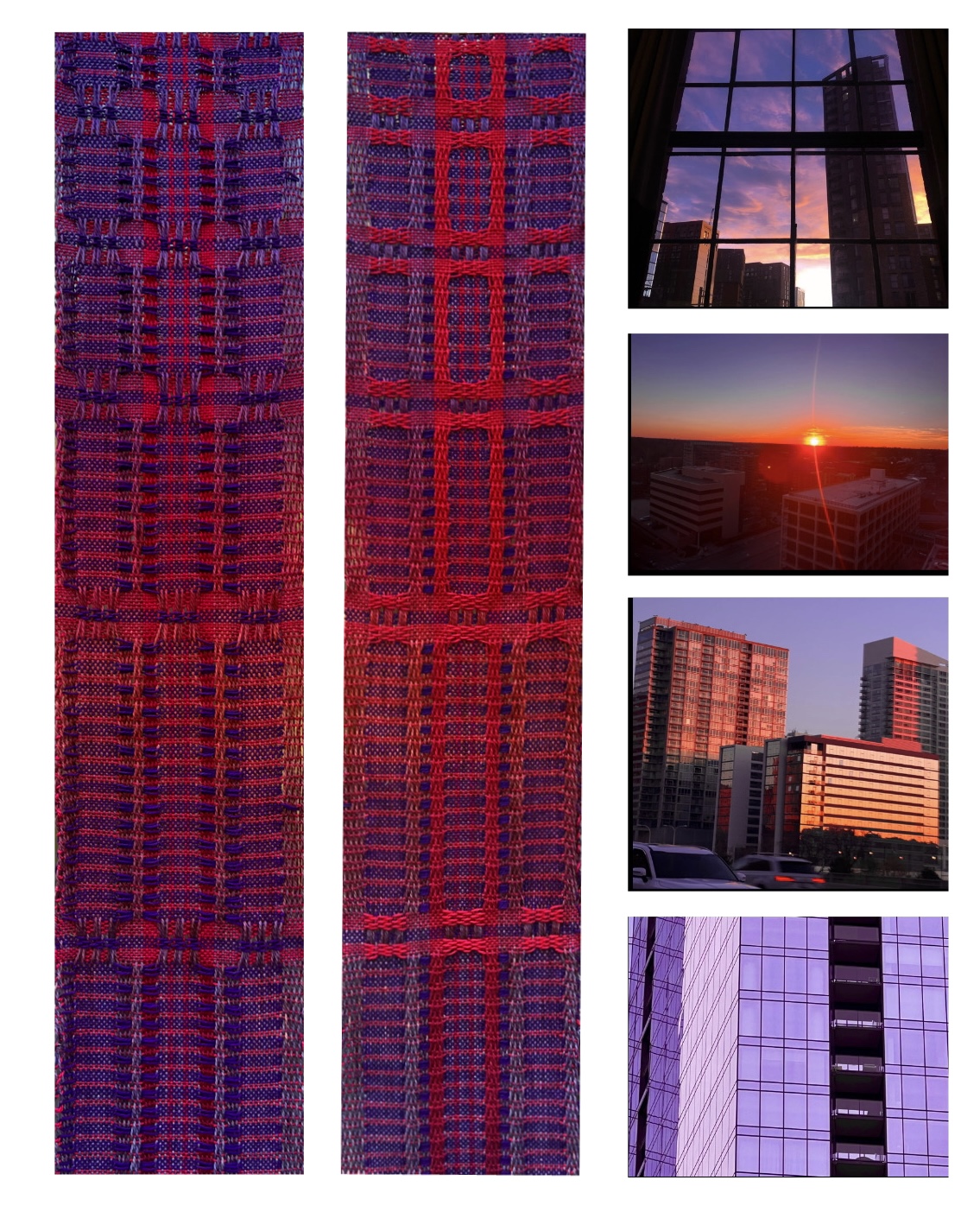
The ‘art of noticing’ is at the core of my practice: as I move through urban environments, I observe often-overlooked details, namely reflections, geometry, light and colour. Observing buildings through a minimalist lens, I abstract them, breaking down the complex structures into their simplest shapes. I then translate these shapes into woven structures known as ‘repeats’, the unit of pattern that is repeated consistently across the weave. By translating urban spaces into woven structures, I am able to materialise my surroundings, not as two-dimensional depictions, but as tactile, spatial experiences. Through weaving, I explore built environments not simply by illustrating them, but by reconstructing them in thread.
Colour plays a central role in translating my observations into textiles. Through the process of hand-dyeing each thread, I can respond directly to my surroundings. Using dyes and threads, rather than paint and canvas, allows me to capture qualities of the everyday – such as the shifting colours of the sky and reflections in windows – and embed them into fibre. By fusing the visuality of colour with the materiality of thread, I give colour form, dimension and scale. In doing so, my textiles create and occupy space, like urban environments themselves.
Dérive
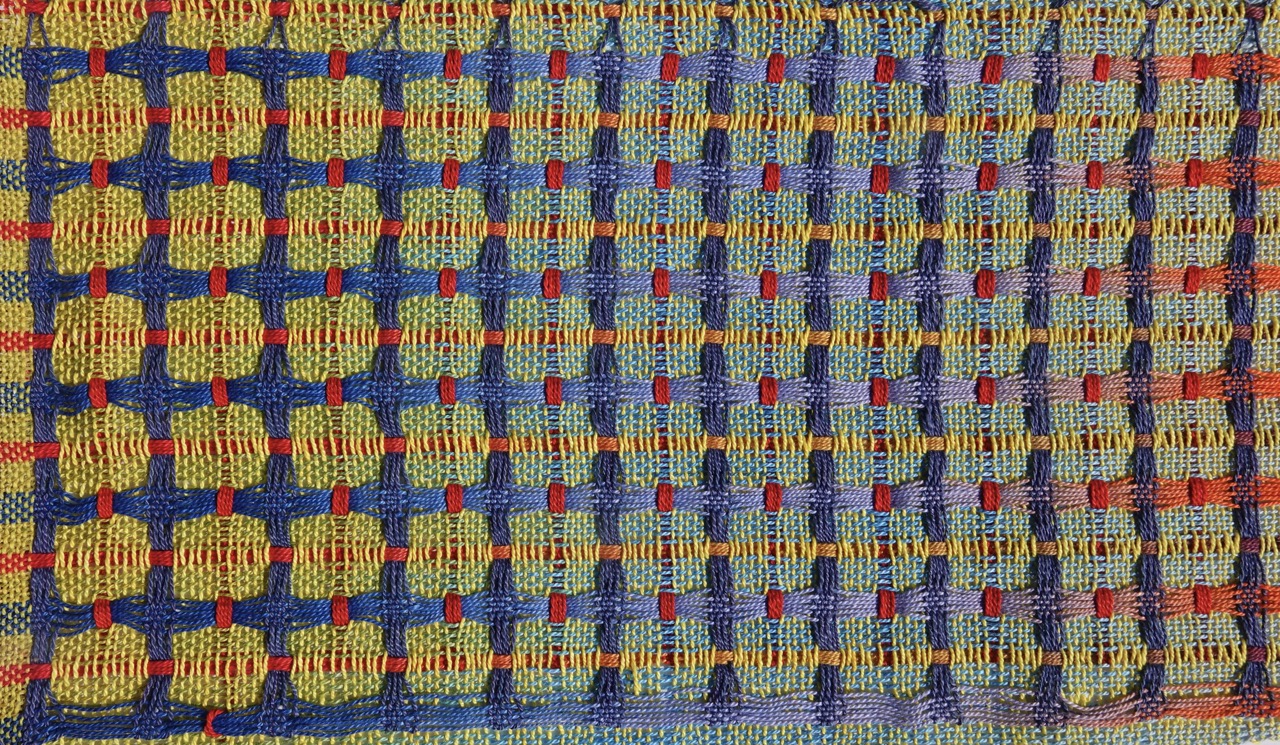
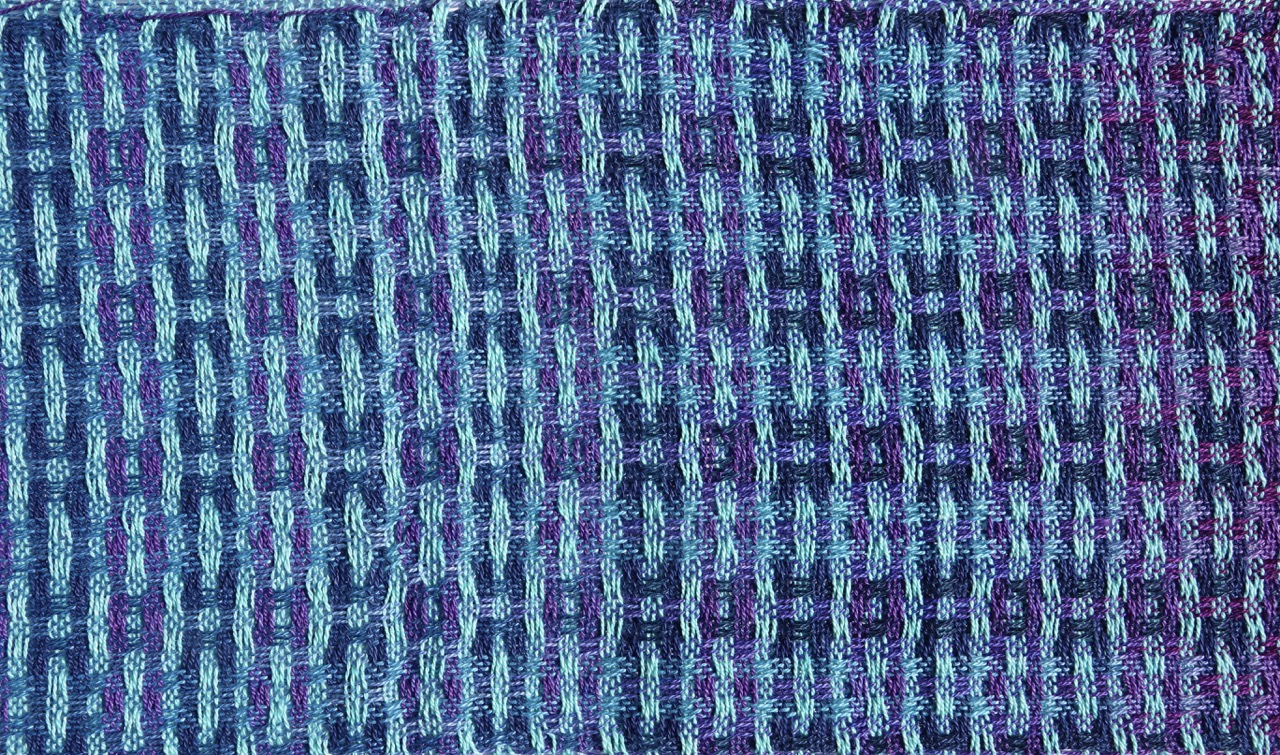
Conceptually, my practice is informed by Psychogeography and the Situationists’ notion of Dérive – a form of urban exploration that resists the order of urban planning through movement guided by spontaneity, intuition and personal choice. By exercising agency through self-directed wandering rather than following pre-determined paths, the controlling logic of urban spaces is disrupted. This tension between structure and subversion forms the foundation of my weavings. Just as urban planning rigidly organises cities, the loom orders threads to create fixed woven structure. However, like dérive, the hand-dyed, variegated threads introduce a layer of unpredictability that transcends structure: the shifting interactions of colour across the warp and weft alter the perception of the woven structure, creating unexpected patterns, shapes, and rhythms that transform across the weave’s surface.
The Social Production of Space
Michel de Certeau’s notion that ‘space is a practiced place’ informed my exhibition’s curation. Organising my sculptures in a grid, a recurring motif in urban planning, architectural design, weaving plans and woven structures, integrates the viewer’s behaviour into my work. Do they follow the grid’s logic or dérive, moving off-path in spontaneous resistance? Furthermore, my use of deflected double weave creates visually distinct sides that blur boundaries between interior and exterior space, mimicking how we perceive urban environments as visual planes rather than whole, dimensional spaces. Like navigating a city, movement defines the meaning of the space, thus these curatorial choices shift my exhibition from a static display to an embodied, phenomenological experience of space.
Marking the grid with tape references Inside the White Cube (1986), which reveals how galleries, like cities, are not neutral but political spaces. Just as urban planners use lines to define space and control movement, museums use tape to delineate where viewers can and cannot go. By incorporating tape into my installation, I invite viewers to contemplate how space is produced and perceived.