User-centred designer focused on creating thoughtful, purpose-driven physical products and experiences. Skilled in prototyping, CAD, and electronics, developed during my placement at Dyson, bringing ideas to life, solving problems, and designing meaningful change through a blend of innovation and empathy.
The Problem
Blind and partially sighted people often face significant challenges navigating large, unfamiliar office environments, particularly before receiving support from Access to Work, which can take up to 3 months to be approved. Standard white canes offer limited spatial context, making it difficult to orient within complex indoor spaces like open-plan offices. This can lead to disorientation, anxiety, and safety risks for new employees. Existing assistive technologies are often costly, overly complex, or incompatible with established cane techniques.
Gyde
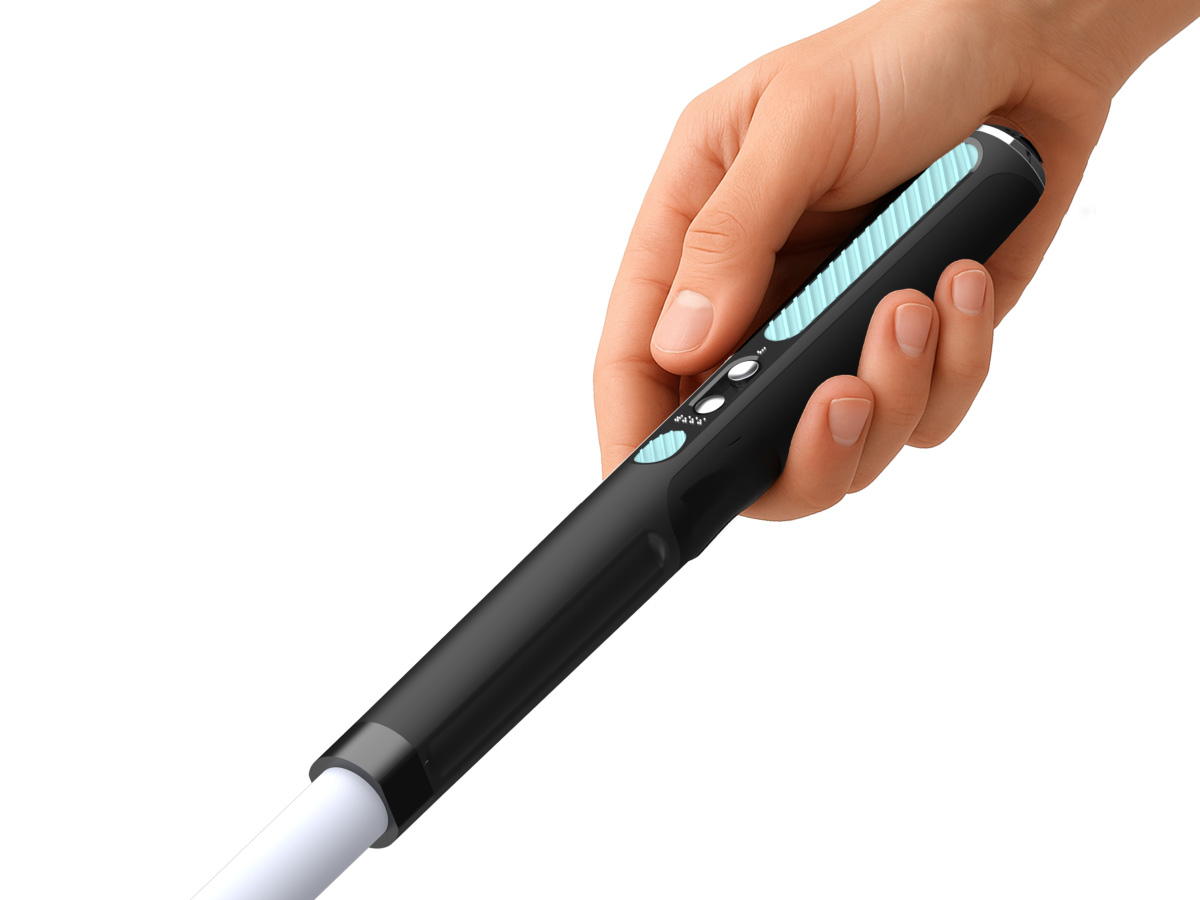
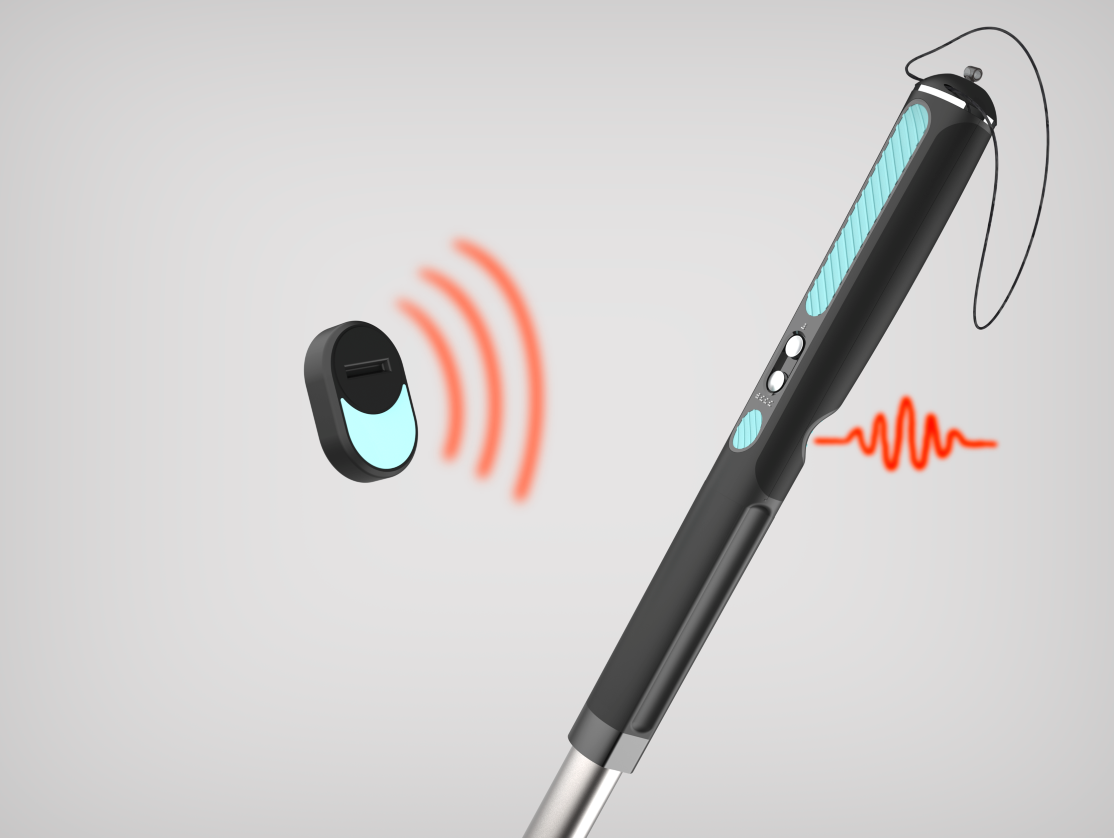
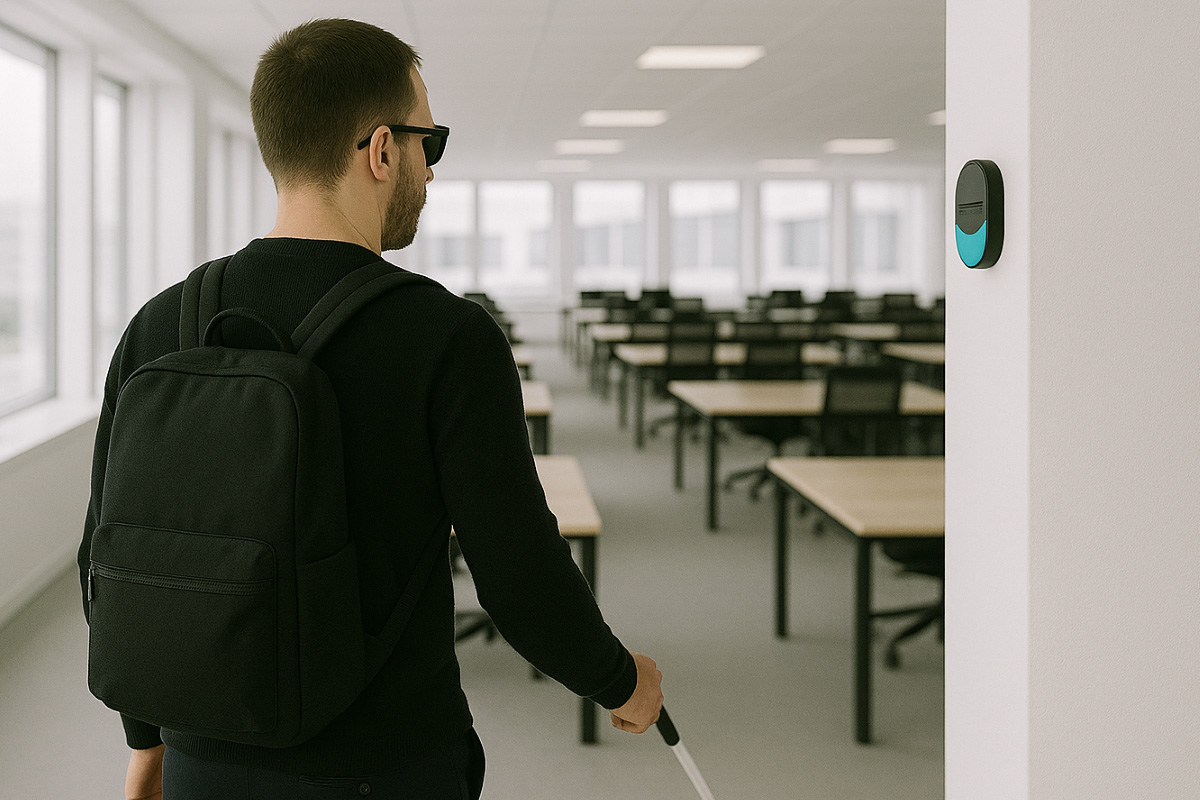
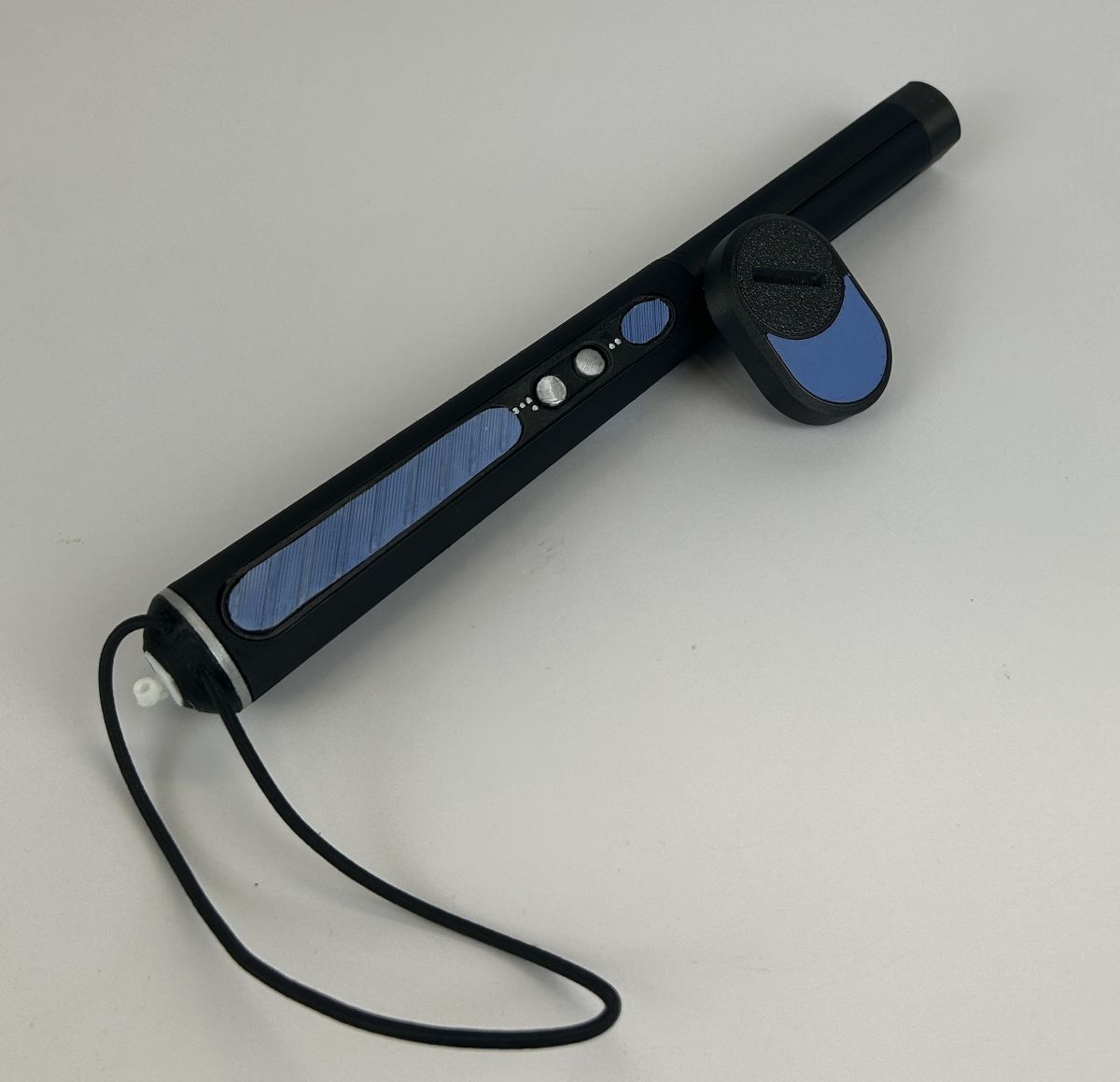
Gyde is a smart cane designed to assist blind and severely visually impaired individuals in safely navigating unfamiliar indoor office environments. It works in conjunction with Bluetooth beacons placed throughout the building, which communicate the user’s location and orientation to the cane. The handle provides real-time directional feedback through intuitive haptic signals, helping users identify key waypoints like meeting rooms, toilets, or exits without relying solely on verbal instructions. Designed to complement existing orientation and mobility techniques, the product enhances spatial awareness while remaining professional, affordable, and user-friendly.
User Journey
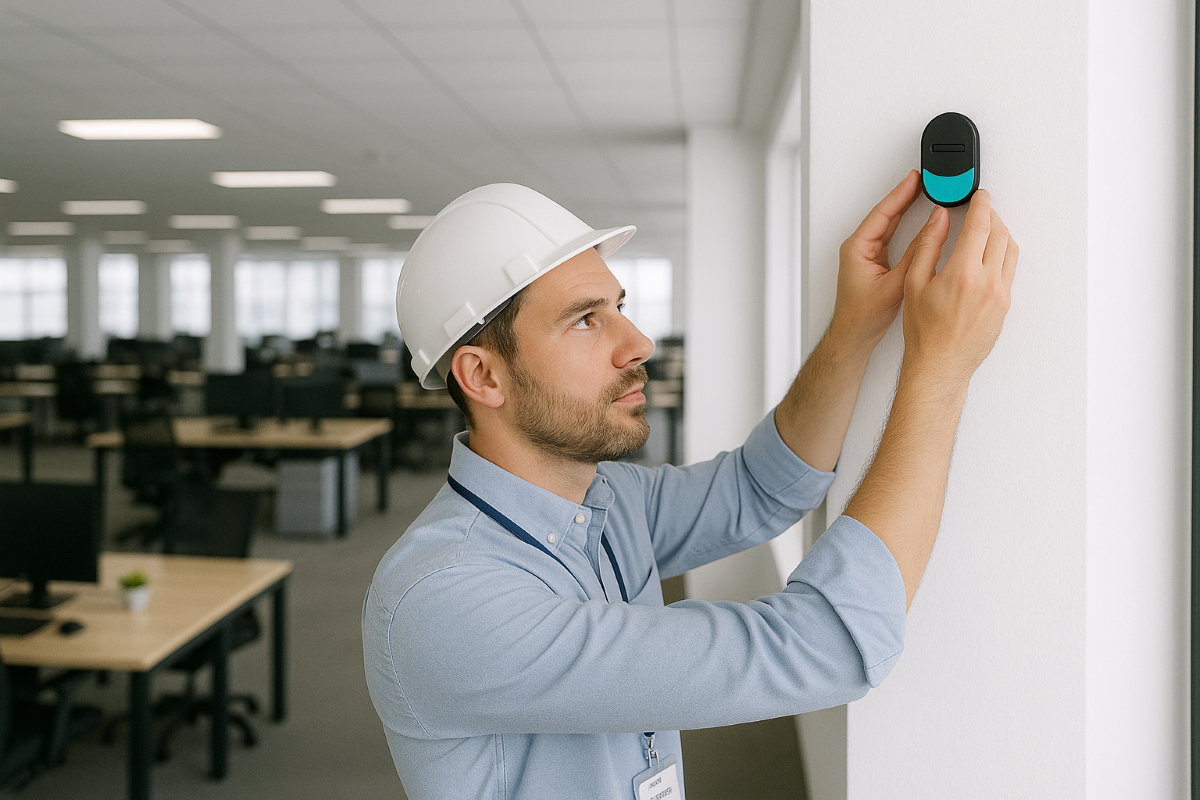
1. Bluetooth beacons are strategically installed on key landmarks within the office by management. Their placement is collaboratively determined by the blind user and an Orientation and Mobility specialist to ensure optimal support for independent navigation.
2. When disoriented the user clicks the power button and spans through the different beacons around them to help determine their position or select a beacon to connect to and begin navigating to in order to find a known location.
3. Once the user has arrived at the desired location (e.g. Kitchen). They can use the landmark that the beacon on as a reference point and move towards the desired location as desired.
Fine details
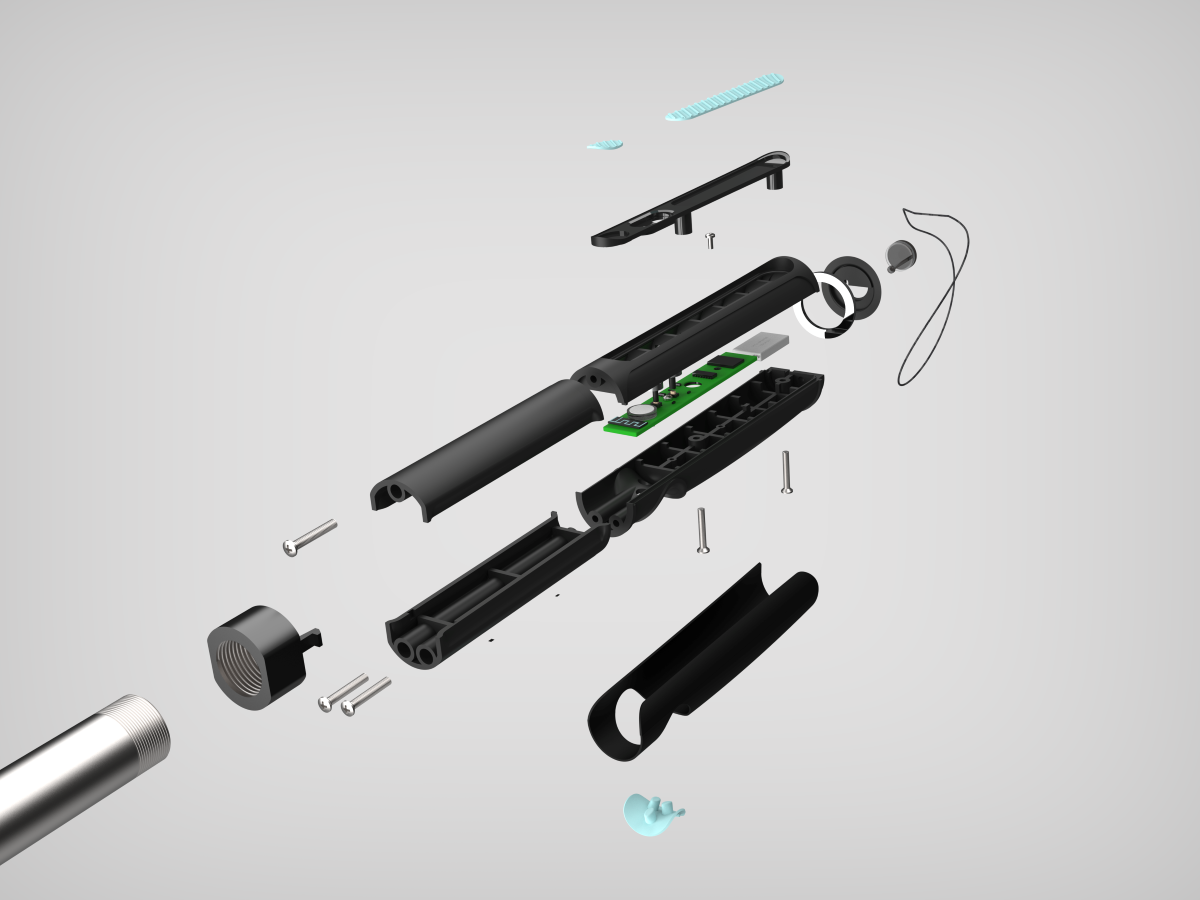
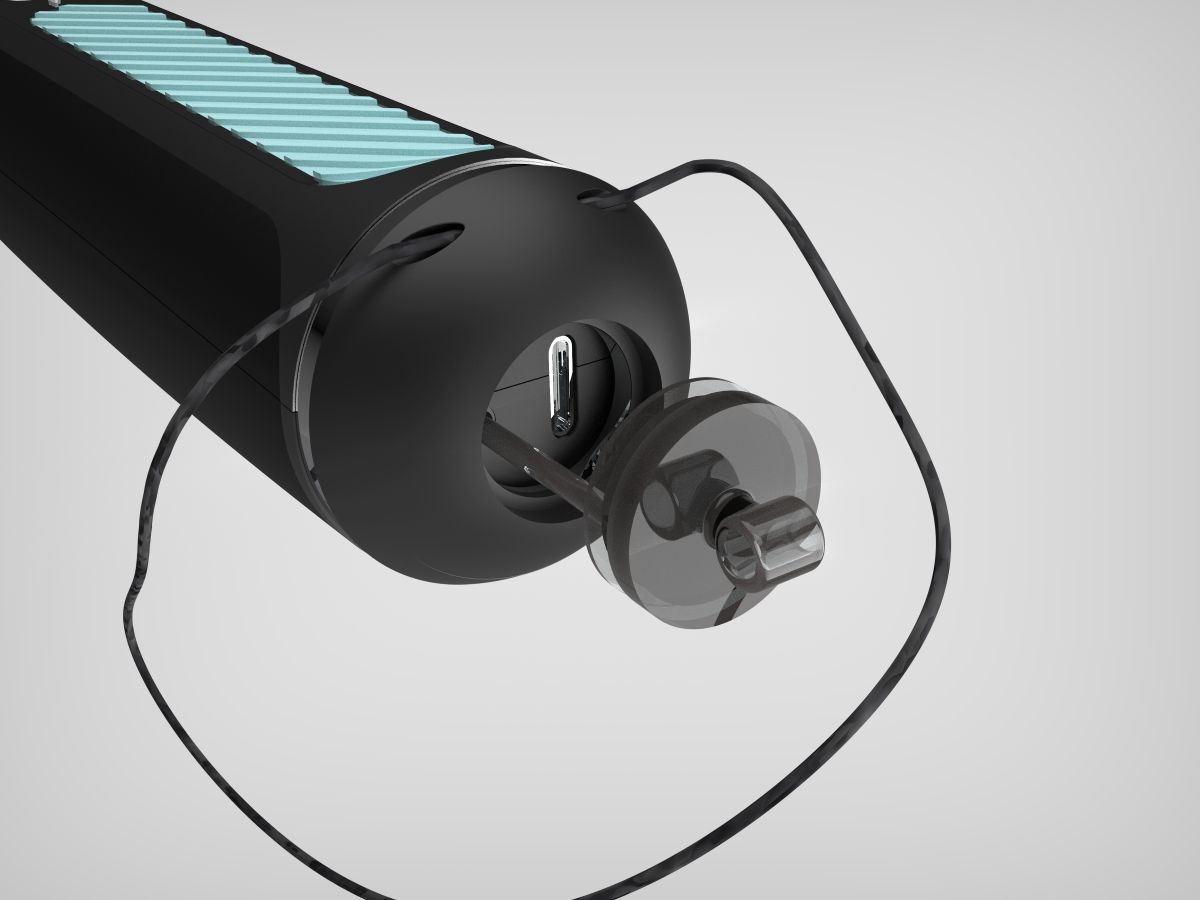
Tethered USB-Cover & Elastic cord
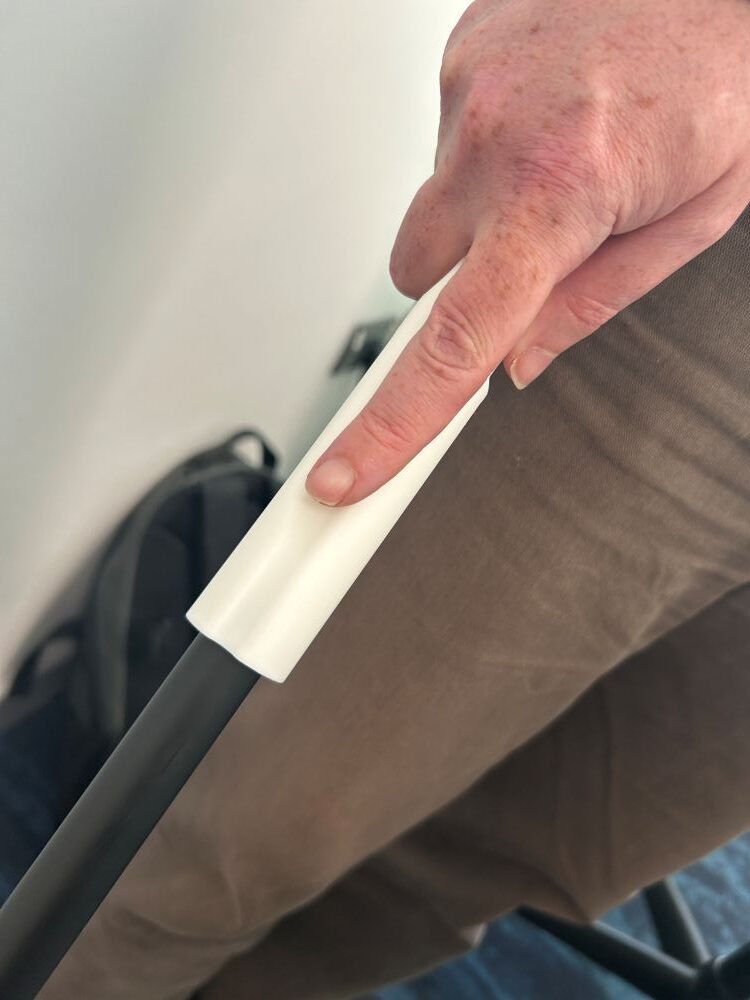
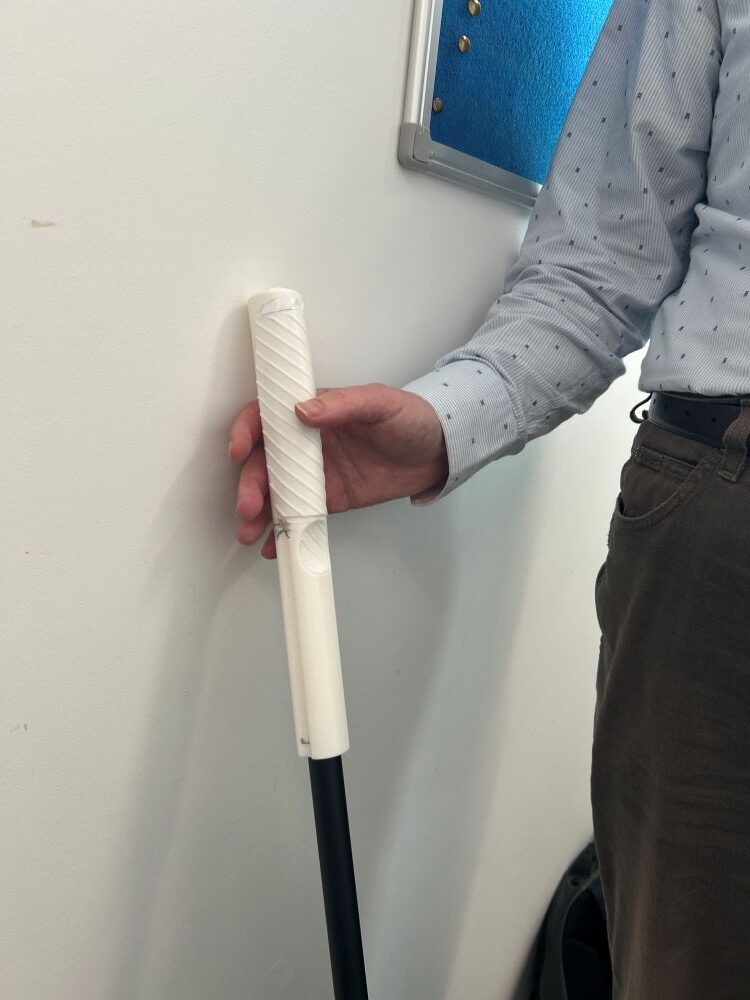
Distinct buttons, Braille labels, Ergonomic non-slip grip, High constrast & Material changes
User Testing & Prototyping
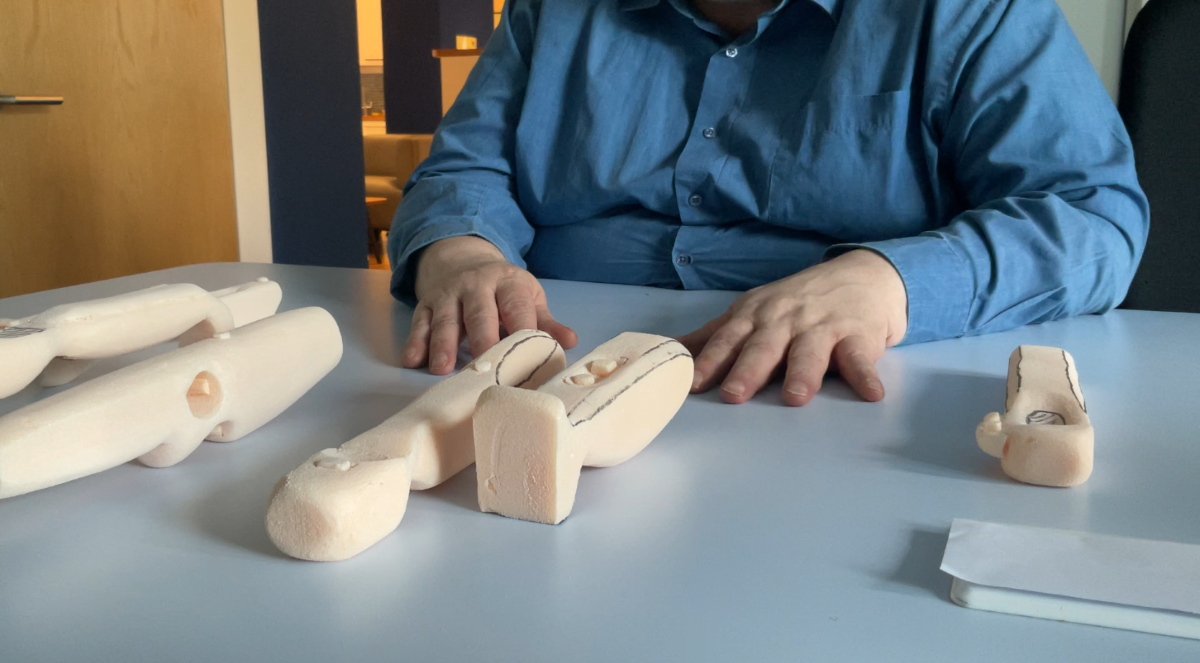
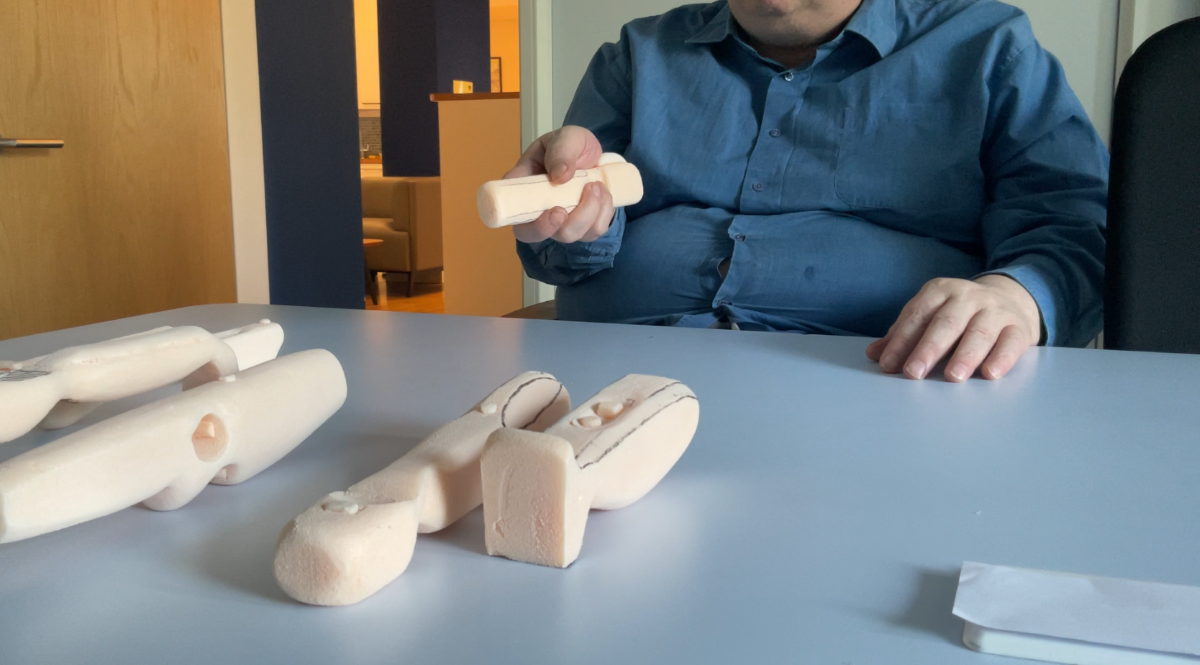
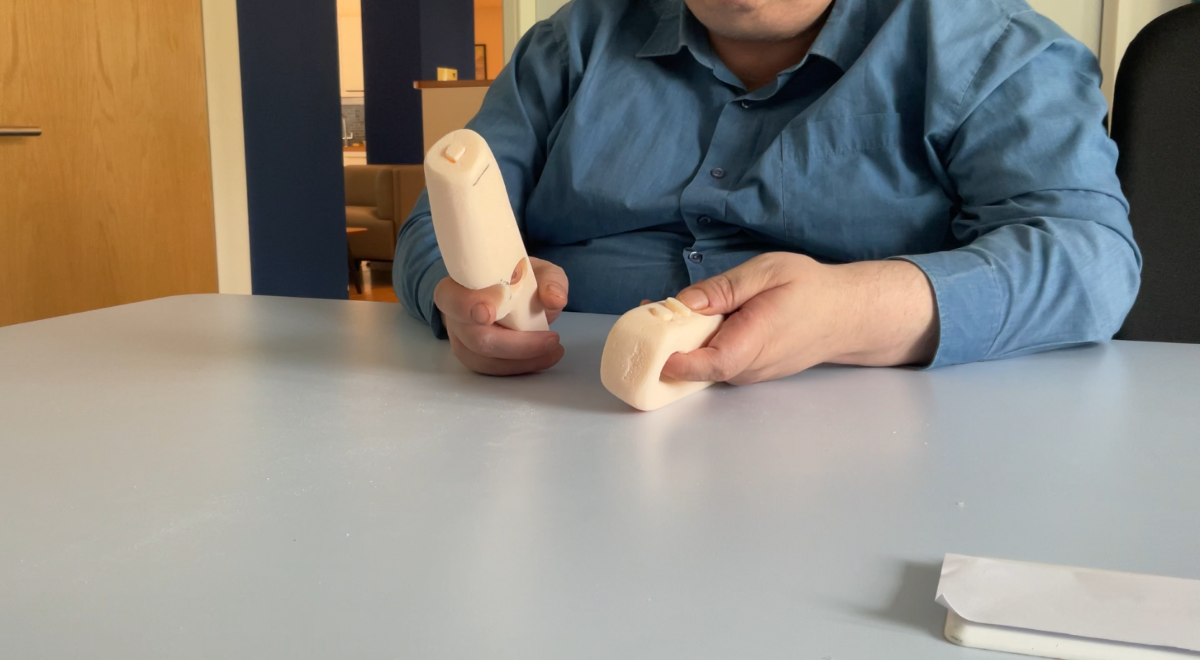
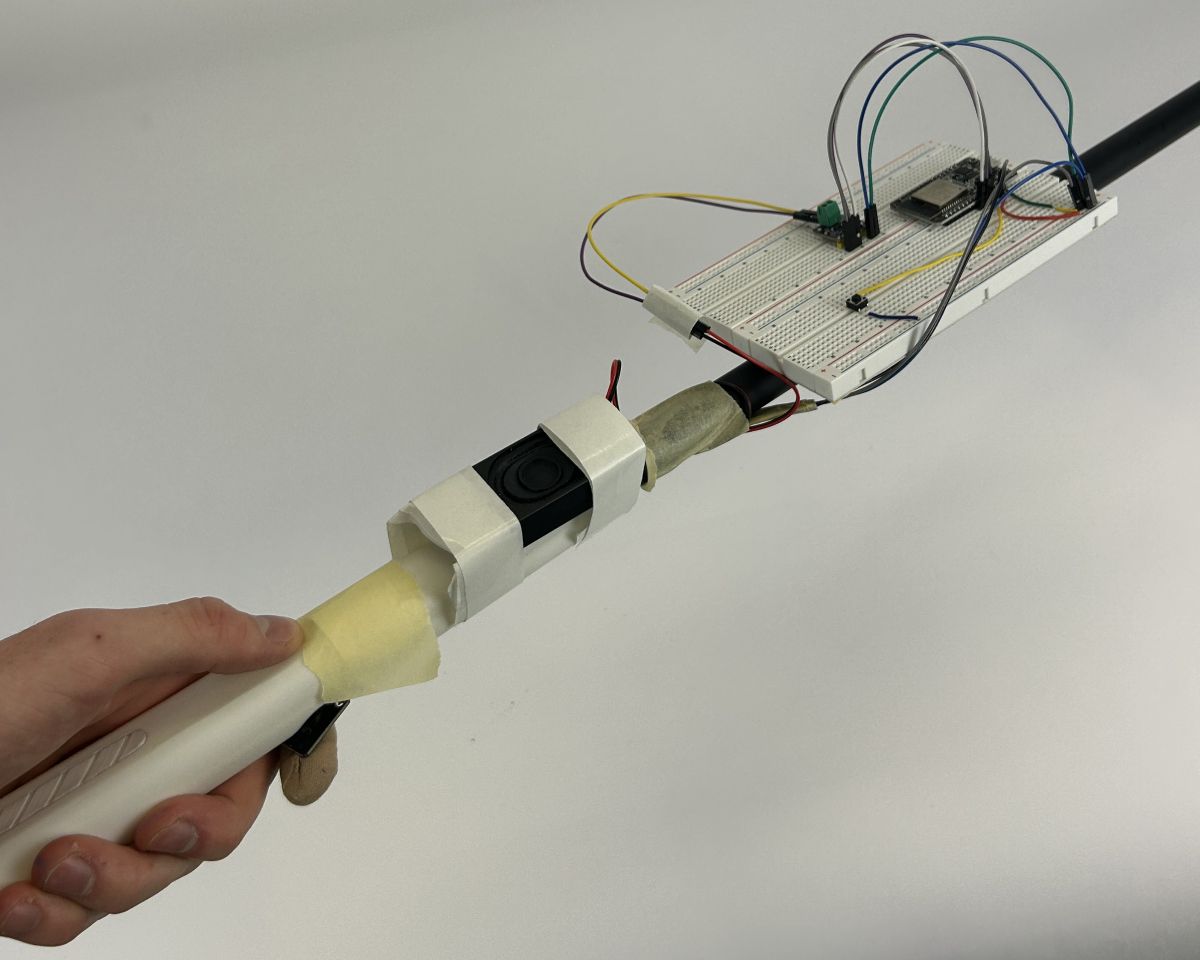
Engaging directly with blind cane users was critical to the project’s success. I conducted regular interviews and user testing throughout the design process, including multiple visits to the Thomas Pocklington Trust in London. Hands-on sessions with foam models and 3D-printed prototypes allowed me to test and refine key elements such as handle ergonomics, audio and haptic feedback, material textures, and product weight. Rapid, function-first prototyping enabled fast iteration, leading to a final aesthetic prototype once the form, CMF, and user interface were resolved.
Design Week
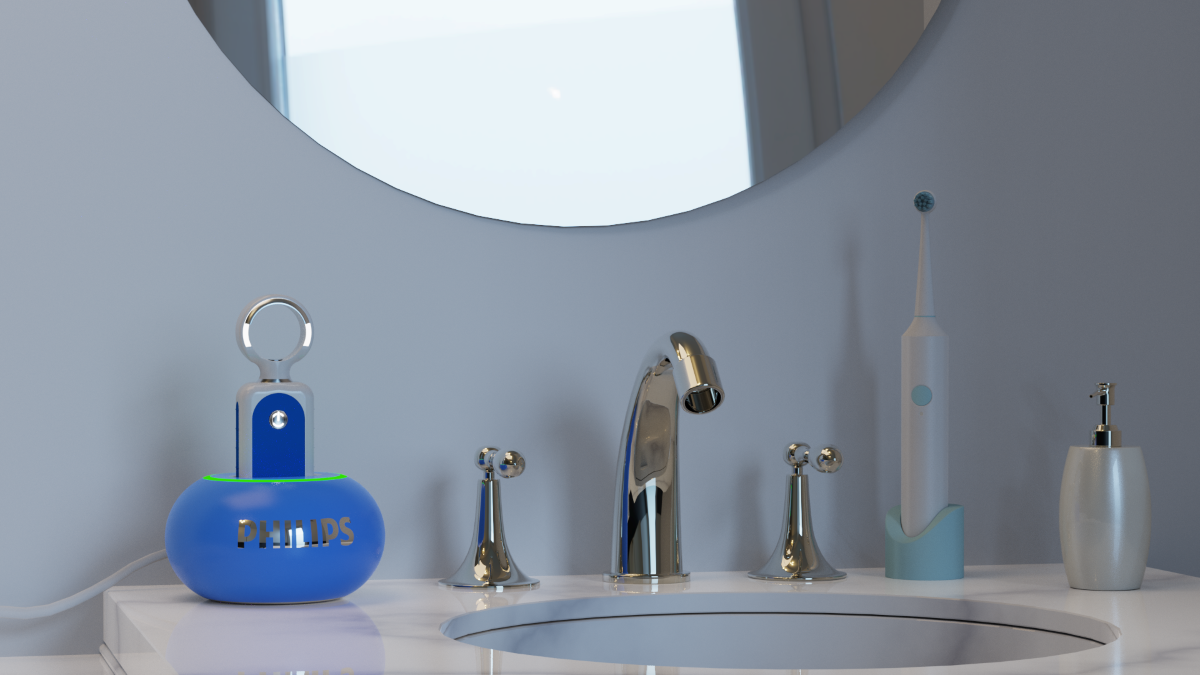
With the rise of AI-powered products, I was set a brief to design an AI-inspired product for a well-known brand. After research, I identified a gap in Philips’ portfolio: the growing market of tongue scrapers. This led to the development of OraClean. The first AI-powered tongue scraper that analyses saliva and odour to deliver a personalised oral health score.
OraClean uses a semiconductor gas sensor to detect volatile compounds on the tongue, sending data to an app for real-time scoring. When docked in its charging hub, UV imaging further analyses saliva, contributing to a more comprehensive health assessment. Machine learning compares this data to existing databases, refining its insights with each use to improve accuracy, feedback, and trend tracking over time.
Placement
Dyson
During my time at Dyson, I had the privilege of working across two product categories—Haircare and Floorcare. It was here that I developed many of the core skills that shaped my final year, including collaboration, rigorous testing, CAD, electronics, and, above all, resilience.
I gained valuable experience working in both large and small teams, adapting to different dynamics and workflows. A highlight of my placement was contributing to a project that led to me being named as an author on a patent shortly before I left.