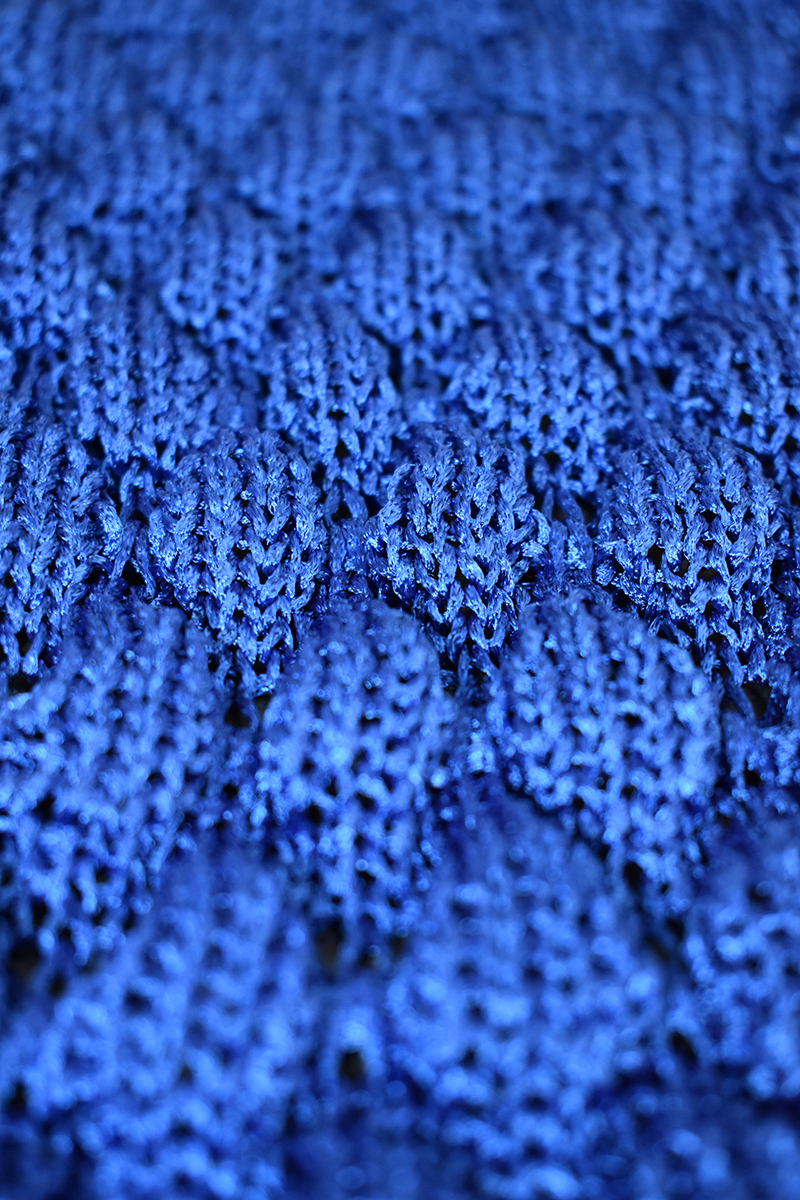
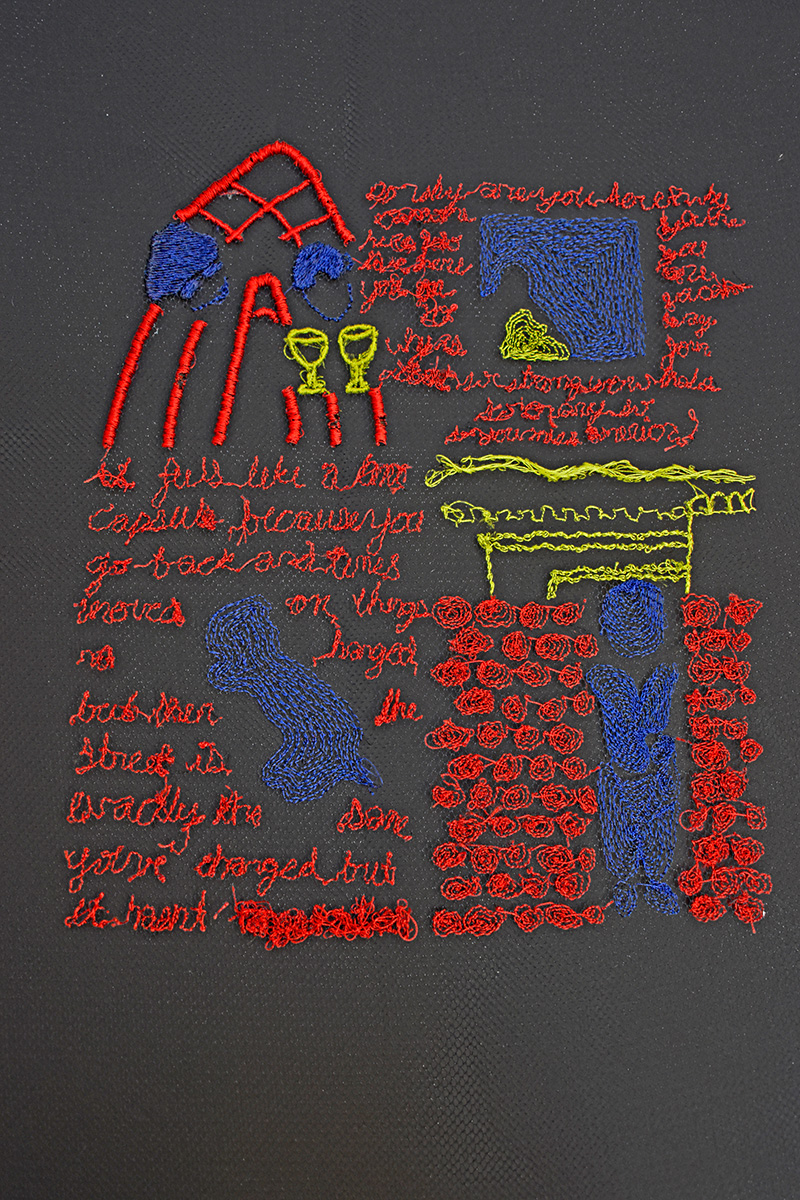
Lucy is a British-American multimedia textile designer who specializes in digital embroidery, knit, laser, and print design. Her work focuses on social themes such as perception and identity.
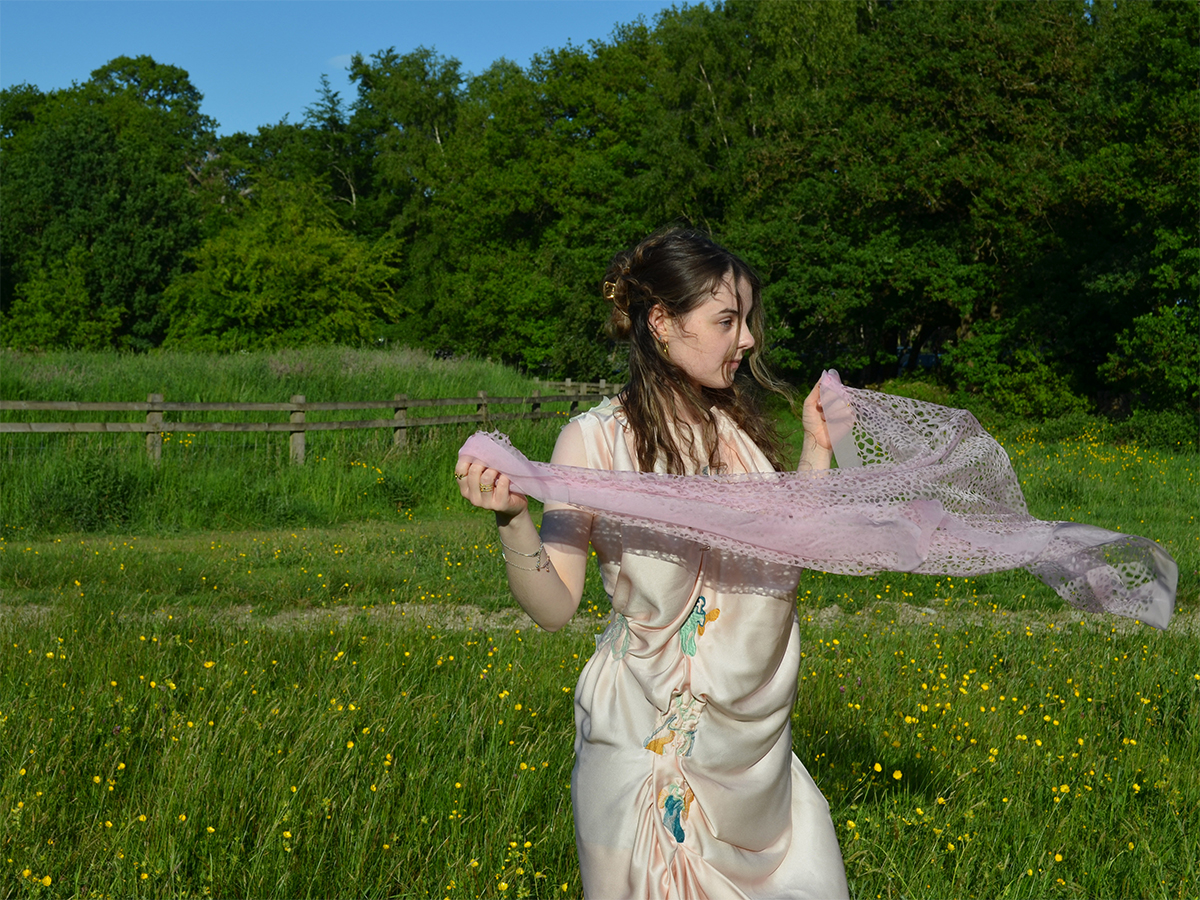
This project explores how the perception of beauty effects the power dynamics between men and women. The concept is investigated at the intersection of myth and film through the story of Persephone, the Goddess of Spring from Greek mythology.
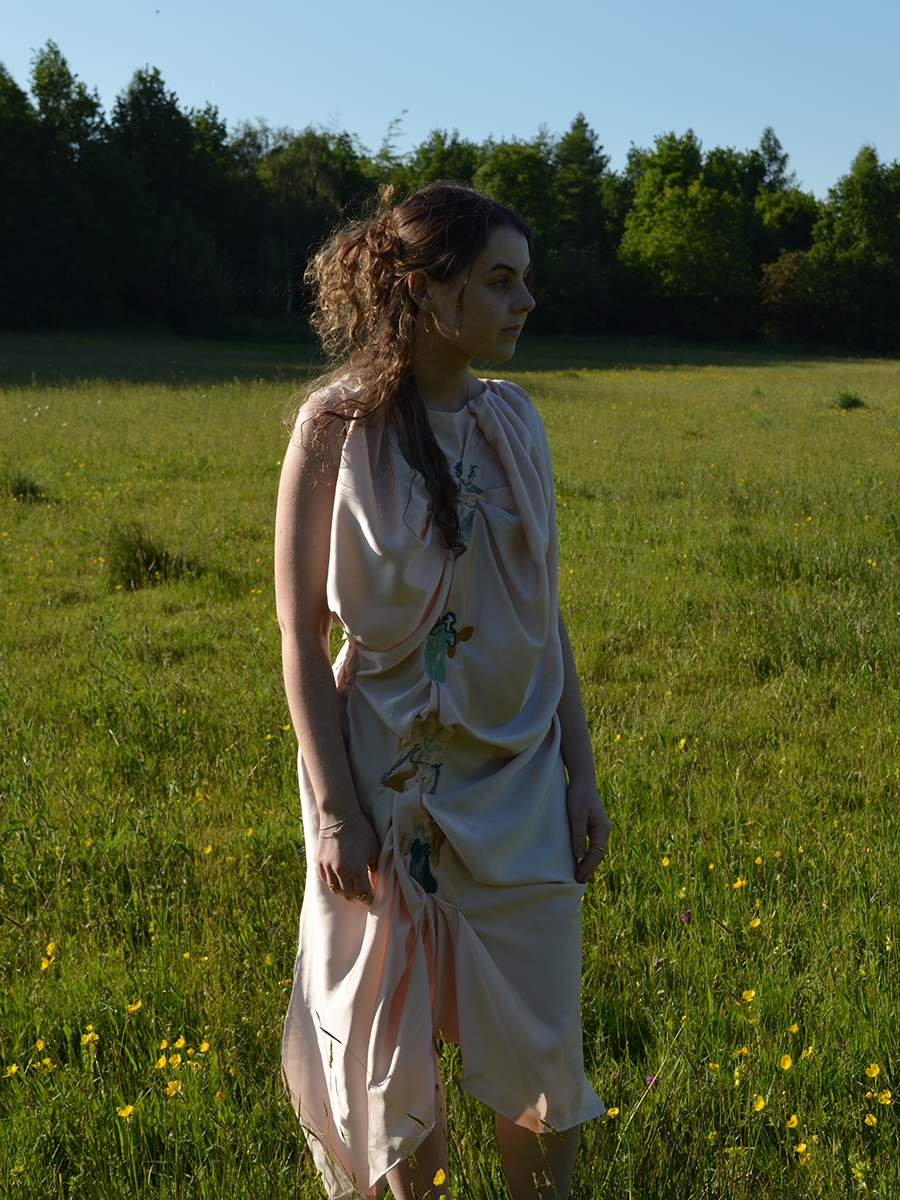

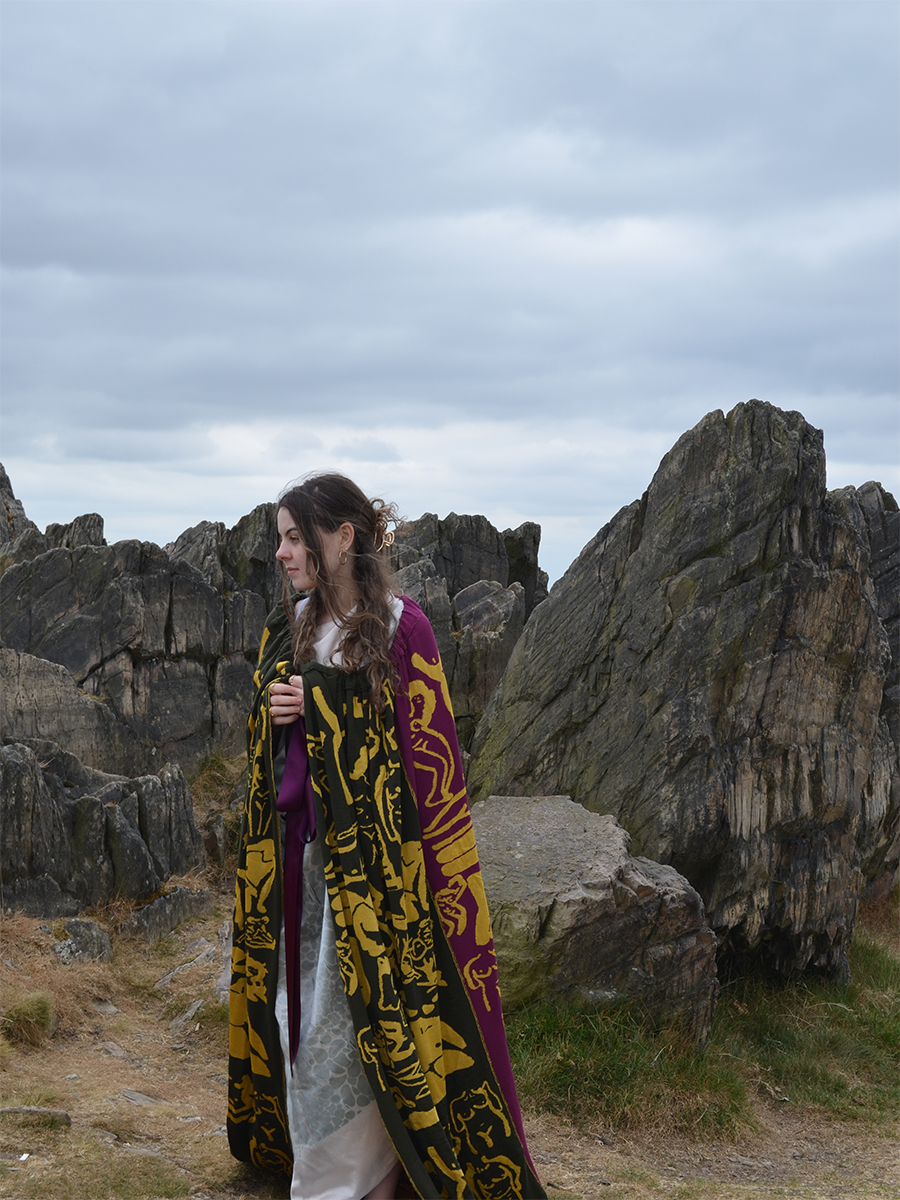
Persephone: Goddess of Growth is the title of the imagined film this project creates costume for. The storyline of the film follows the ‘original’ story of Persephone in The Homeric Hymn to Demeter. Focusing on Persephone and her character – not in relation to others – I break the hymn into 3 scenes. First ‘Maiden Persephone’: a virgin Persephone picking flowers. Second ‘Queen Persephone’: Persephone captured in the underworld. Lastly ‘Free Persephone’: Persephone returned to earth. Through the progression of the looks from scene to scene I show that a woman’s beauty is entwined with her perception and that ultimately resilience and strength are more powerful than beauty.
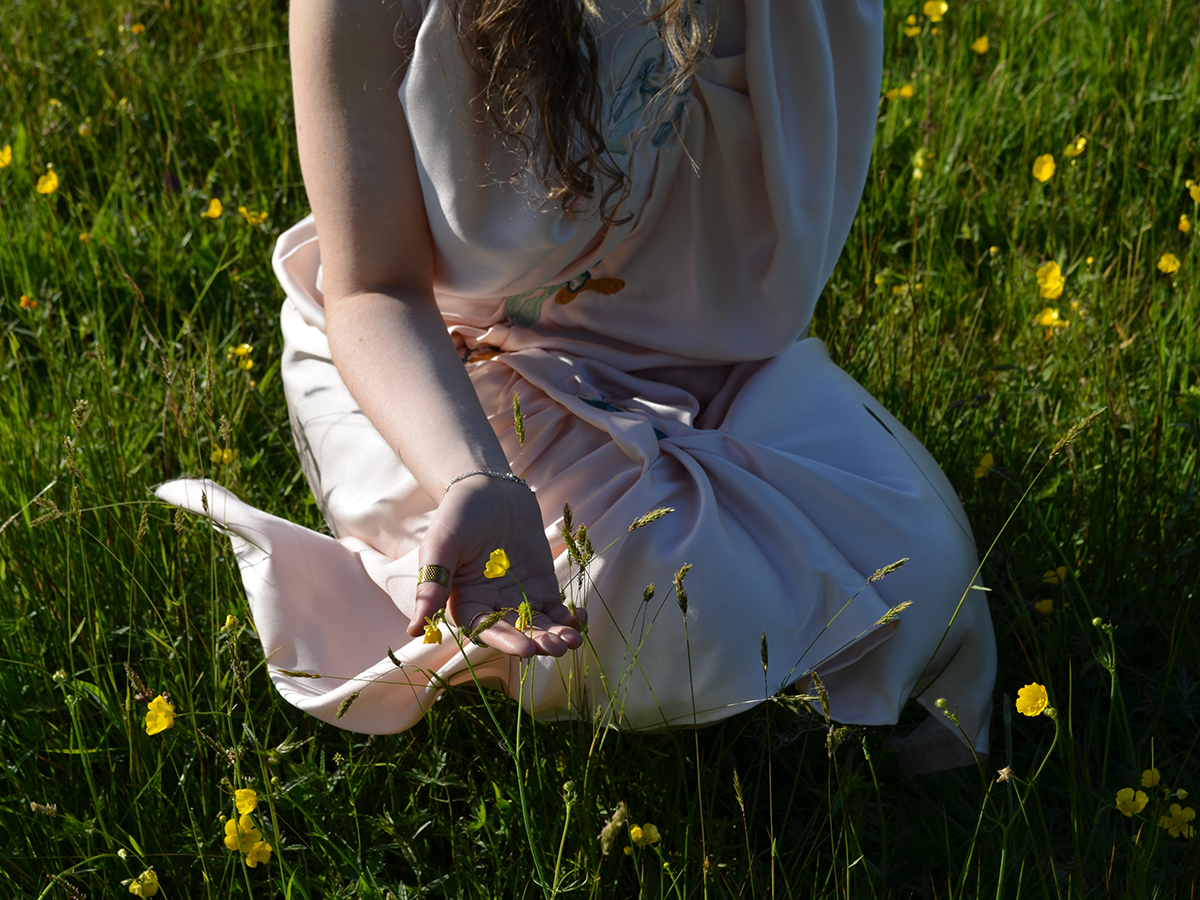
Peplos: this garment is pleated silk with digital embroidery.
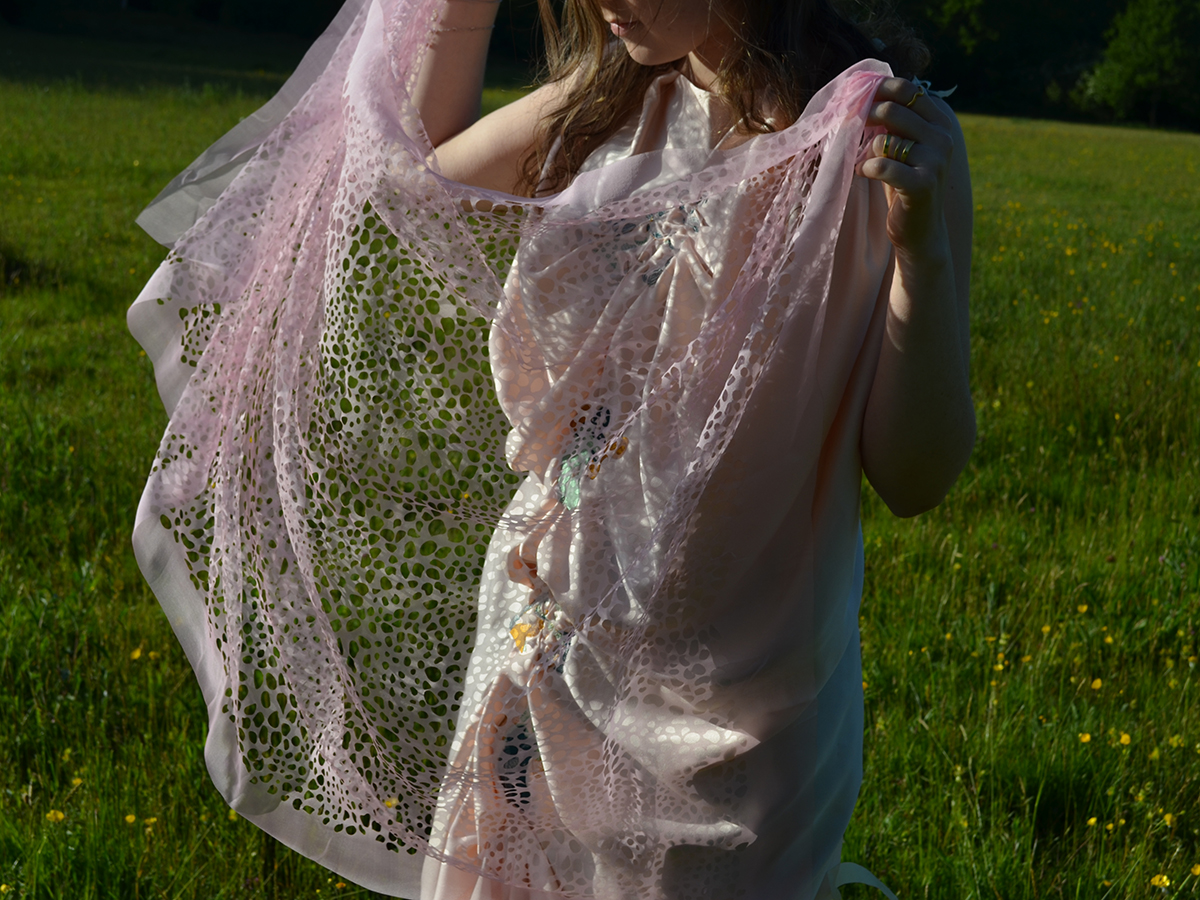
Epiblema: An ancient Greek shawl laser cut (programmed on Illustrator) on polyester.
The peplos and epiblema are ancient Greek garments that inspired the the first look. The flowy materials are held in place with digital embroidery to signify the illusion of freedom.
Chiton and Corset: The chiton is an ancient Greek garment that would normally be combined with a strophion – a sort of belt – that I replaced with a corset to reference the restrictiveness of Victorian women’s clothing. The chiton is devored on a silk-viscose satin and double dyed.
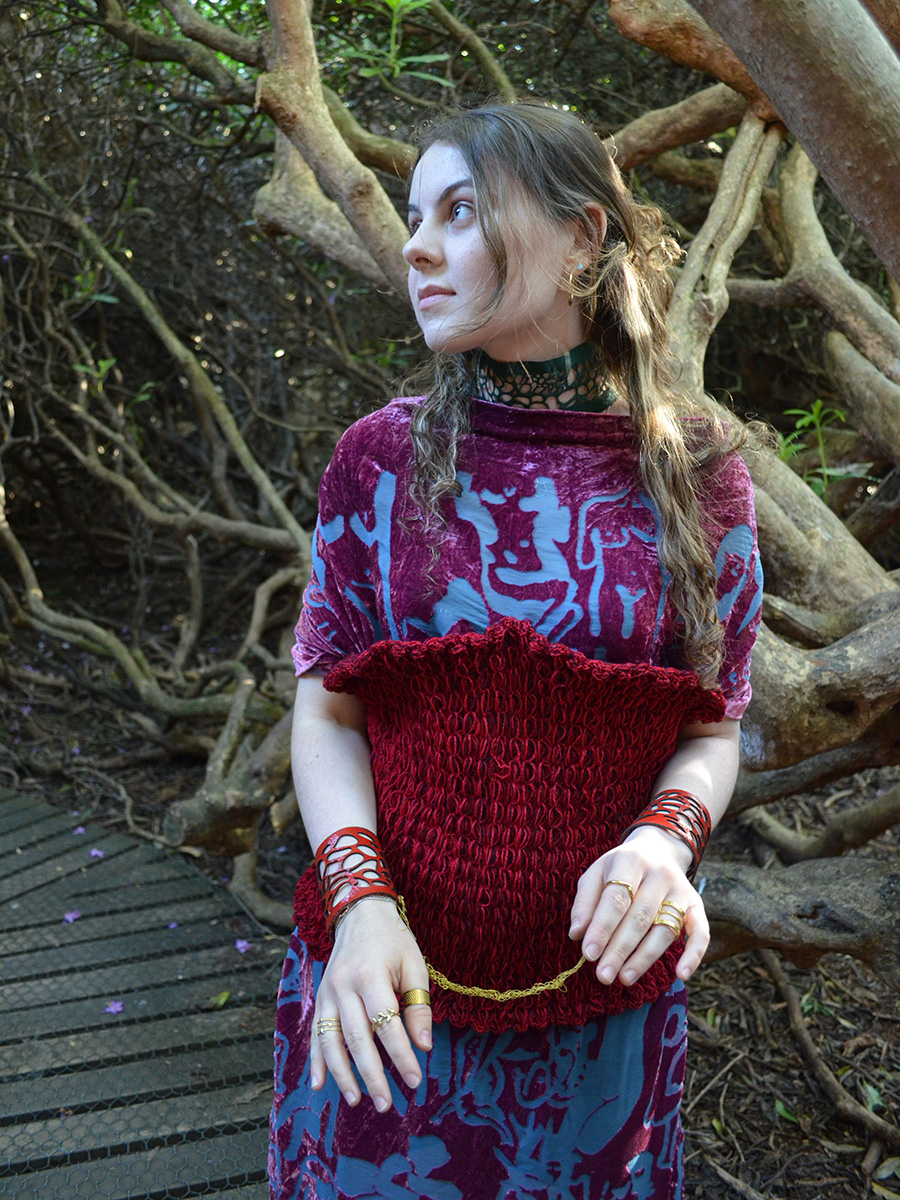
Choker and Handcuffs: The choker and cuffs are laser-cut. The cuffs are connected by a loose gold chain to become handcuffs. The chain is tube knit silk.
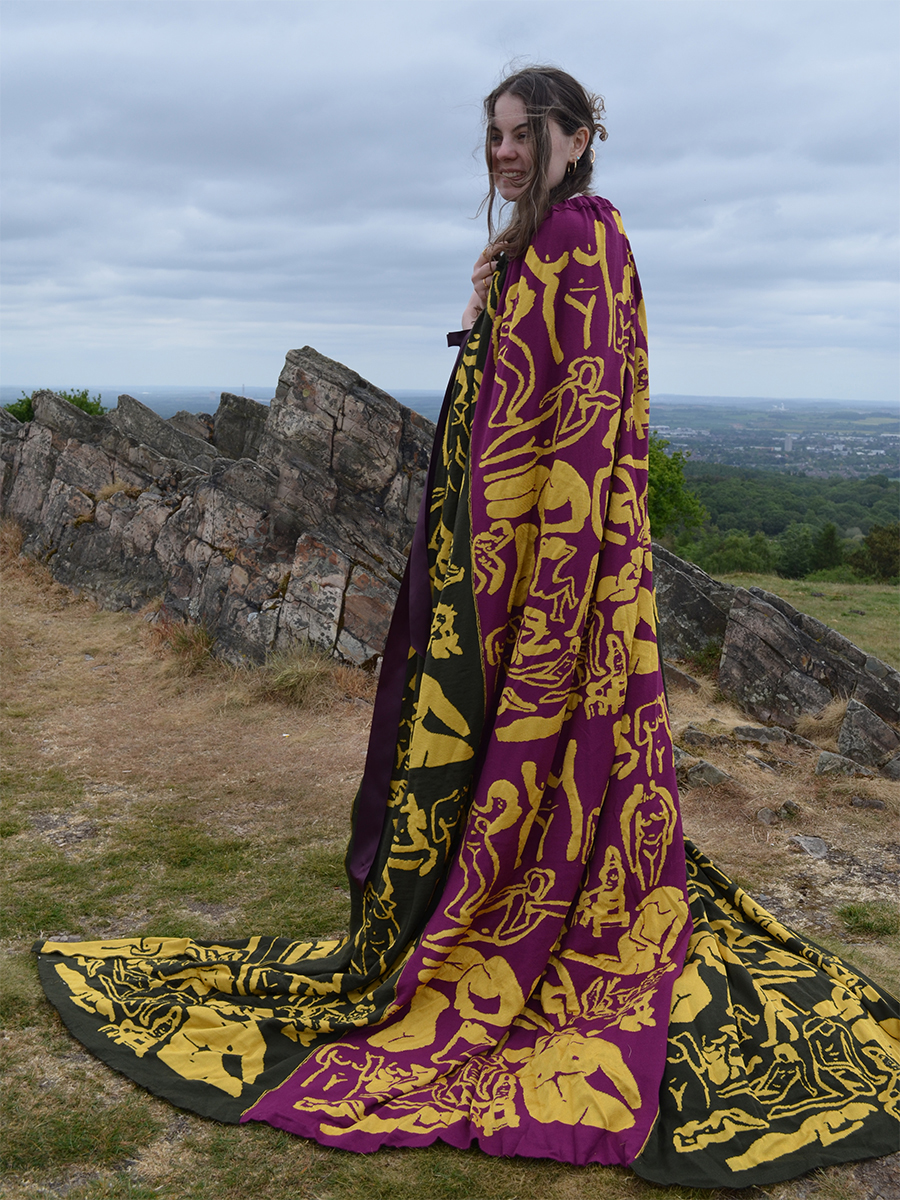
The Most Goddess-Like Robe: A robe referencing a female poet from the 1800s who described Persephone as wearing a ‘most goddess-like robe’ when arriving back from the underworld to symbolize overcoming male oppression. The robe is a jacquard knit triptych. The three panels were knit on Shima with 100% merino wool (green yarn) and 100% silk (gold and purple yarns).
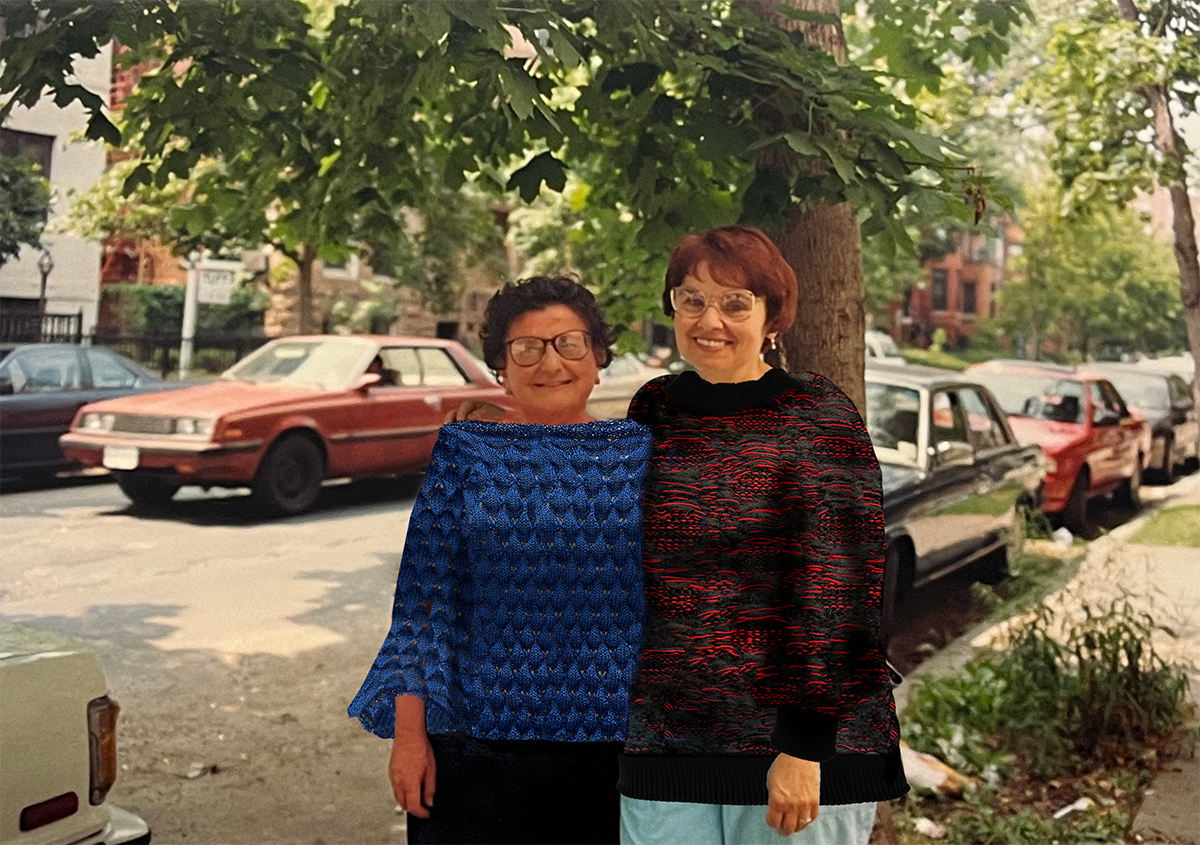


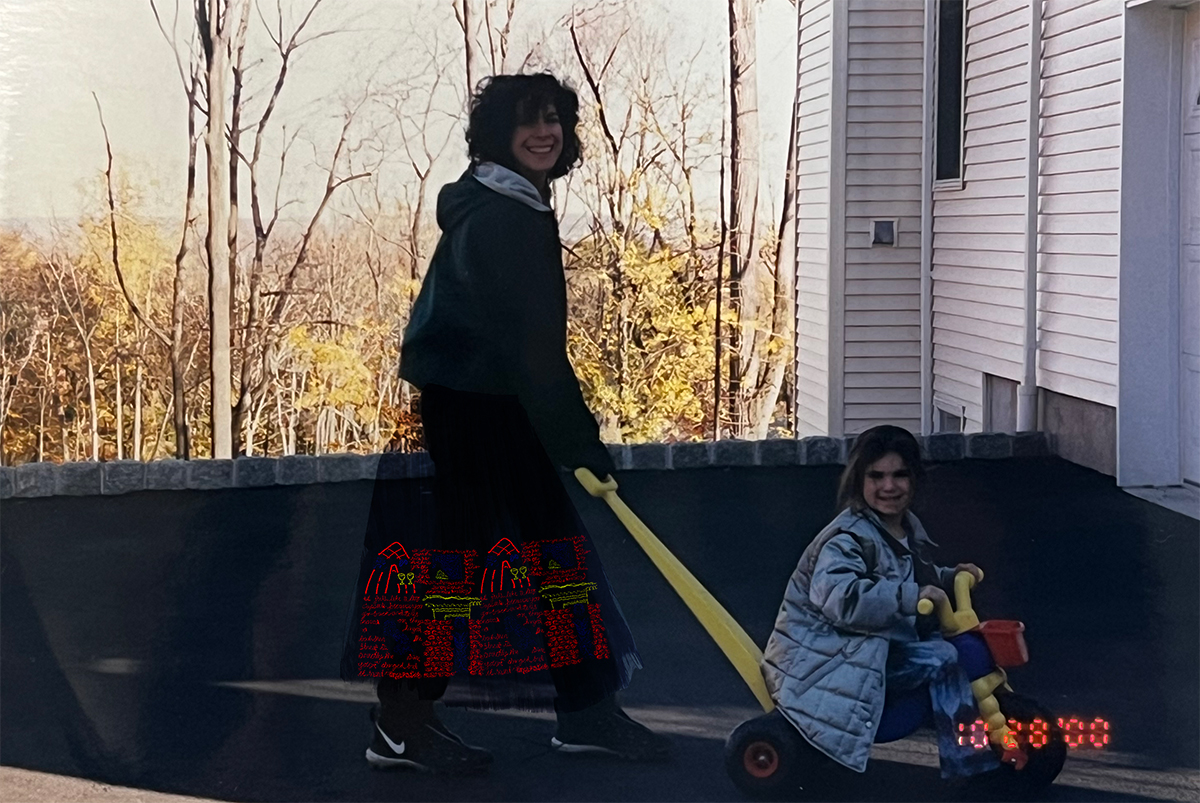
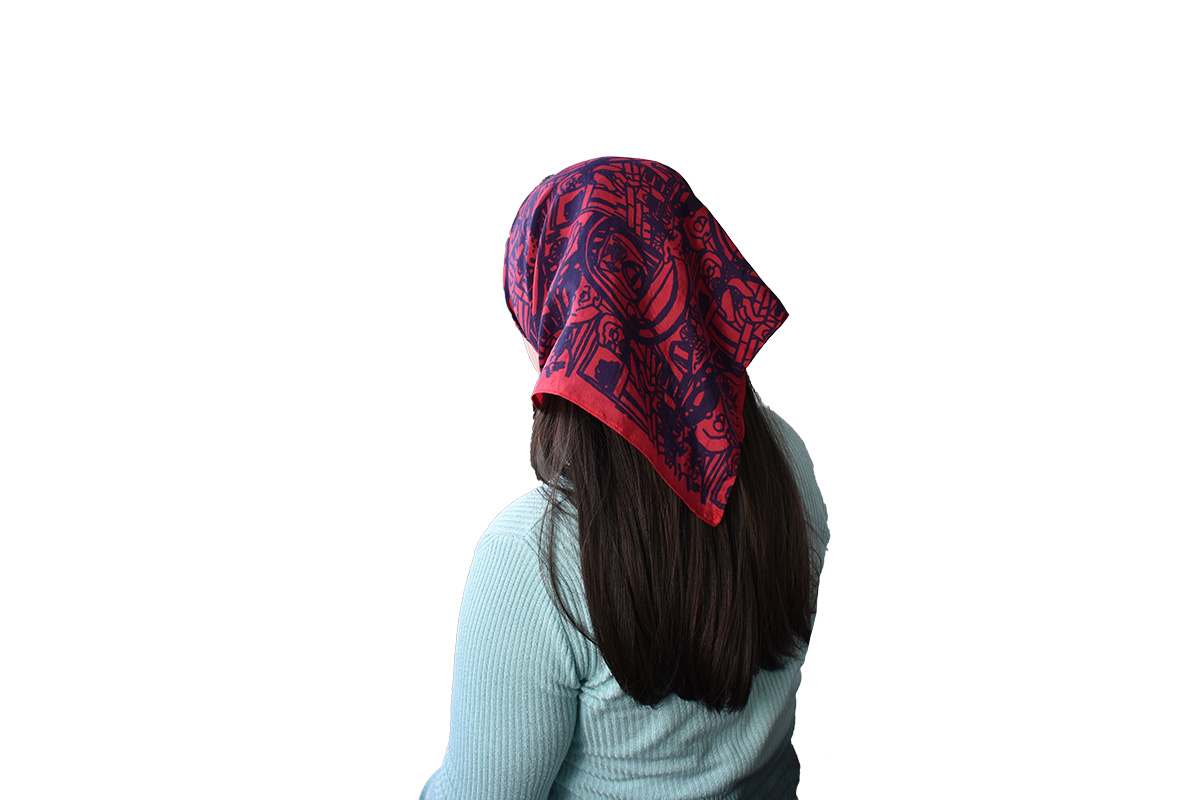
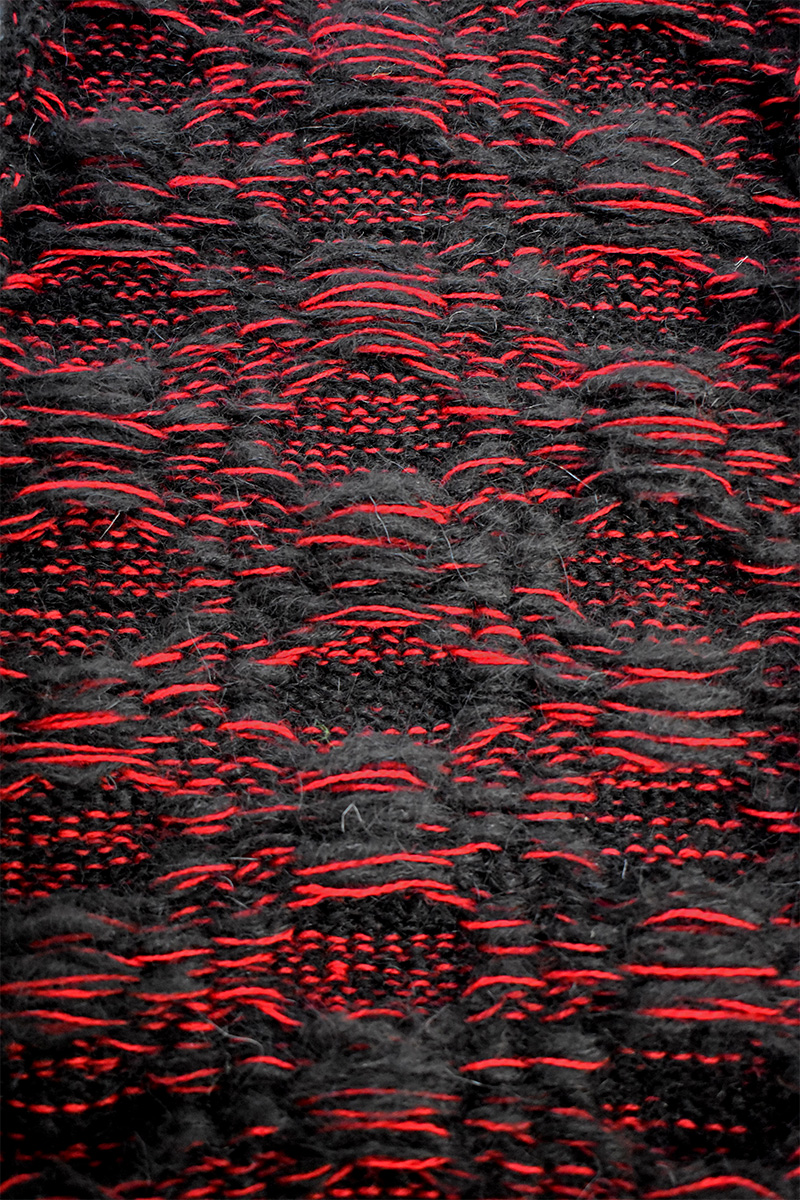
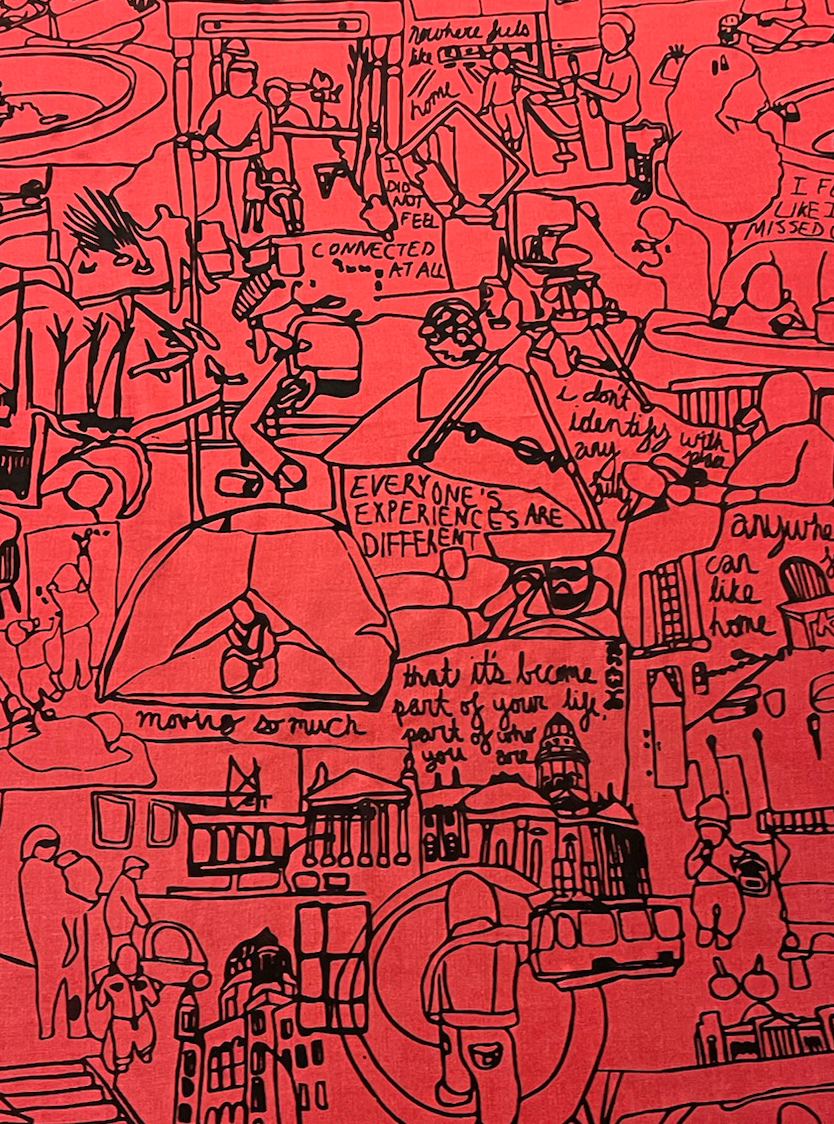
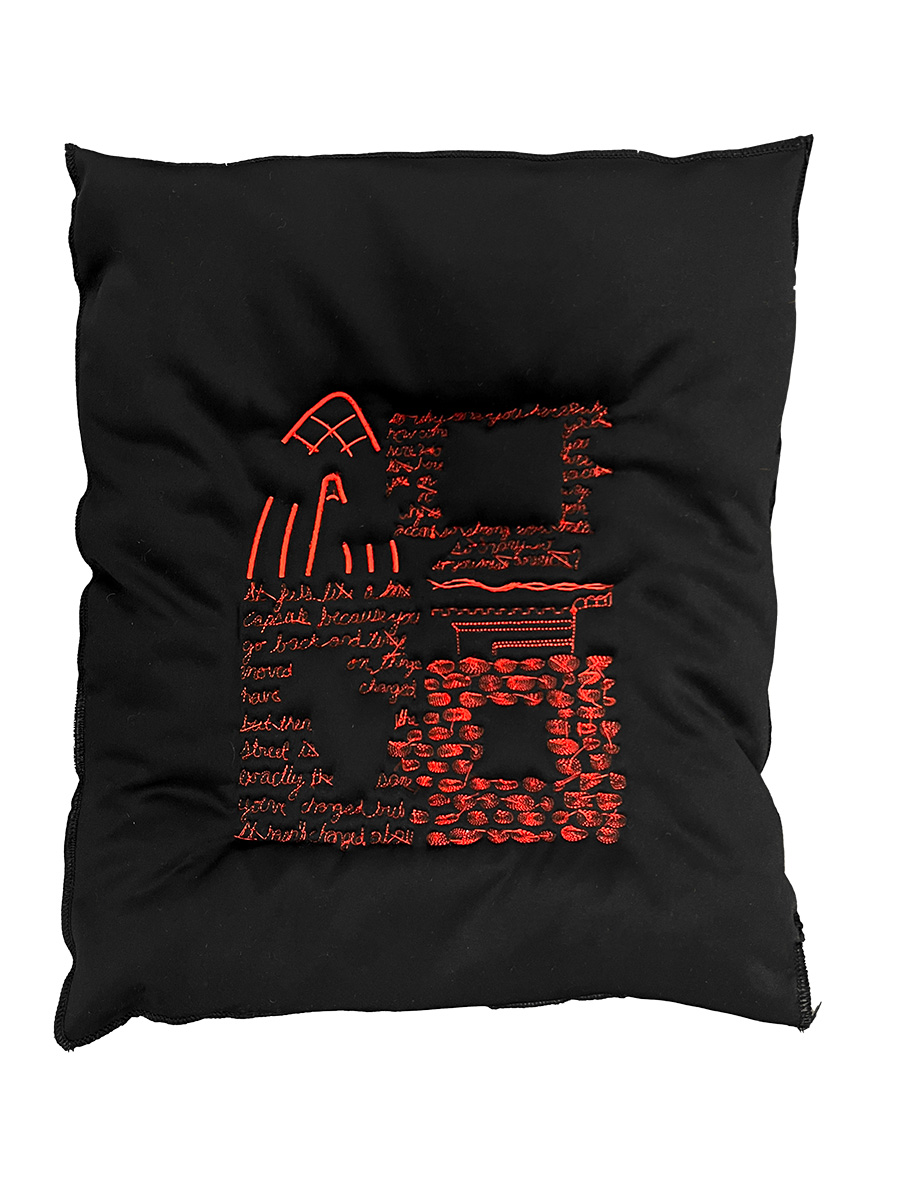
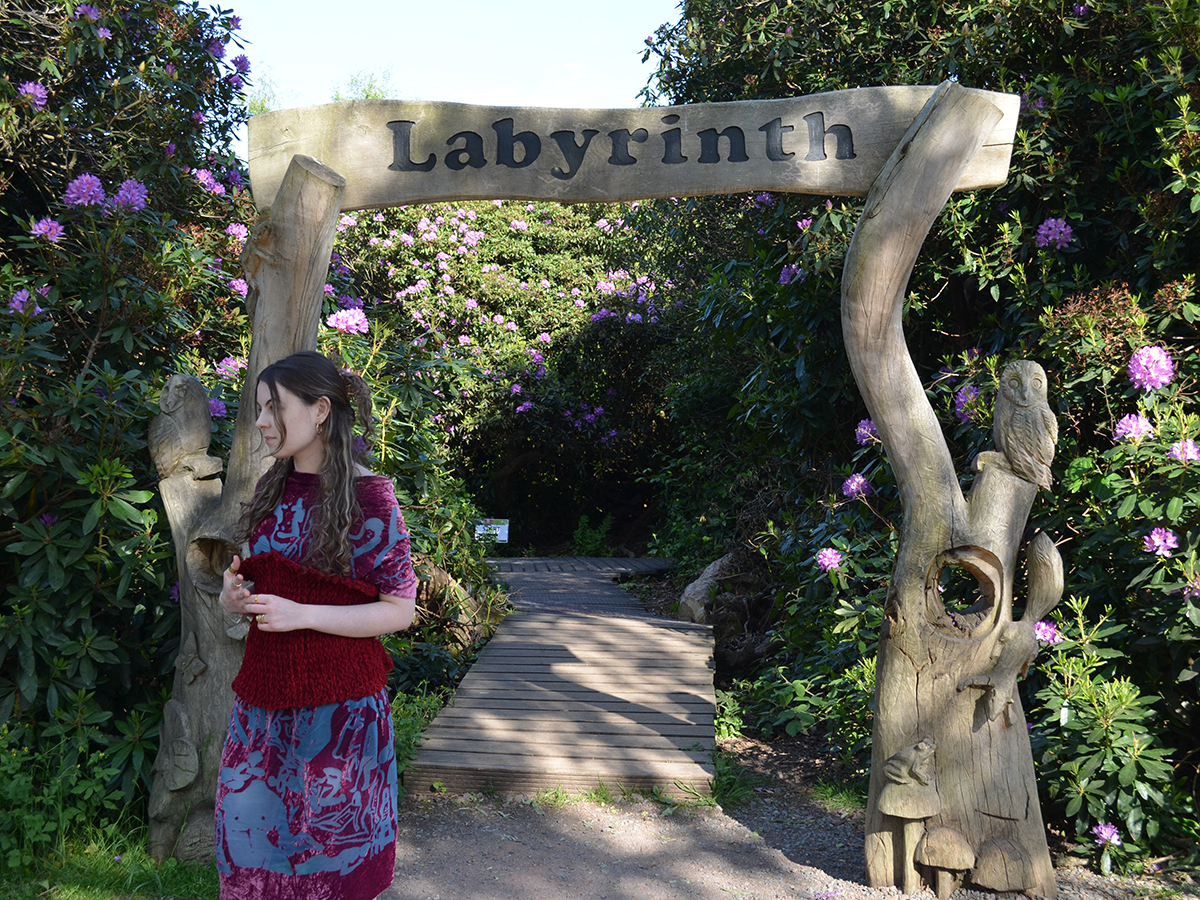
Unbelonging explores the feelings of Third Culture Kids (TCKs) and how ‘nowhere feels like home’. TCKs are people who have grown up in countries different to their nationality, becoming disjointed with their original culture, but not fully grasping the new culture. Unbelonging is a commentary on interpersonal perception while traveling and draws on my experiences as a TCK. Unbelonging shows that connection is personal and can still exist between TCKs and their homes, whether they ‘belong’ or not. The collection is intended as a capsule wardrobe for TCKs or those who travel frequently.