I am a textile designer and artist, with an enthusiasm for sustainable fibres, environmental art and adaptable materials. My work considers future scenarios such as the climate crisis and visualises how changes can be made through the use of textiles.
Flooded Rutland: A Woven Warning
River & Origins
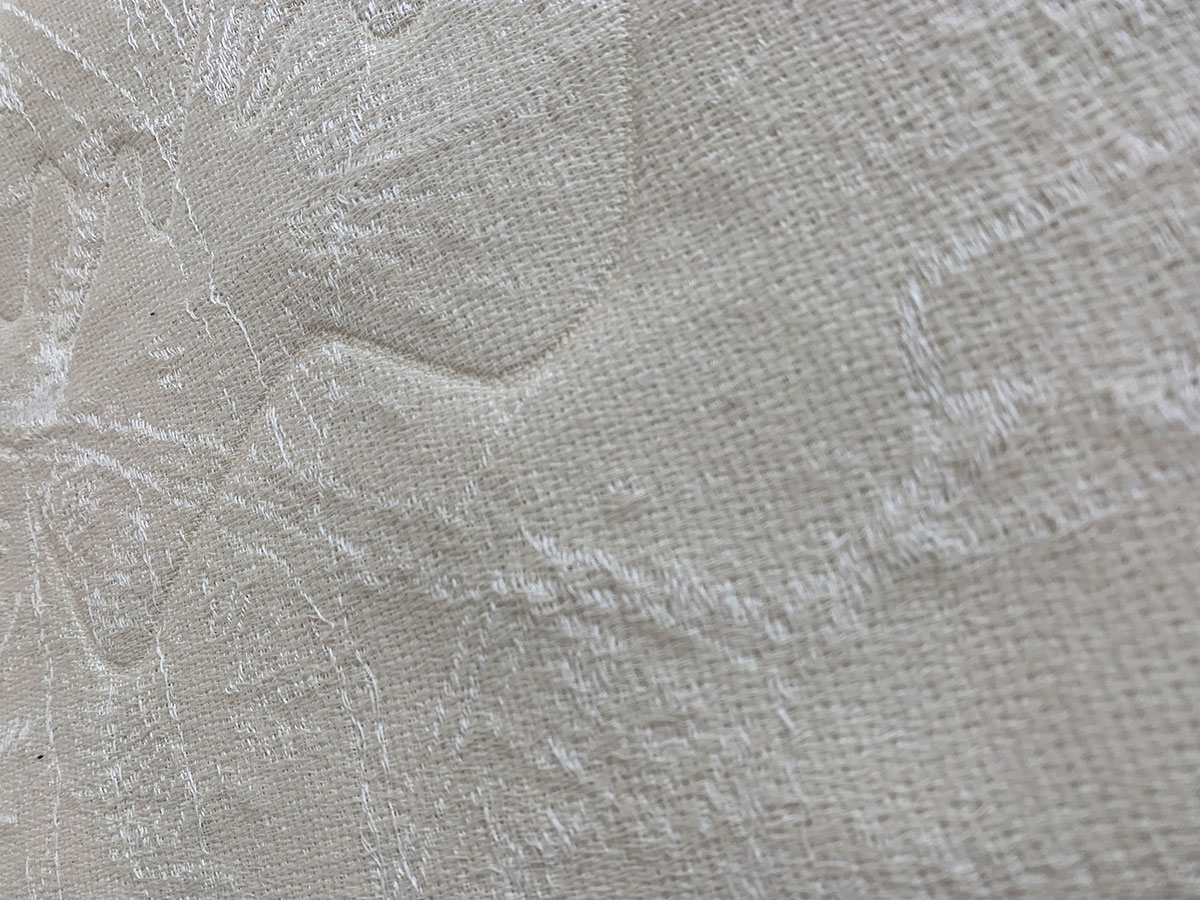
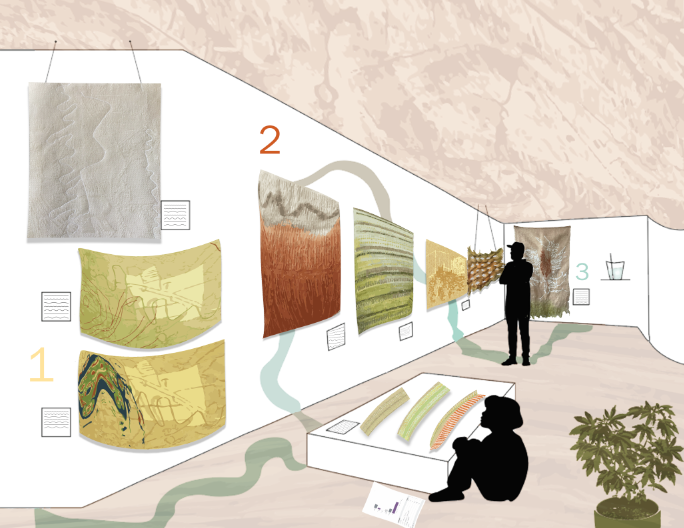
My project highlights the local implications of climate change related flooding in my home county of Rutland, focusing both on educating the public about the damage and disruption, and providing possible solutions through data abstractions and impactful imagery in textile form. I use a range of techniques from jacquard design and screen printing, to dyeing and hand weaving. My work is divided into sections: section one depicting the context and a looming threat; section two showing the impacts on the landscape and the residents; and section three representing a reality in which excess flooding can be resolved. The above piece, River & Origins illustrates a jacquard map contextualising the landscape that has been shaped by changing water basins for decades.
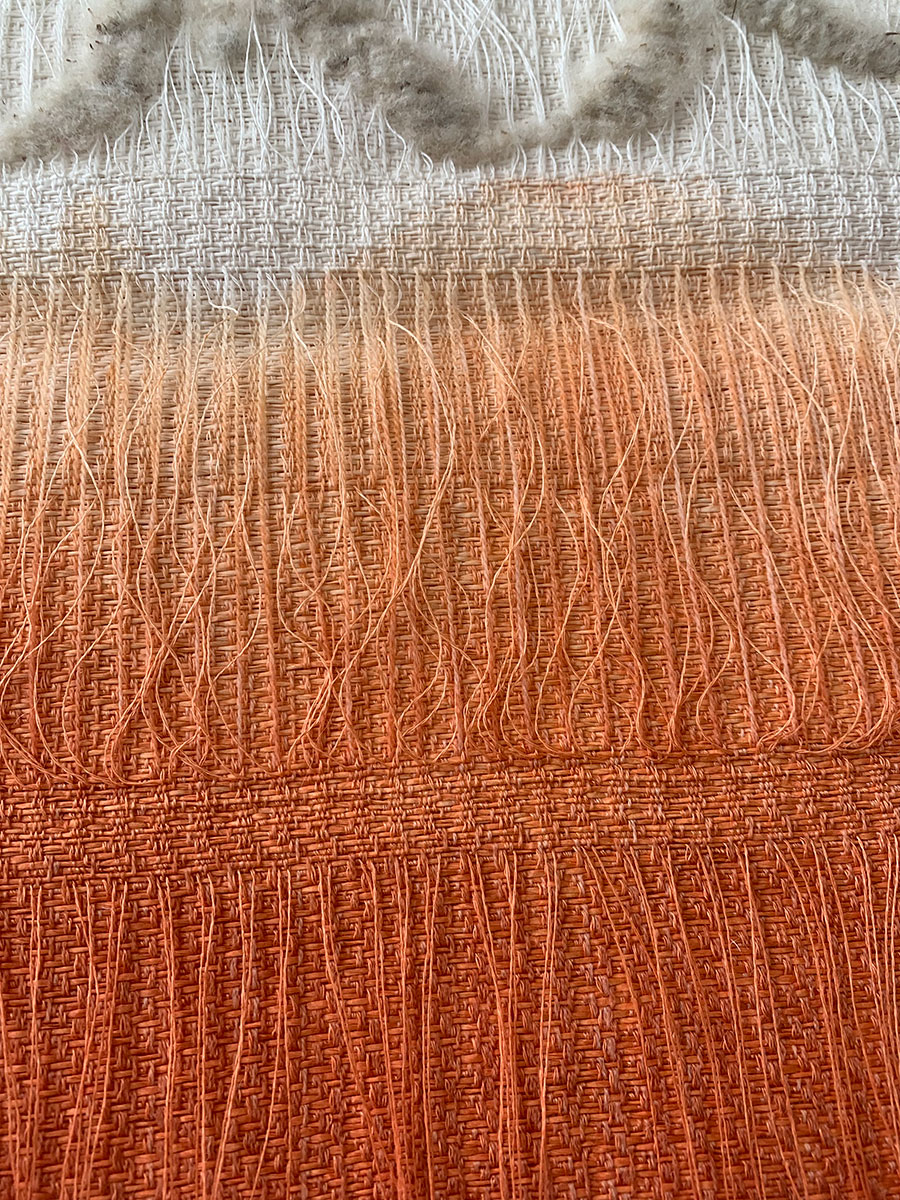
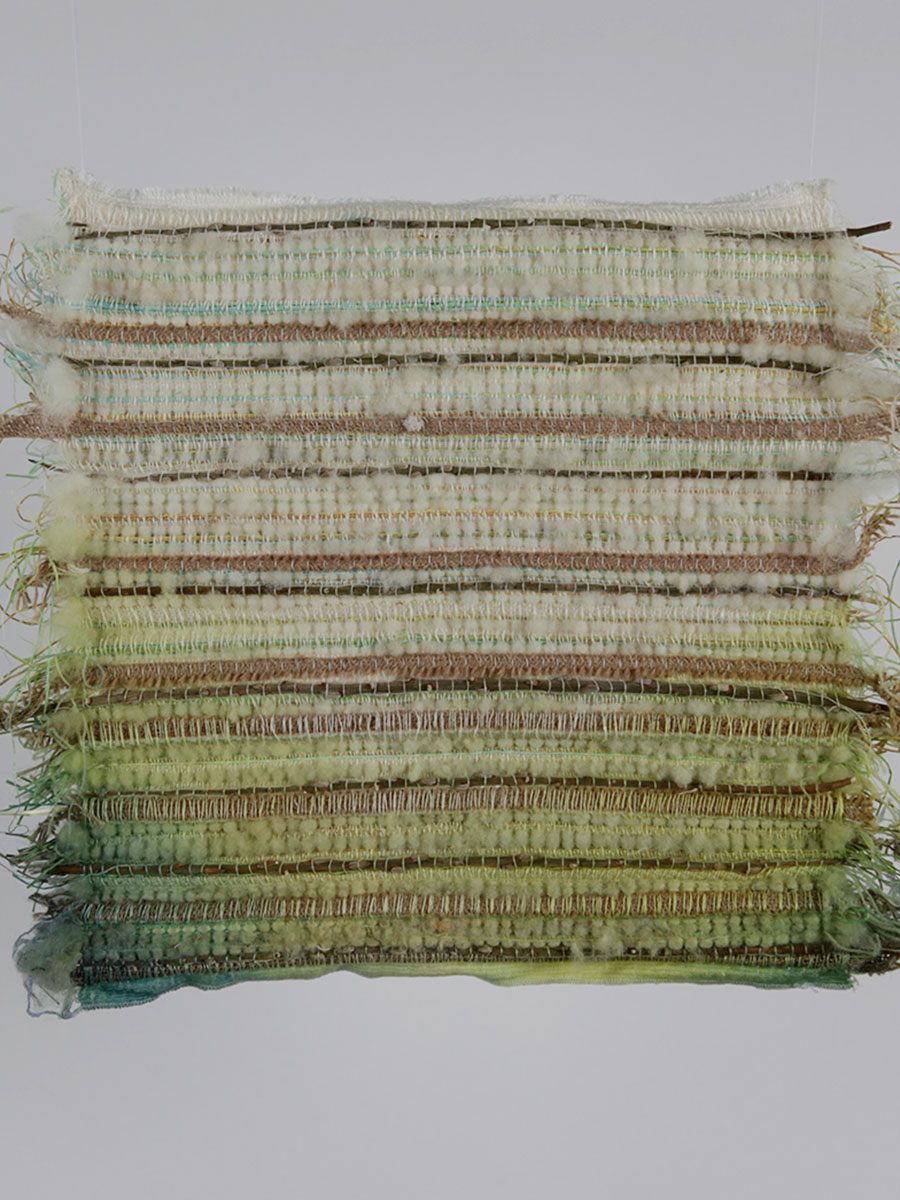
Dip-dyed woven piece, Rising Caution, translates rainfall data into weave structures to create a graph-like background. The piece is comprised of linen and wool warps, and hemp paper yarn weft, as well as an in-lay wool fleece representing the maximum rainfall level ever recorded in Britain. Rising Caution visualises the harsh reality as the threat of excess water moves ever closer to the point of no return.
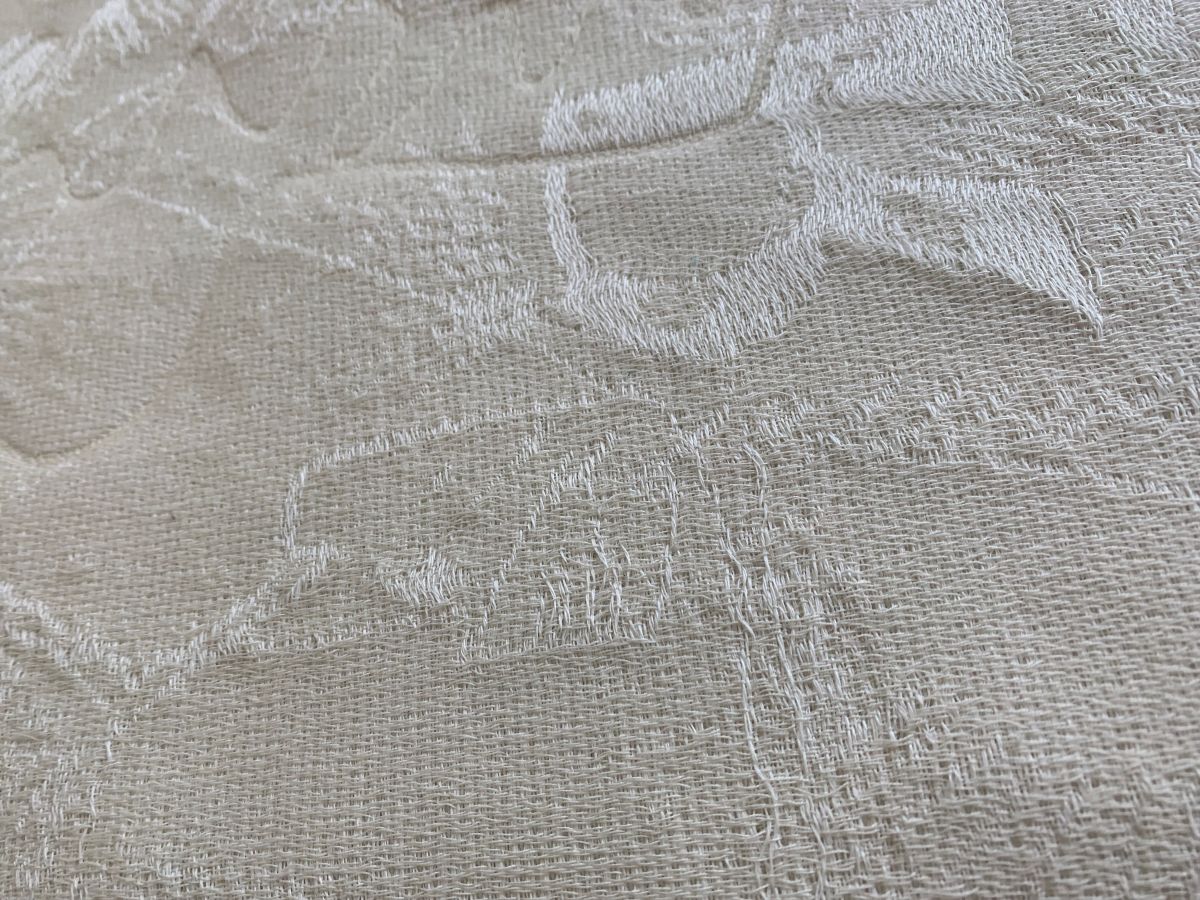
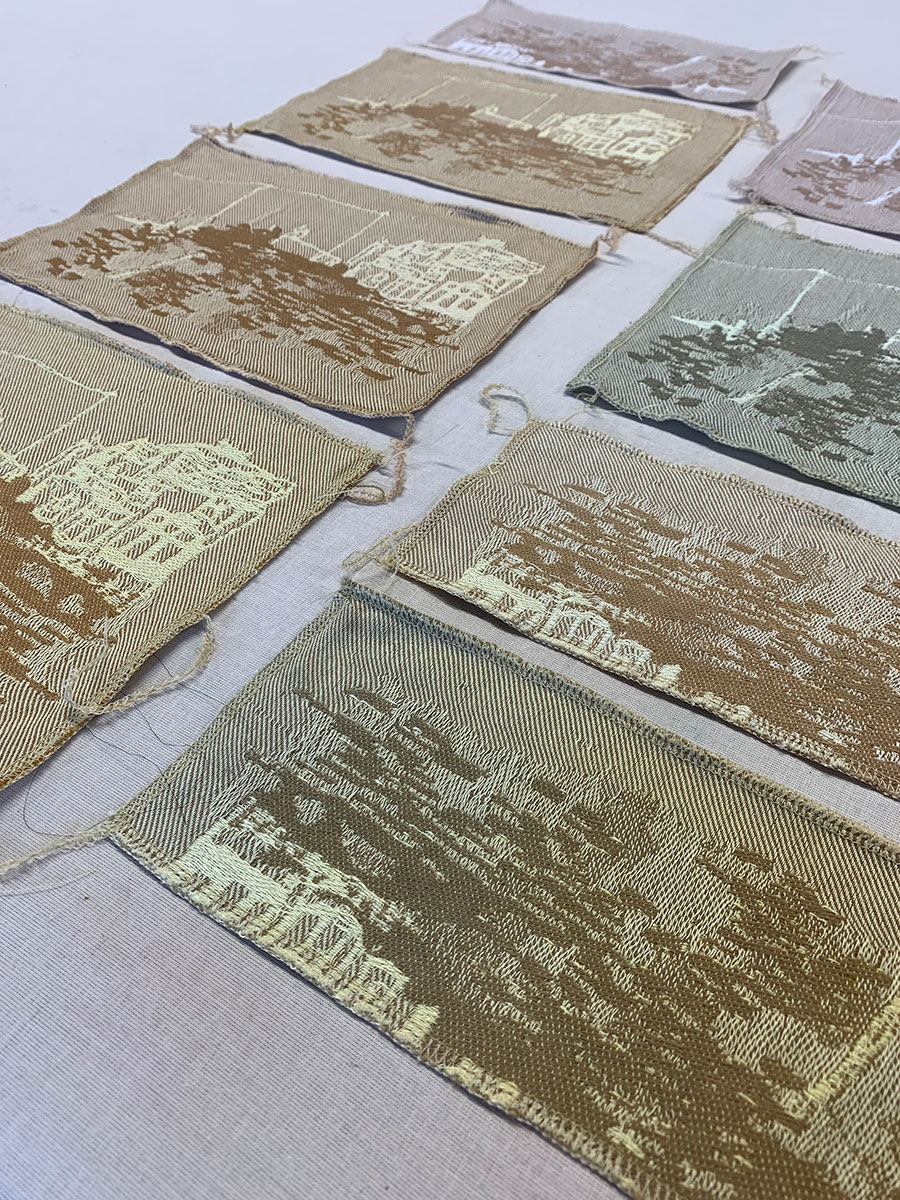
Dyed jacquard experiments for my design, Rutland-on-Sea, depicting infrastructure damage, and the possibility that with the right intervention, this could be reduced to a distant memory.
Concept & Materials
The selection of textile fibres is crucial to this project, as local materials and land use can be proven to be beneficial at reducing flooding. Local wool farming could help preserve soil from erosion, reducing waterlogging and run-off. Similarly, plants such as hemp have been proven to assist with flood protection due to their large roots, as well as the potential to be used in geotextiles as a filtration device.
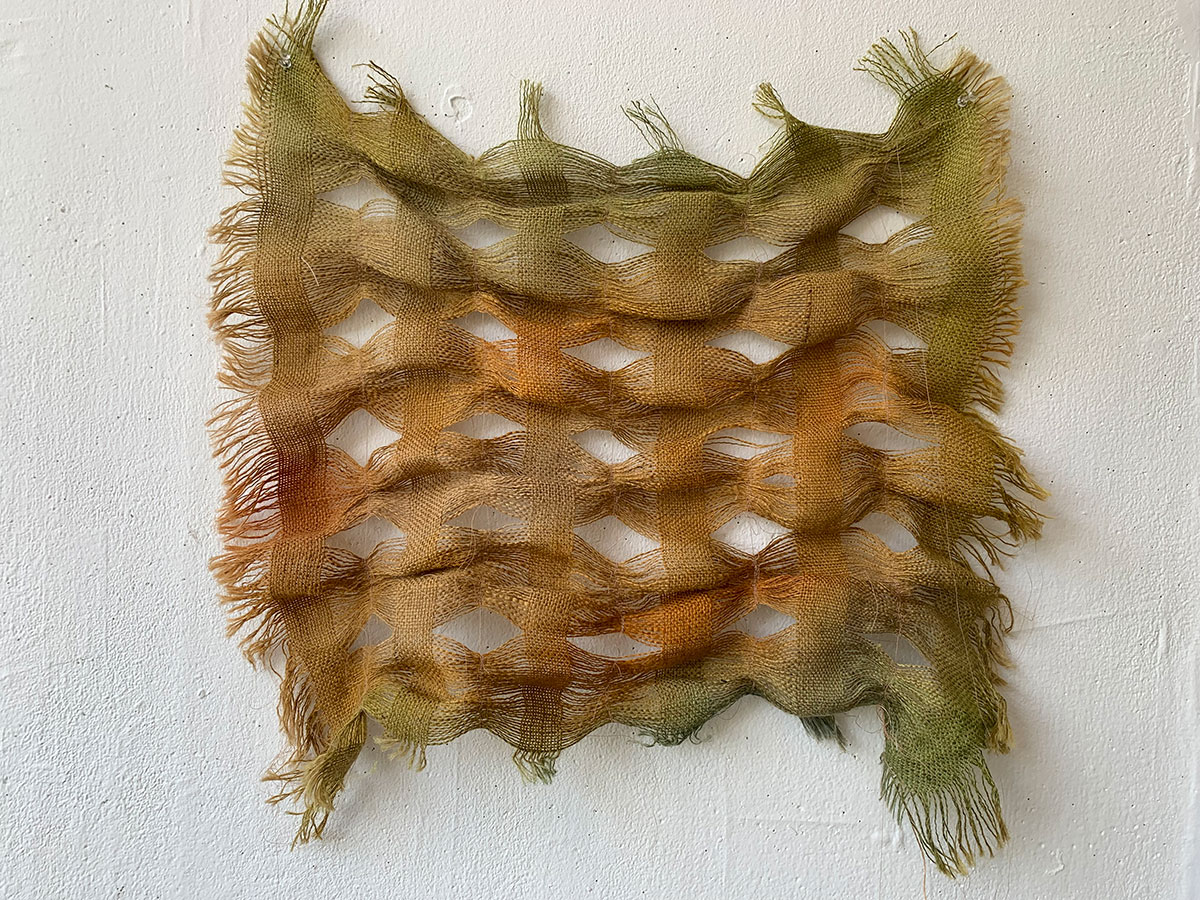
Unleashed Debris is a dip-dyed woven piece comprised of hessian strips, hemp paper yarn, wool fleece, willow and straw. This piece symbolises how the natural formation of the land can be easily disrupted and damaged by debris clogging waterways.
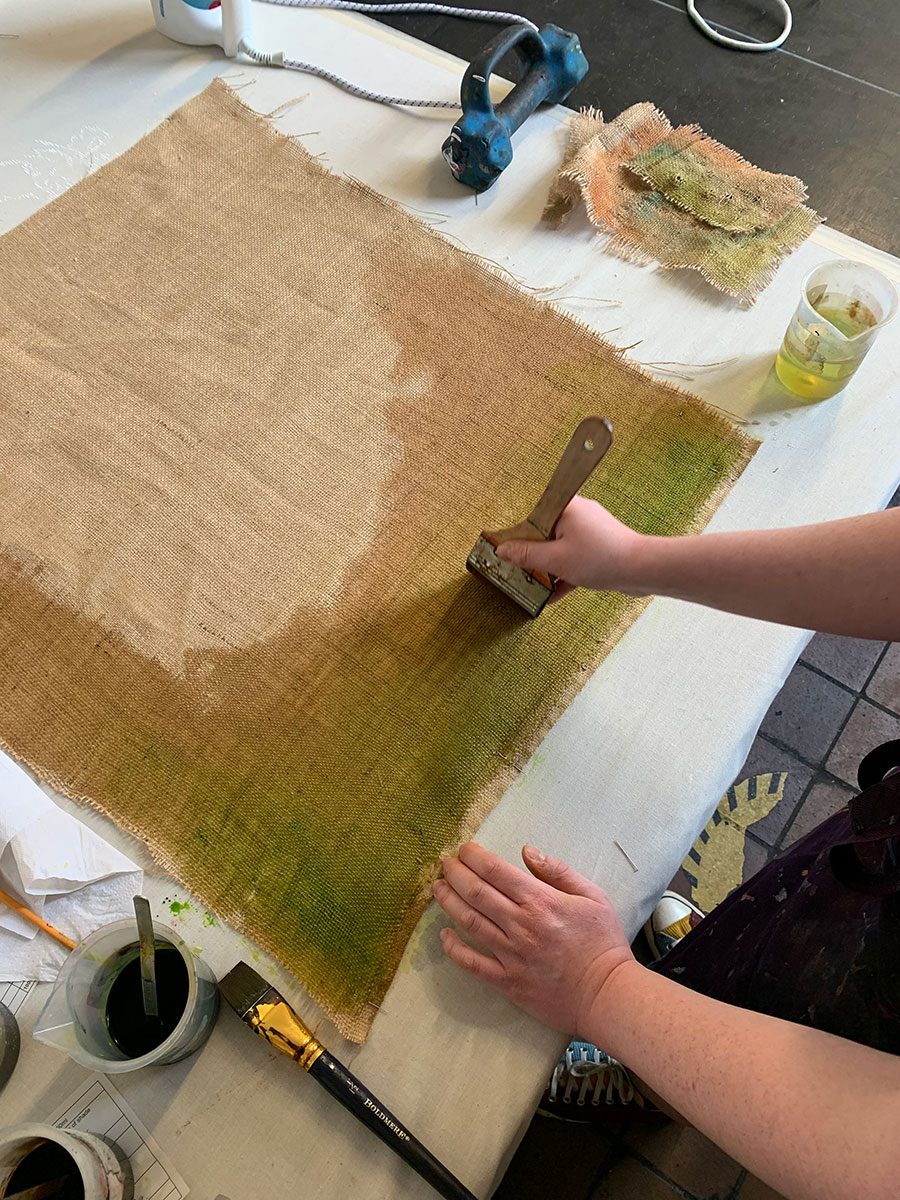
Hand-painted Procion dye onto hessian to later resemble rusted and eroded flood defences.
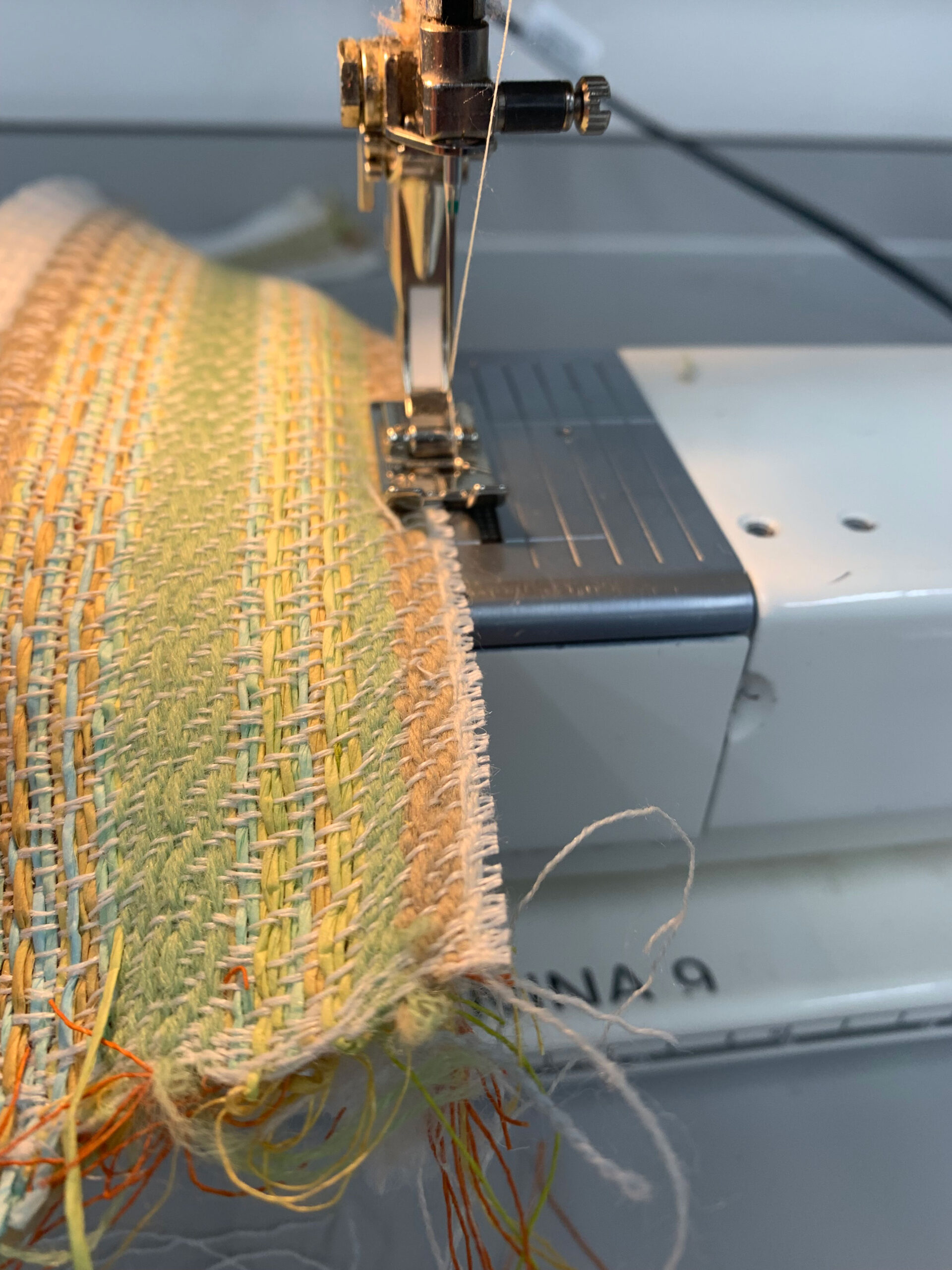
Stitching and finishing data questionnaire weave samples: when the top cloth is cut, the bottom layer reveals colour-coded data reflecting the impacts of flooding on Rutland residents.
Gabion reflects the shape of flood defences, as well as being comprised of hessian which is often used in sandbags.
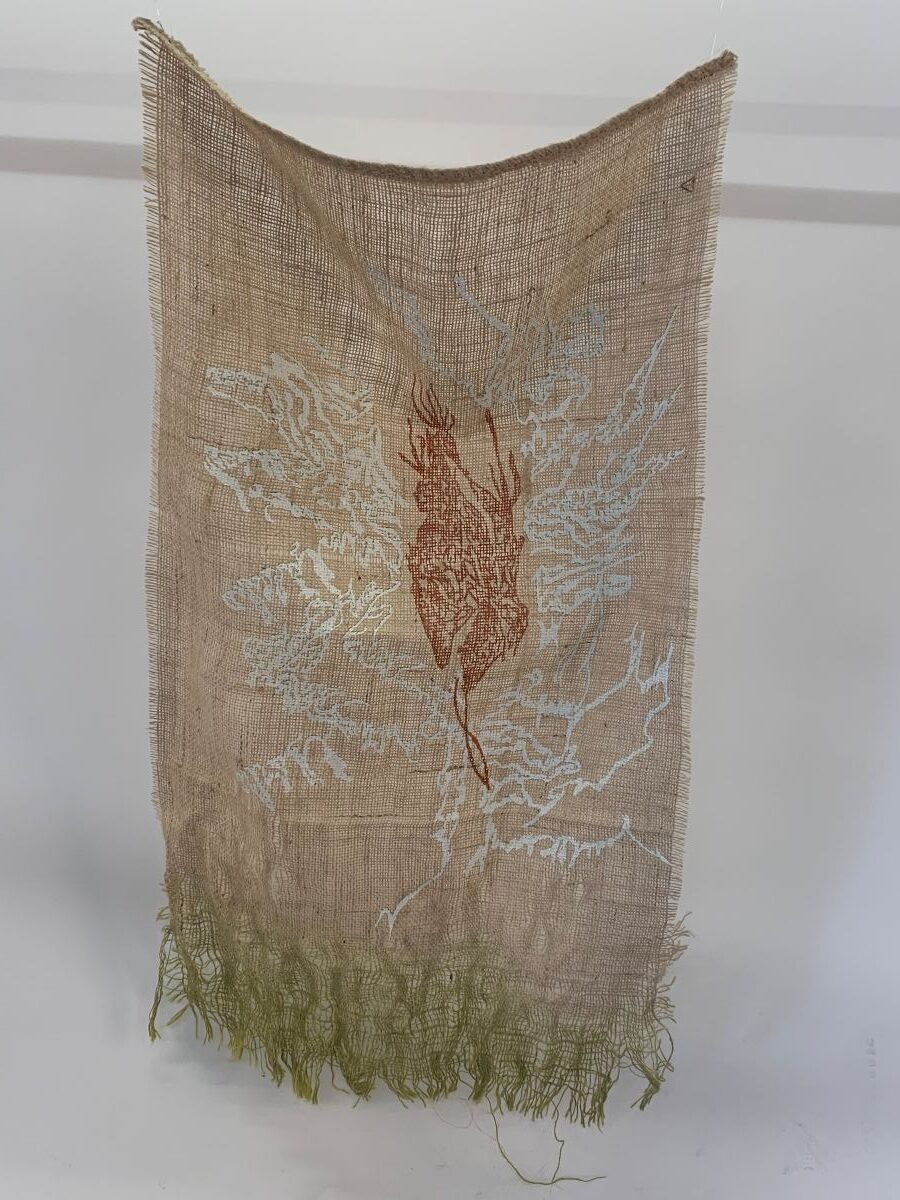
Colour changing “roots” created from screen printing hydrochromic (water activated) ink onto hessian. When water is applied to the white sections, the ink disappears. revealing the colour from pigment underneath. This symbolises the ability of interconnected root systems to absorb huge quantities of water and still flourish. The connectivity also references the strength amassed from working together as a community.
Growing Connections: Hydrochromic ink and pigment printed onto hessian and dip-dyed with direct dye.
Visualisation of my collection exhibited in the entrance to a community centre, where county residents can reflect on information and be encouraged to take immediate action.