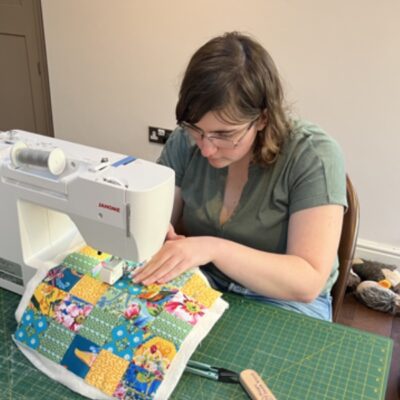
Estella Montagu


Zero waist and keepsake designer

I have designed community-based craft kits for creating quilts and teddy bears using repurposed fabrics to help reduce textile waste and revive lost sewing skills. The kits cater to beginner and intermediate levels, promoting sustainability and skill-building.
The sessions will also benefit participants mental health, tackling loneliness and stress by encouraging group participation, offering social support through shared creative activity. Participants are invited to bring personal or donated fabrics, making the experience meaningful and inclusive. This session merges environmental, emotional, and social goals into a single educational and creative activity.

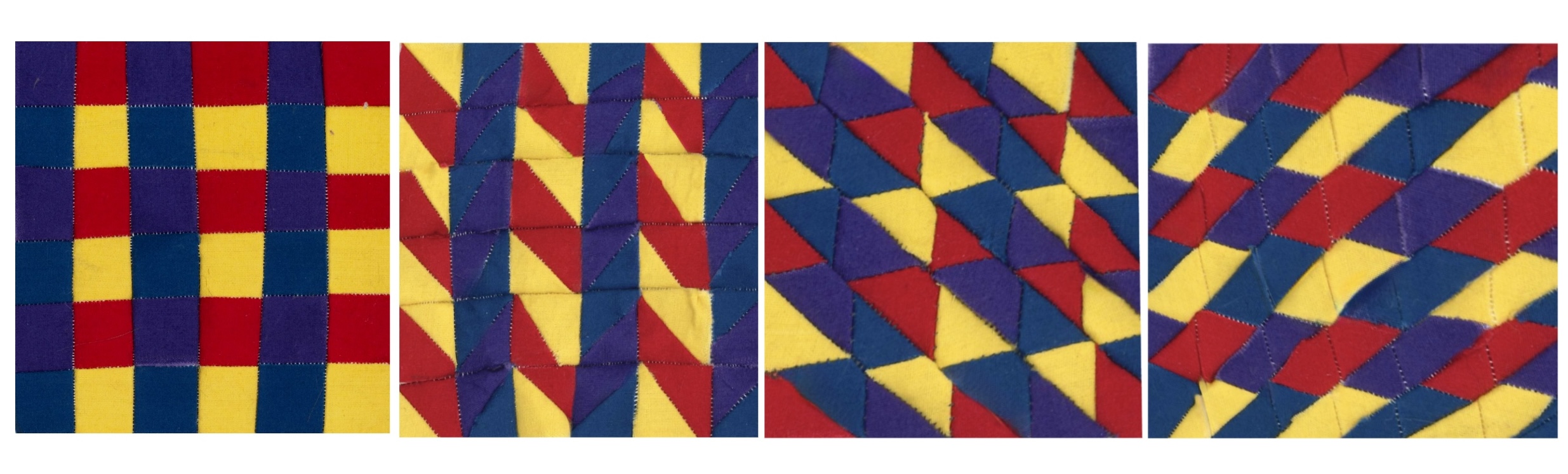
The kits are designed to be accessible for beginners while still offering patterns that skilled crafters will find engaging. Drawing inspiration from 1960s–2000s nostalgia, they feature bold geometric patterns and vibrant colours characteristic of mid-century modern aesthetics. Using donated and scrap fabrics means the colour palette and materials will naturally vary.
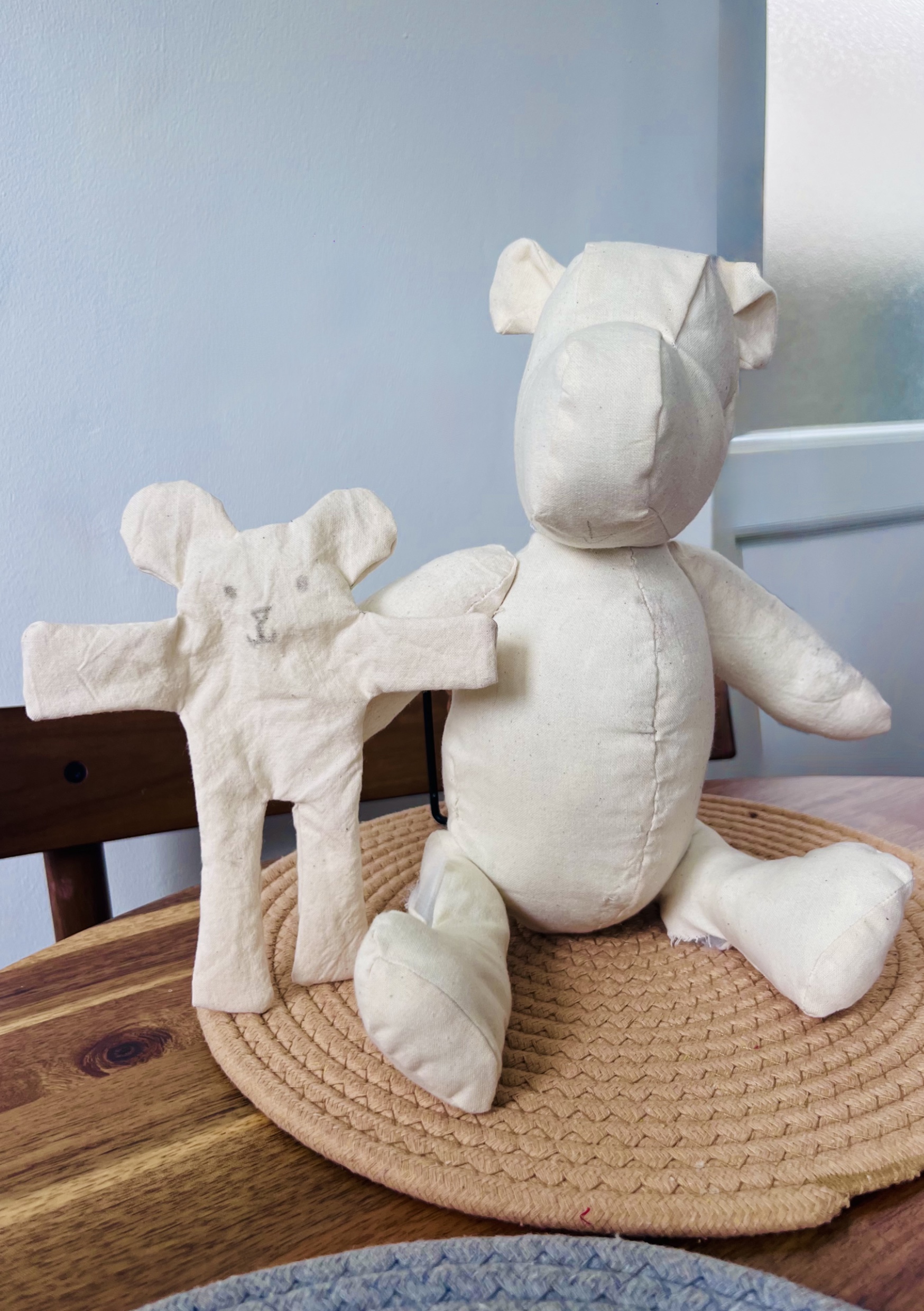
The quilted patterns above serve a dual purpose with the second craft kit, focused on making teddy bears serving as comfort items. These kits will be available in varying levels of difficulty, allowing beginners to start simply while providing a challenge for more experienced crafters. This tiered approach encourages skill progression and fosters interaction between novices and skilled makers, promoting learning and connection through shared activity.
Sustainability
An average person throws away 1kg of textile waste annually, (Fashion waste facts and statistics, 2025) “In 2021, around 711,000 tonnes of used textiles were discarded in the household bin…11% was sent to landfill. ” (Textiles market situation report 2024, 2024). Scrap quilting can reduce this waste by giving stained, ripped, damaged discarded fabrics a meaningful way to preserve the memories within them and save them from joining the 350,000 tonnes that end up in landfill (Fashion waste facts and statistics, 2025).
Reviving Sewing
Sewing skills have declined in the UK, going from an integral part of education to a forgotten skill. A 2017 survey by the British Heart Foundation revealed that nearly six in ten (59%) people are unable to sew confidently or at all, with a third (33%) never having been taught. However, over half (55%) of Brits wish they could sew, and 60% are willing to learn this money-saving skill (British Heart Foundation, 2017). The kits aim to bridge this skills gap.
Combatting Loneliness and Stress
Group crafting activities offer a meaningful way to alleviate loneliness and stress. Providing a group focus gives a shared interest and sparks conversations. Participating in a creative activity for 45 minutes can significantly reduce stress (Kaimal, G, 2016). Group crafts build on this by fostering a sense of community and helping individuals feel less isolated and more supported. Crafts Council found that “55% of active craft club leaders reported that their members would otherwise be socially isolated [without the club]. 47% said that members would not otherwise have a chance to engage in the arts.” (Craft Club Annual Report 2020, 2020).
Soft toys, such as teddy bears, play a significant role in alleviating loneliness by providing emotional comfort and a sense of companionship. Hugging or holding a soft toy can trigger the release of oxytocin, a hormone associated with bonding and stress reduction, (The Character Toy Store, 2025) resulting in relaxation and emotional well-being. In group crafting settings, creating and sharing these soft toys can help foster social connections.
Implementation
This will be a free activity hosted in community centres, which are seen as community focal points and venues that host group activities. Run by a local art organisation, participants will be encouraged to bring personal textiles, such as old clothing or household fabric to create sentimental items while reducing waste and material costs. Donations from the wider community will support those lacking materials, ensuring inclusivity.
When accounting for crafting, questions, and social interaction, the craft kit sessions will take approximately eight hours in total and will be scheduled weekly to build consistent community engagement.