Hiya, I'm Dominic, a Human Focused Industrial Designer, hobbiest woodworker, historical reenactor and avid climber. My design aims to take peoples' experience with the world and broaden it, making the world easier to enjoy from all walks of life.
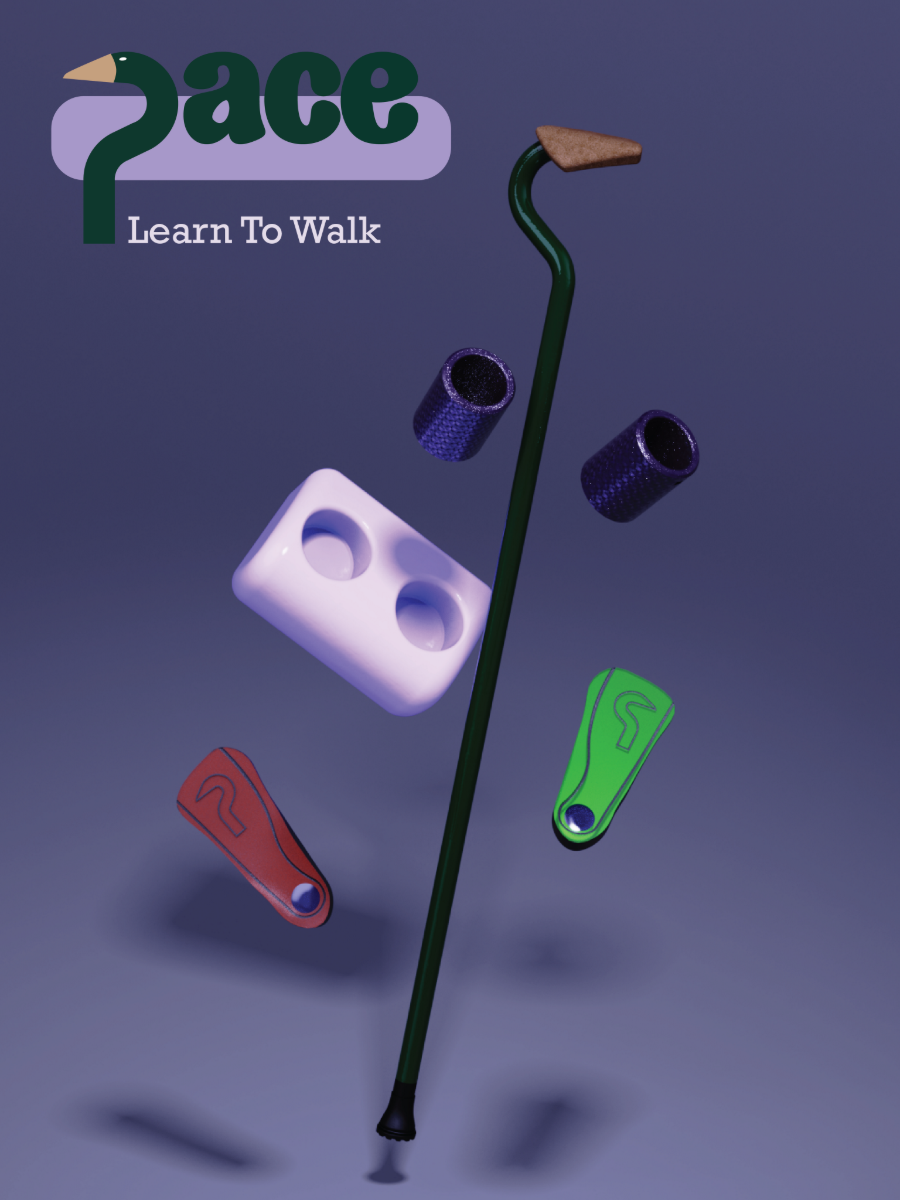
pace – learn to walk
Specialism: Human Factors
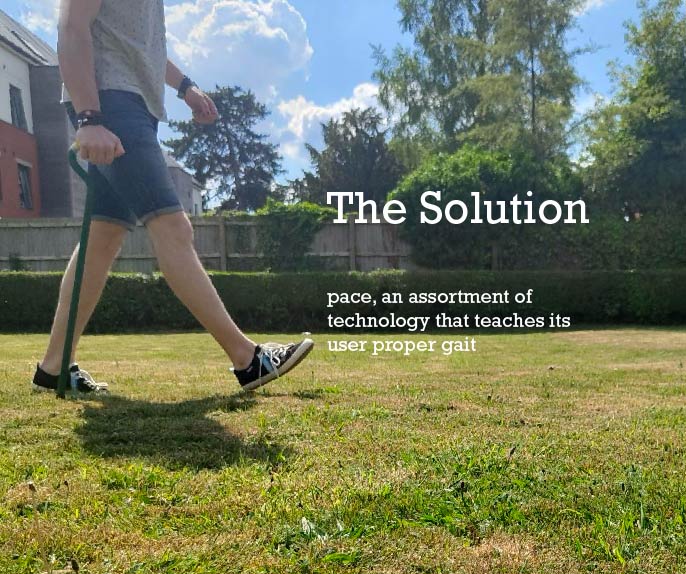
My design focused specifically on how the user would interact with pace, understanding the best fit would have to encoourage a neutral wrist position, less than 30 degrees out from parallel with the forearm, should coushion any impact wiht the ground, avoid putting pressure through the circulatory system and nervous system, provide a comfortable grip and support the user’s weight without significant deformation
A cork composite handle moulded around a solid epoxy cane, capable of holding up to 102kg comfortably
A two part ferrule tells the user when it touches the ground and how much weight is being put through it
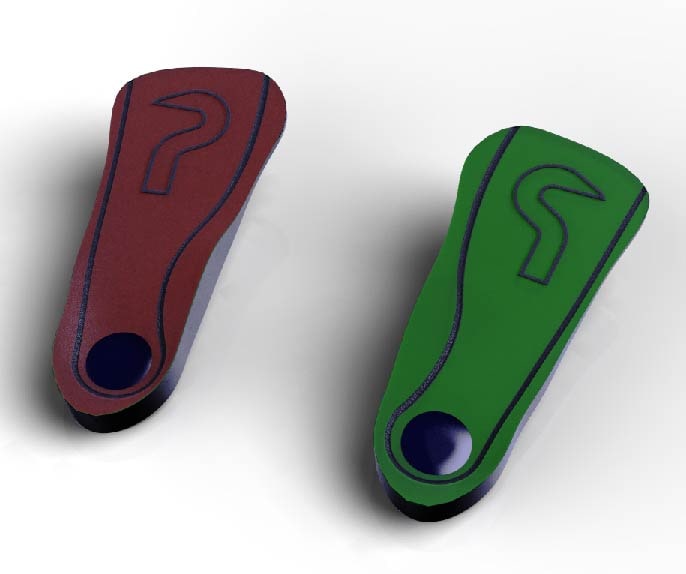
A set of insoles track when each foot touches the ground, and how much weight is put through the heel. This data is used in conjunction with the ferruel to determine your gait
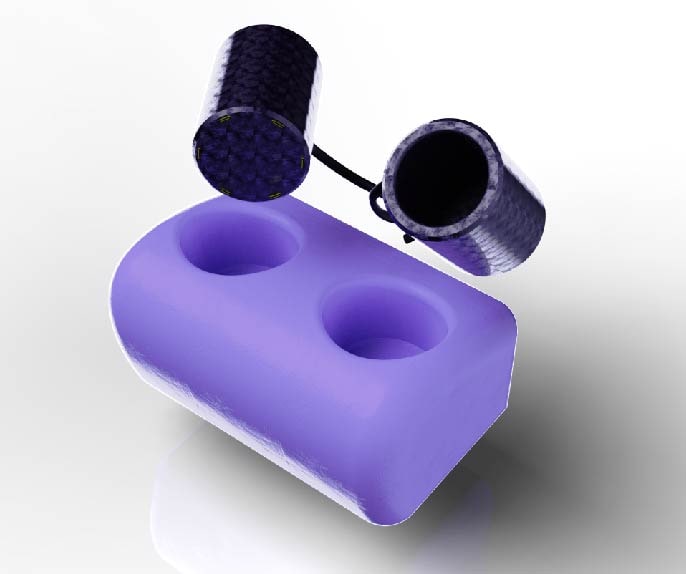
Charging pucks and a tidy space, easily fitting inside a shoe to connect to the ferruel and soles to charge them through QI induction coils
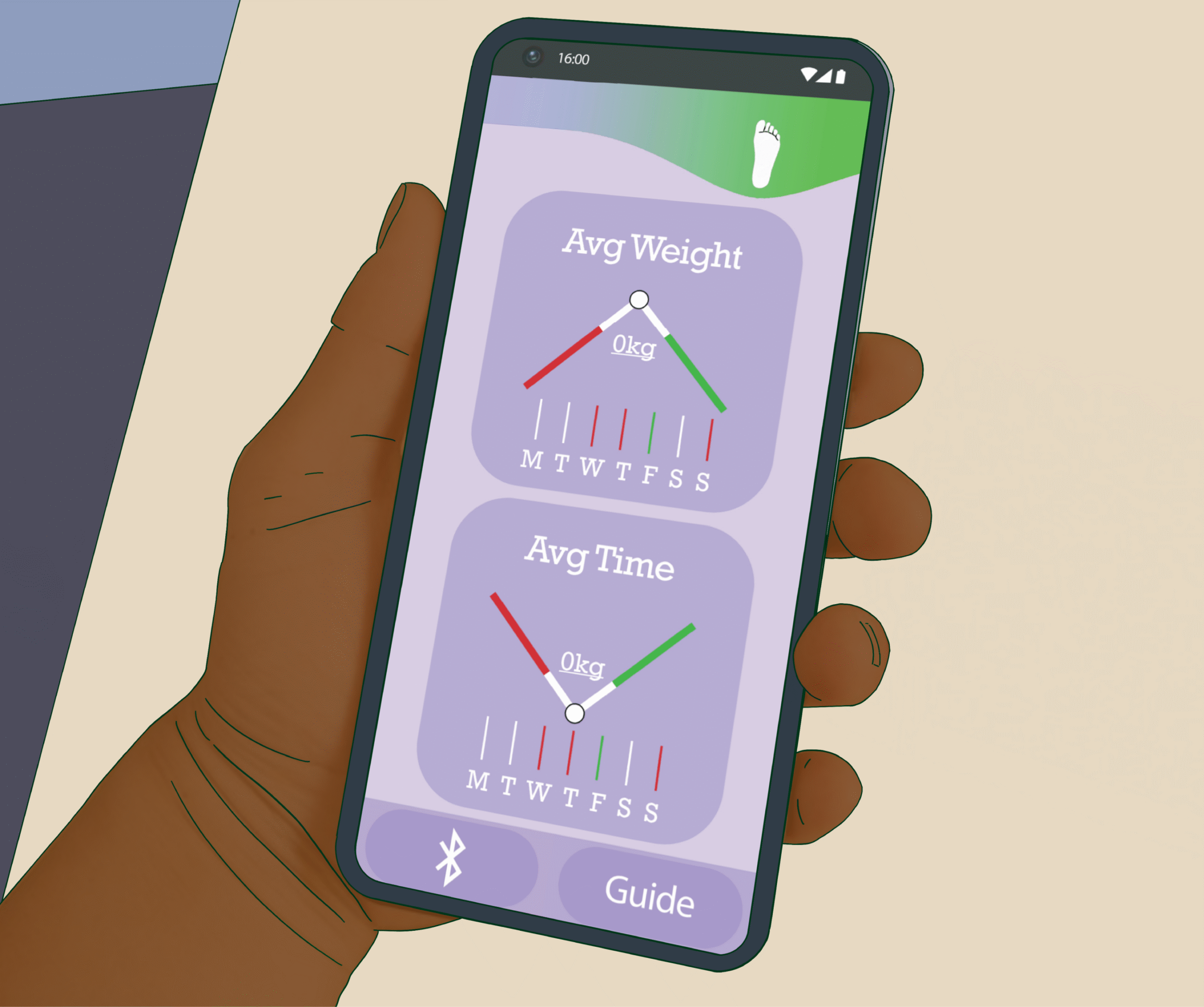
Everything is accessed through the app, where the data collected from the insoles and ferule is analysed and recorded as the time between heel and ferule floor contact, and how the users weight is distributed. When the distribution goes over a maximum time or weight difference the app will alert the user, and over the day it builds an average rating of where there gaid discrepancies are.
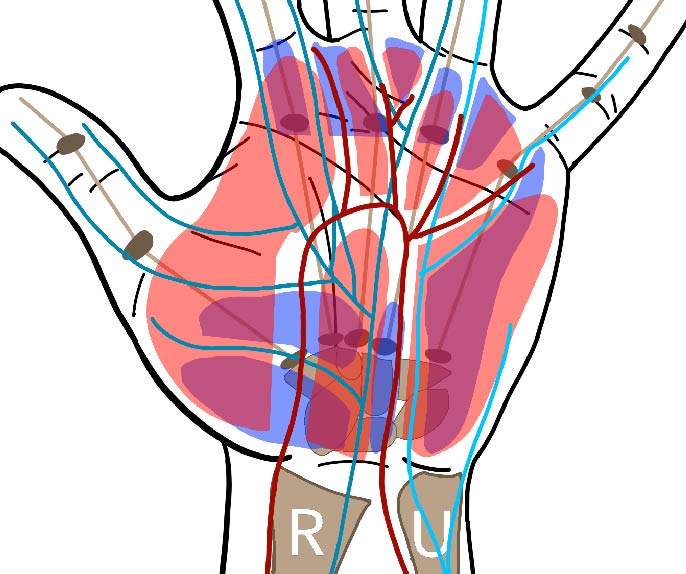
It is vital for the handle to encourage a grip that is comfortable for the user over an extended time. This means it needs to avoid putting weight over the nervous or circulatory system. “Safe” zones are where the red and blue overlap.
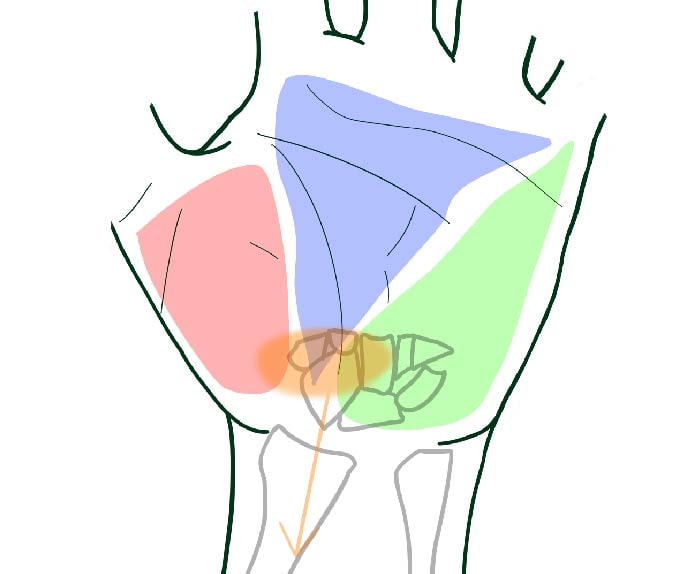
Weight is cushioned by the thumb prominance, where the orange oval sits on the carpal bones. This alows it to direct weigh throught he radial bone.
From there a quadralateral can be formed, based off of the palmar breadth and to a consisten tscale across different hands.
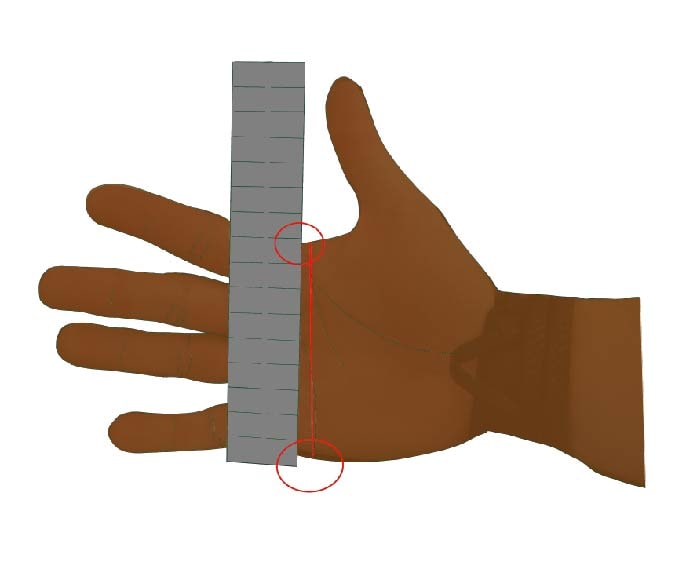
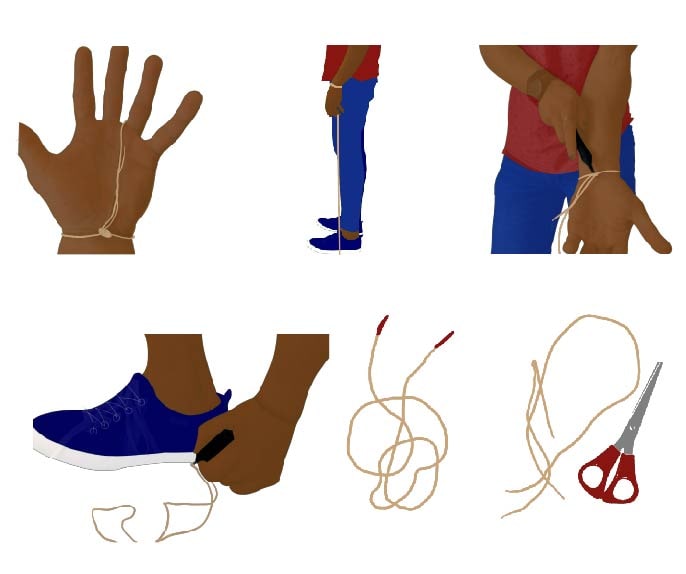
Measuring palmar breadth is as easy adn finding the distal palmar crease and measuring across with a rulerMeasure cane hight by tising a string around your wrist, sthepping on the other end so that the string is taught, and measuring the sidtance between the wrist and floor