Angharad Smith


Multi disciplinary artist creating protest art through the medium of stained glass as well as fabric. My work blends the traditional with the contemporary to promote and preserve the art of protest in Wales.

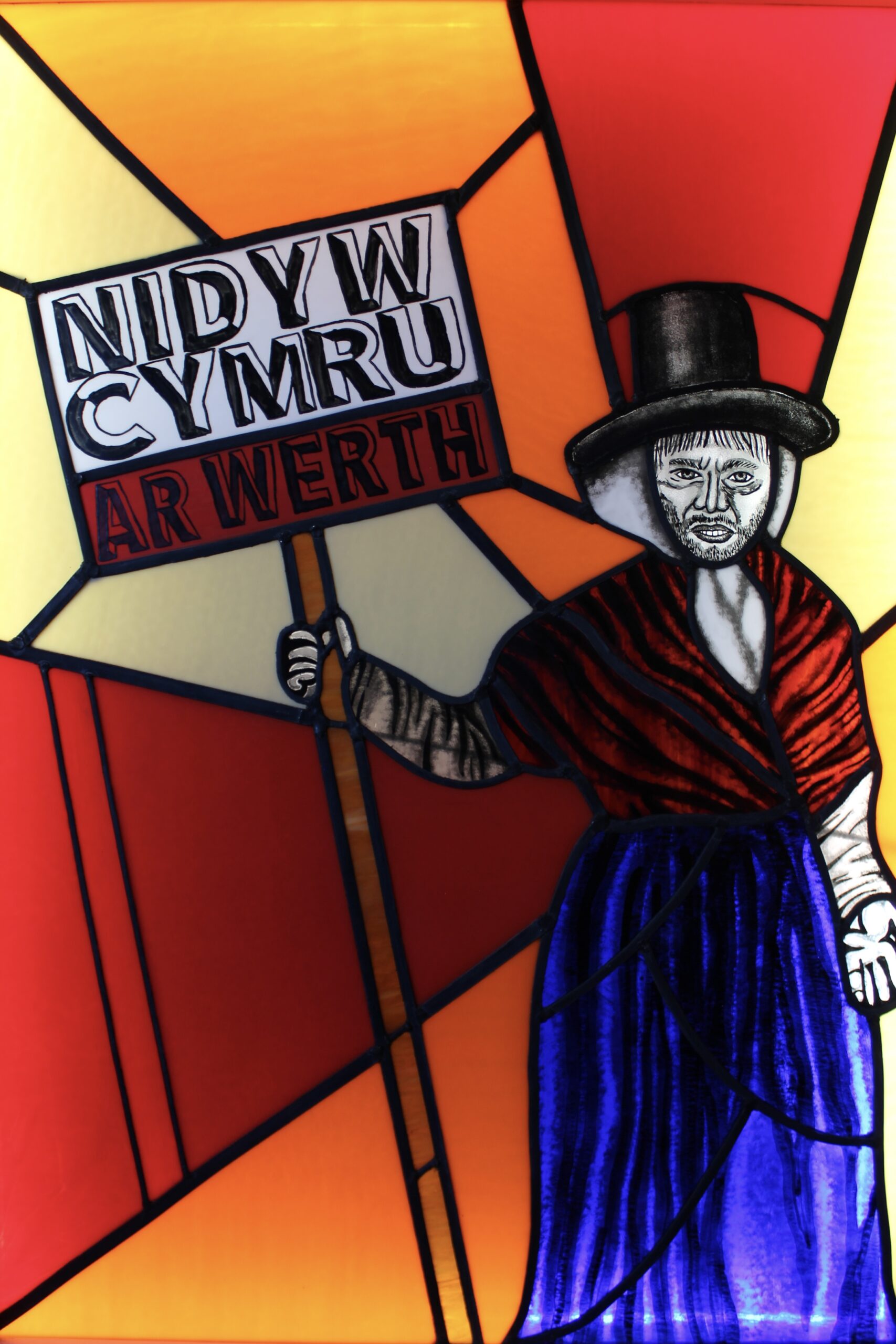
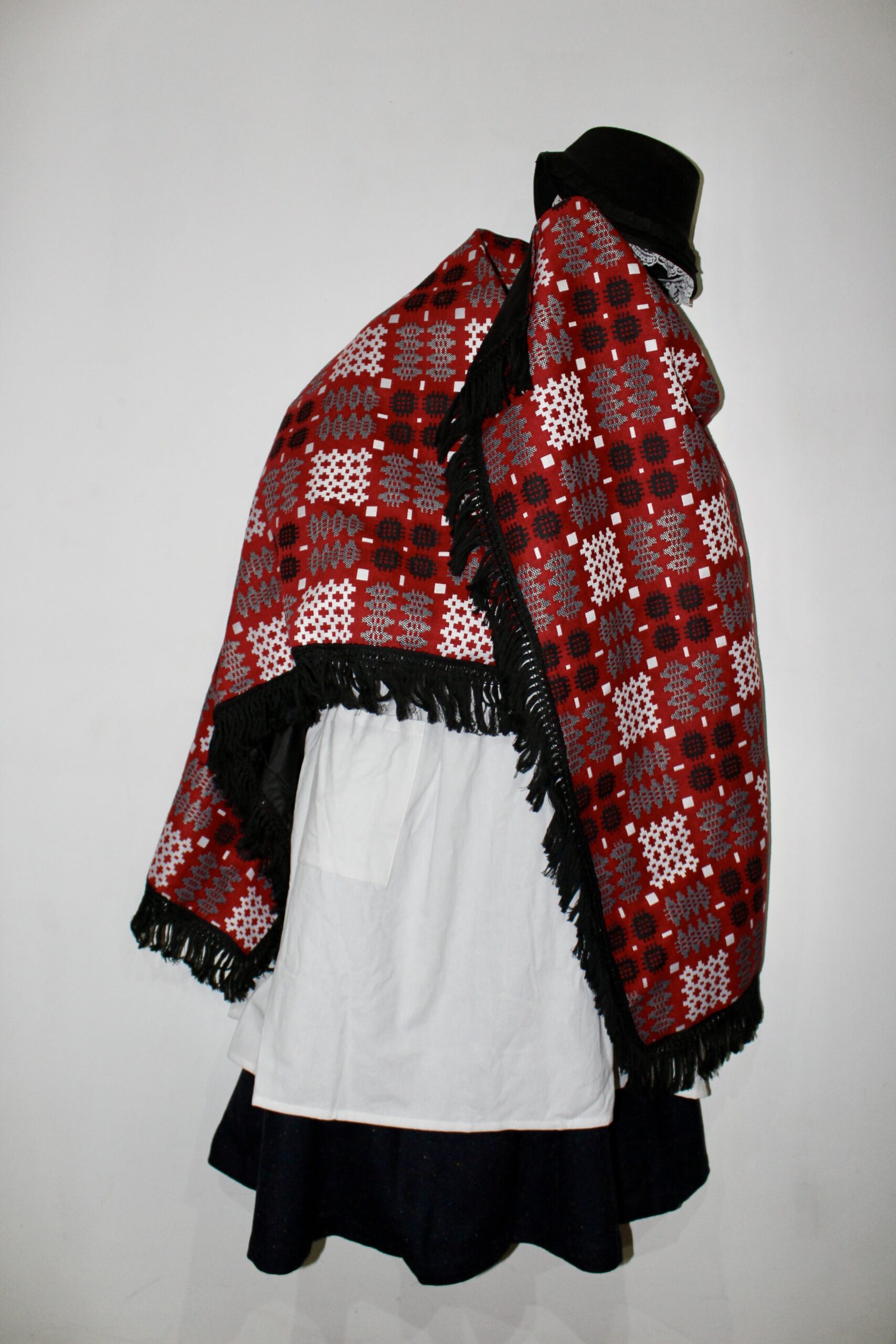
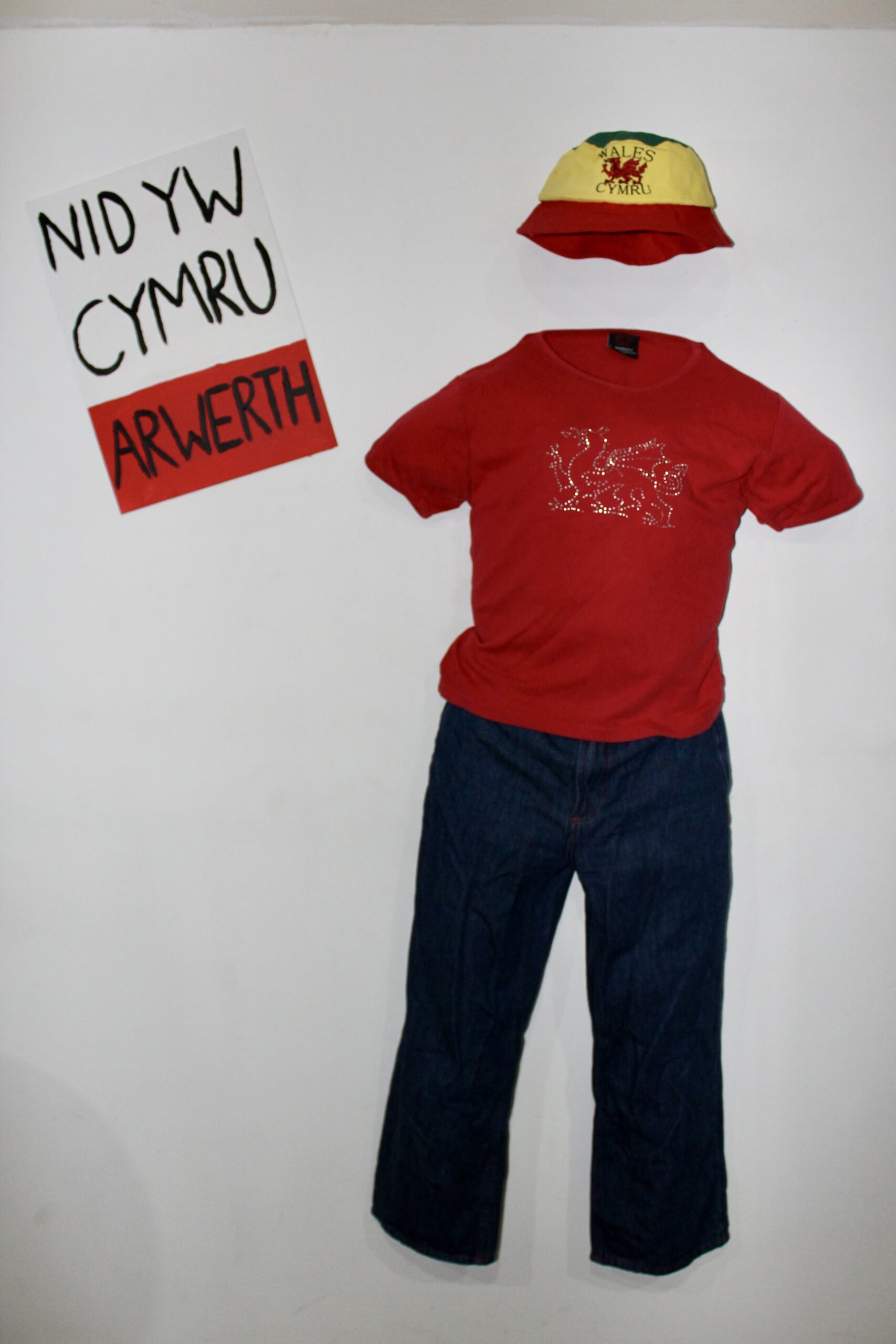
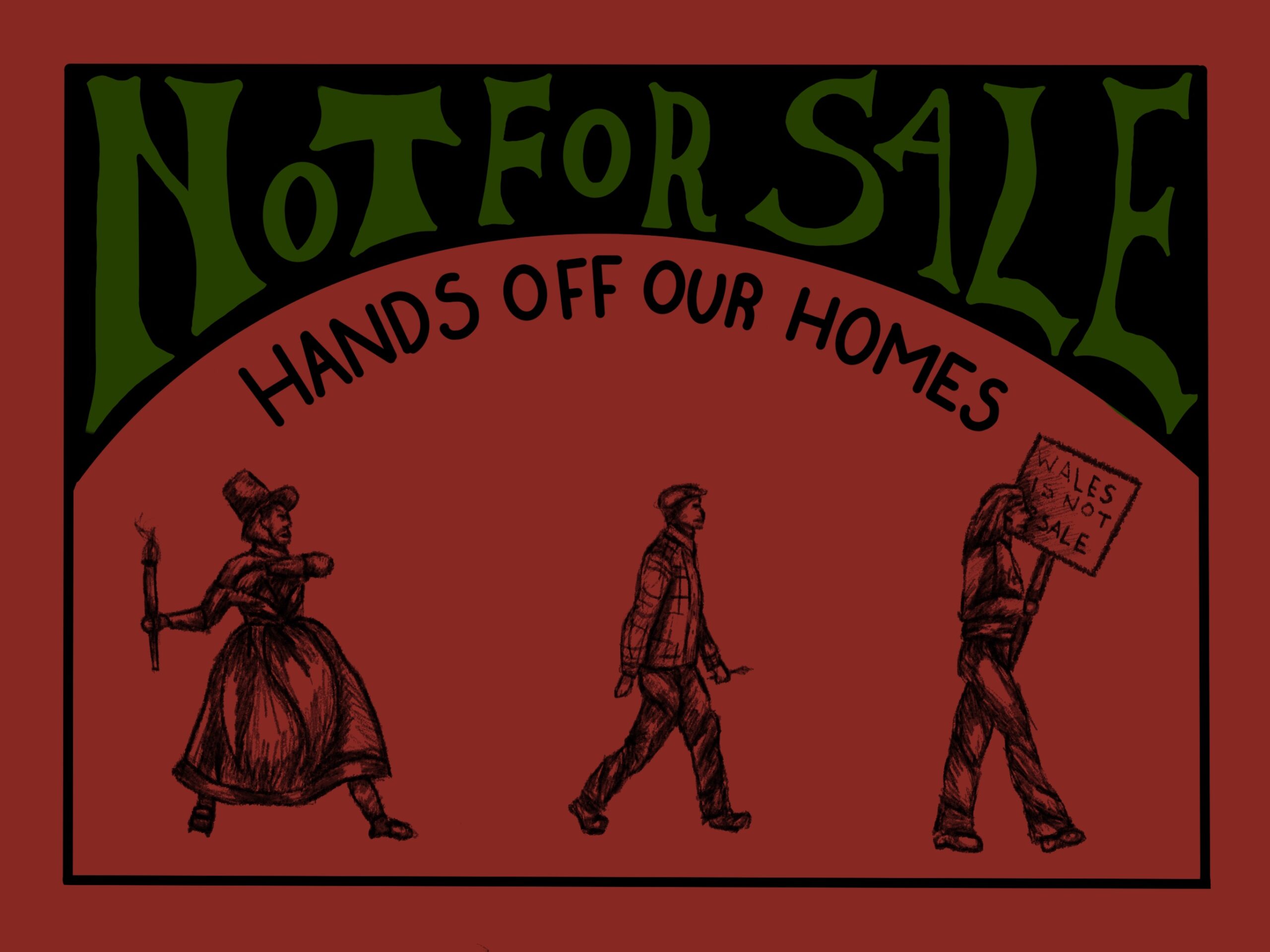
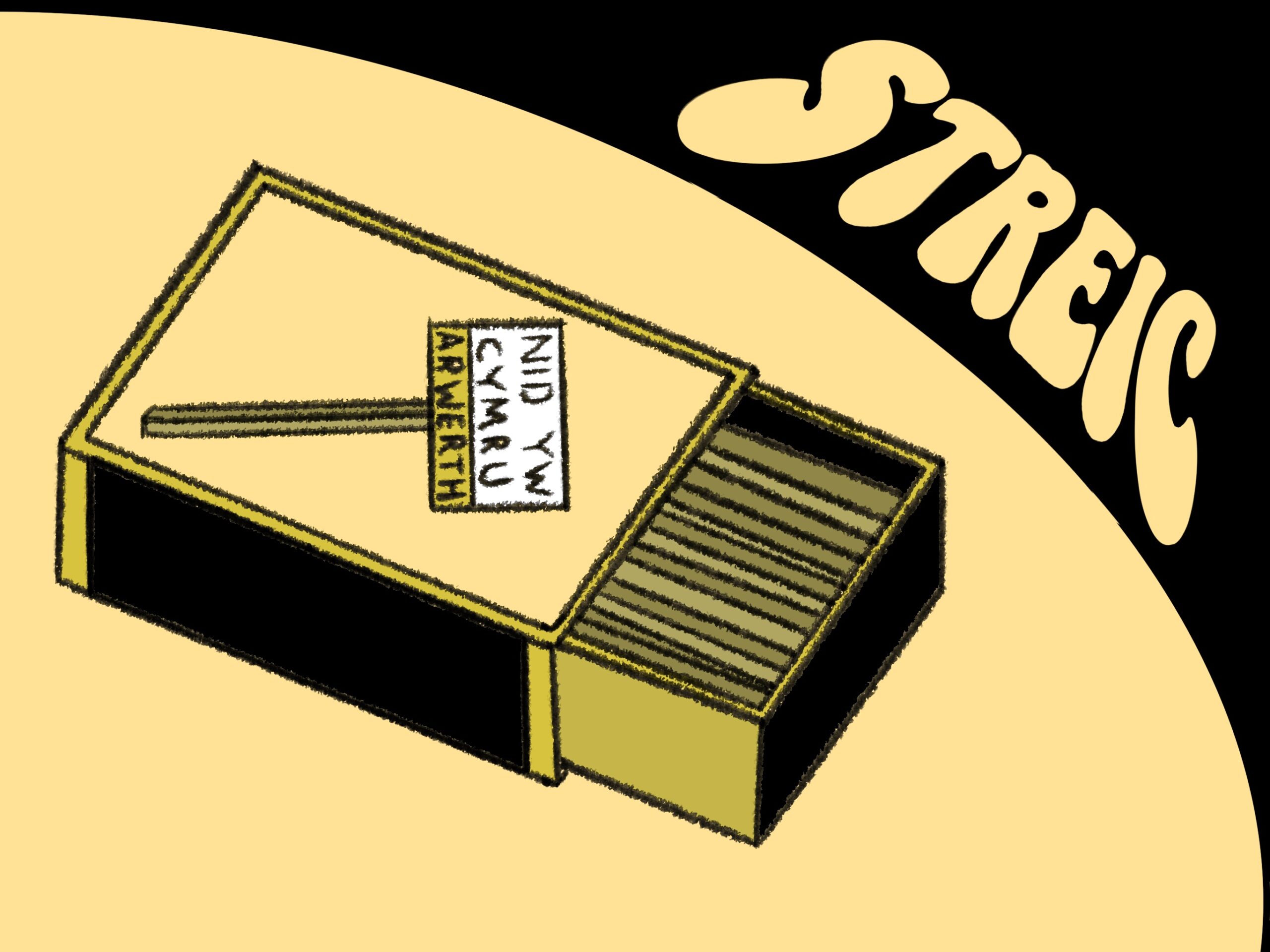
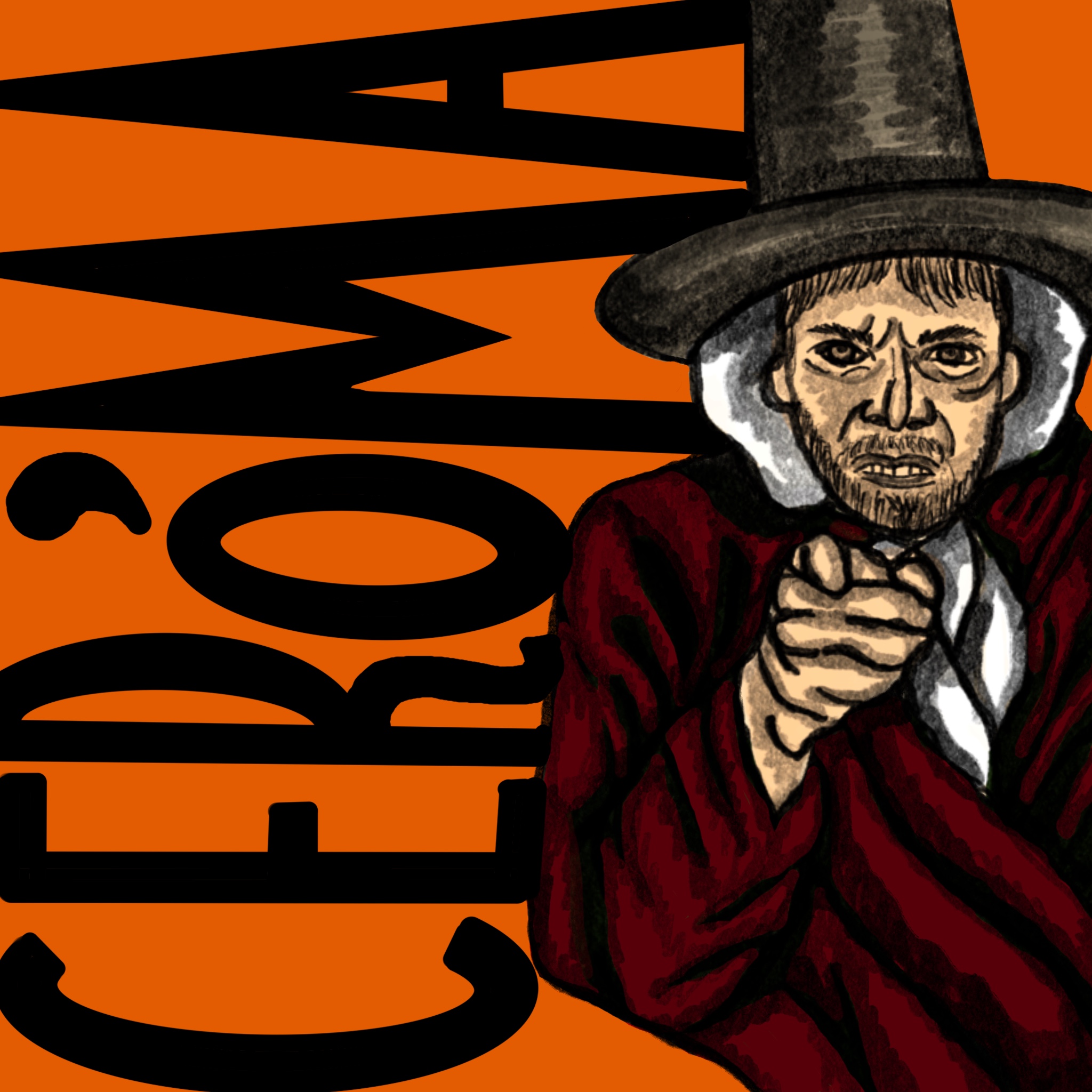
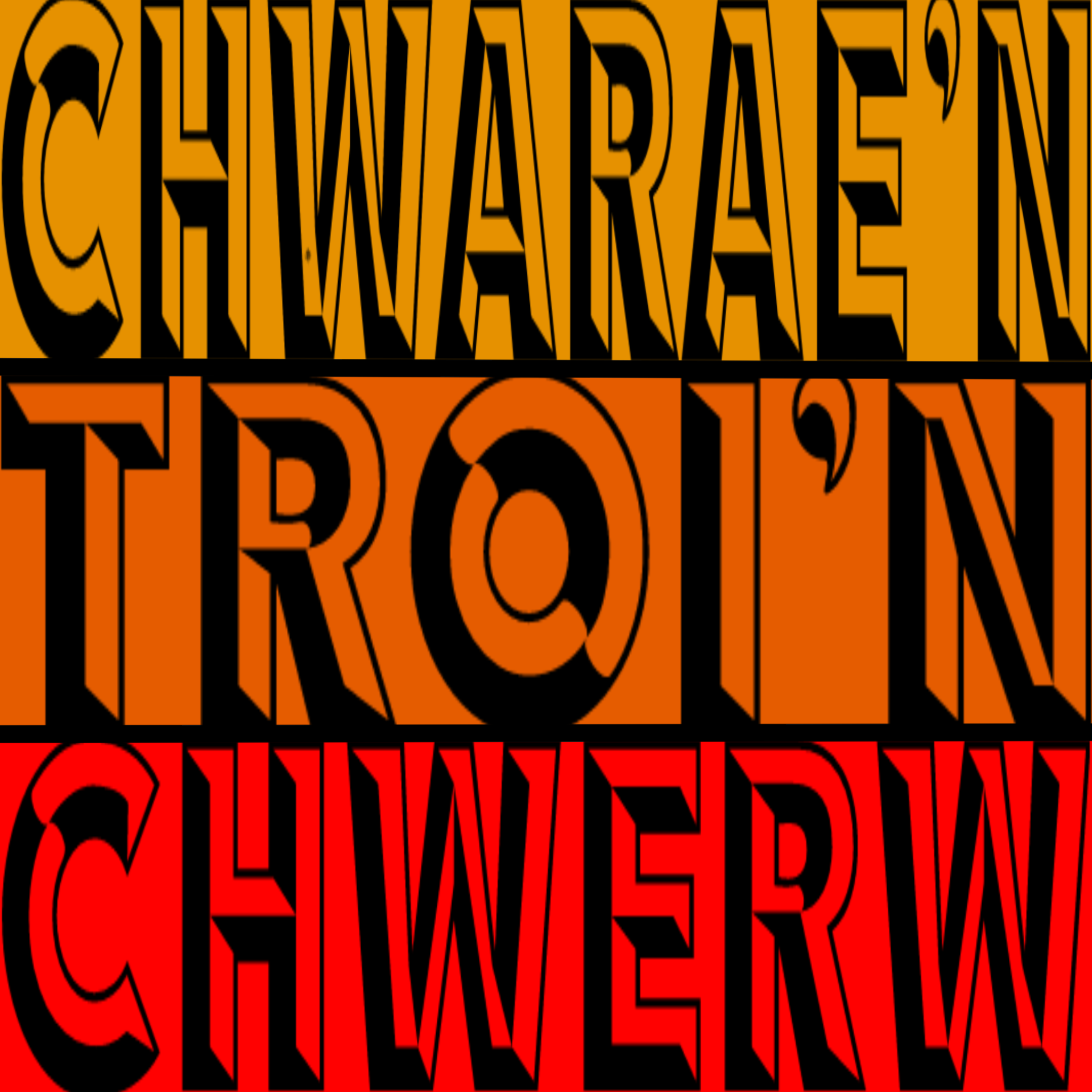
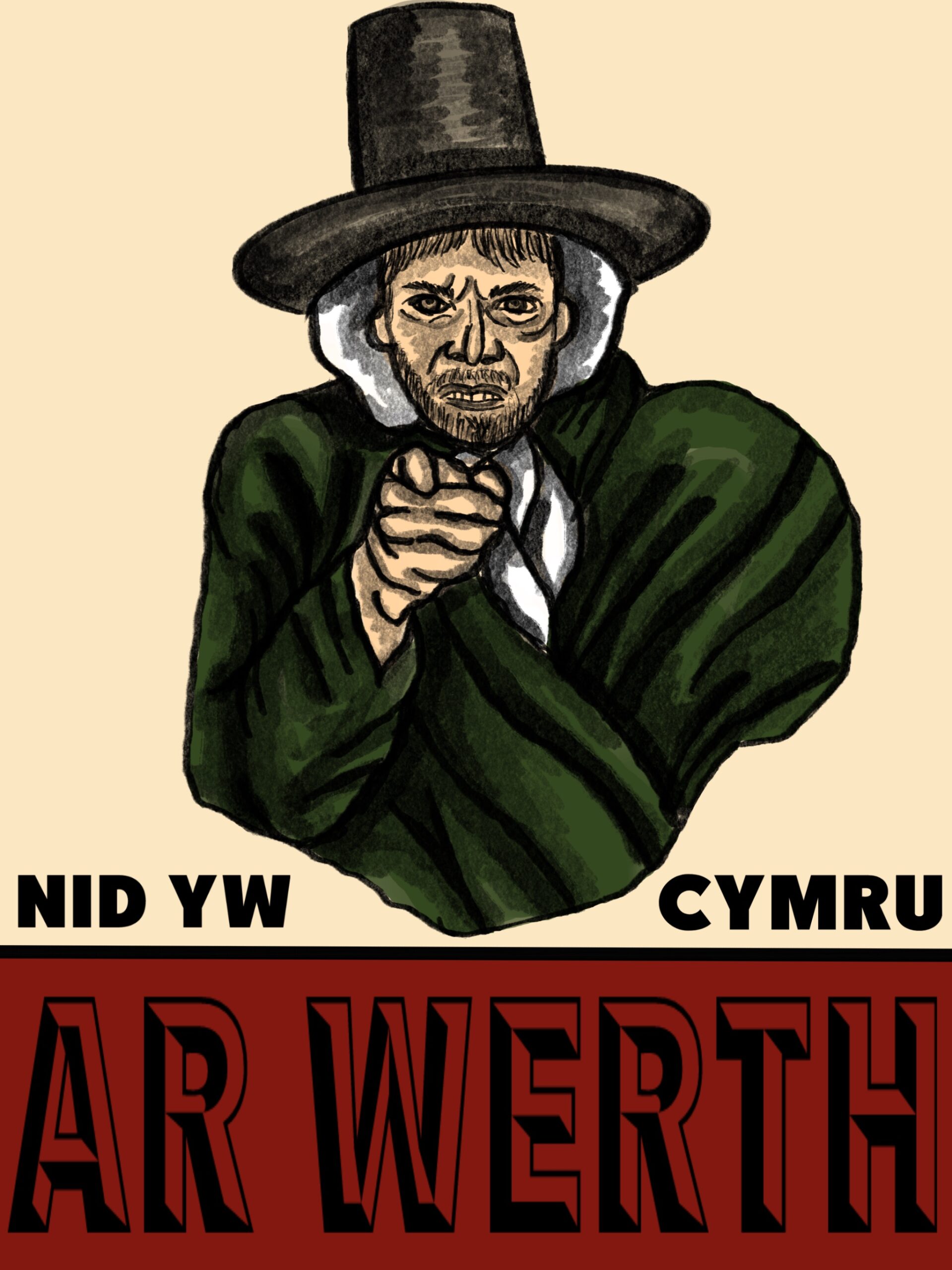
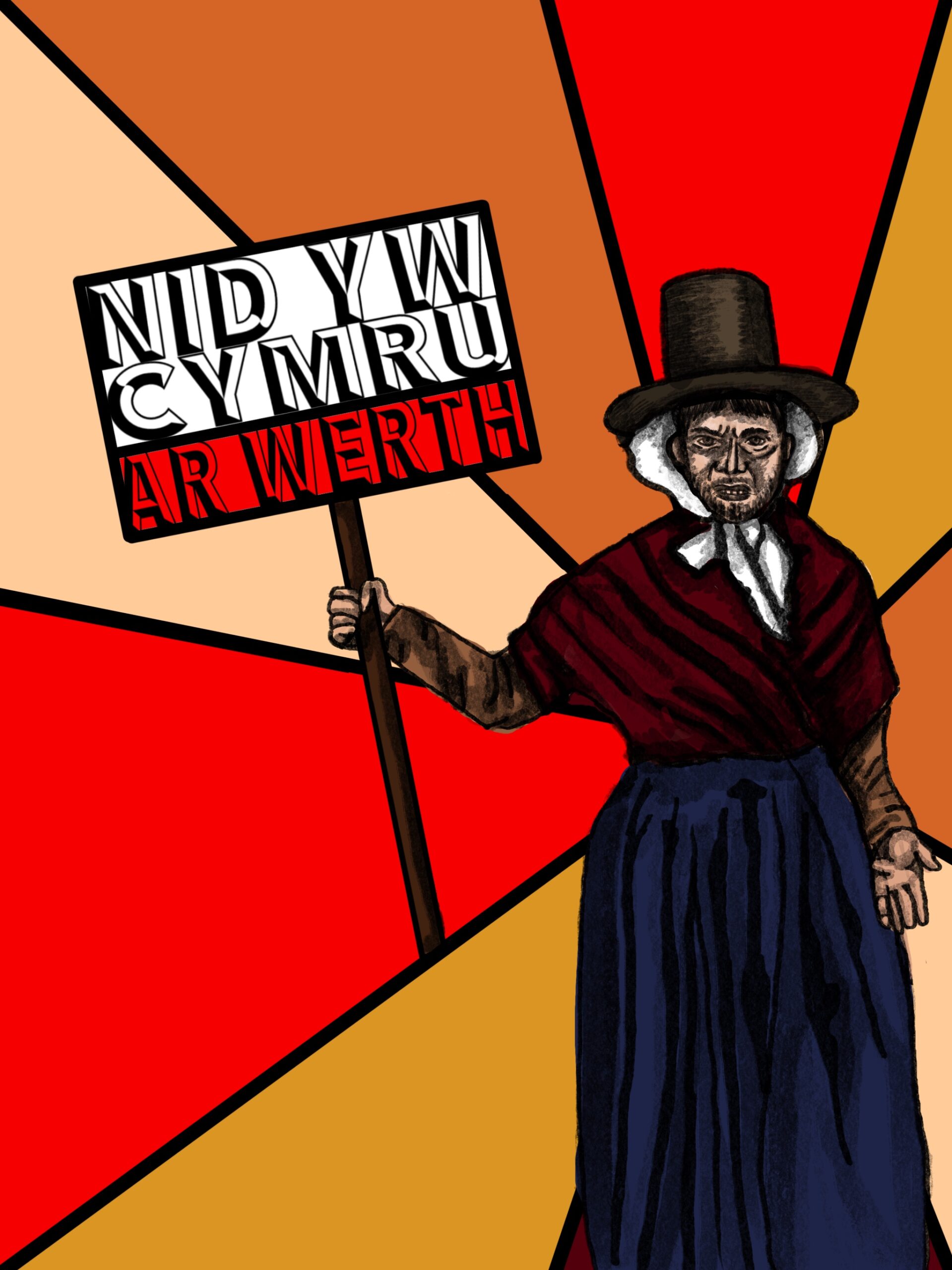
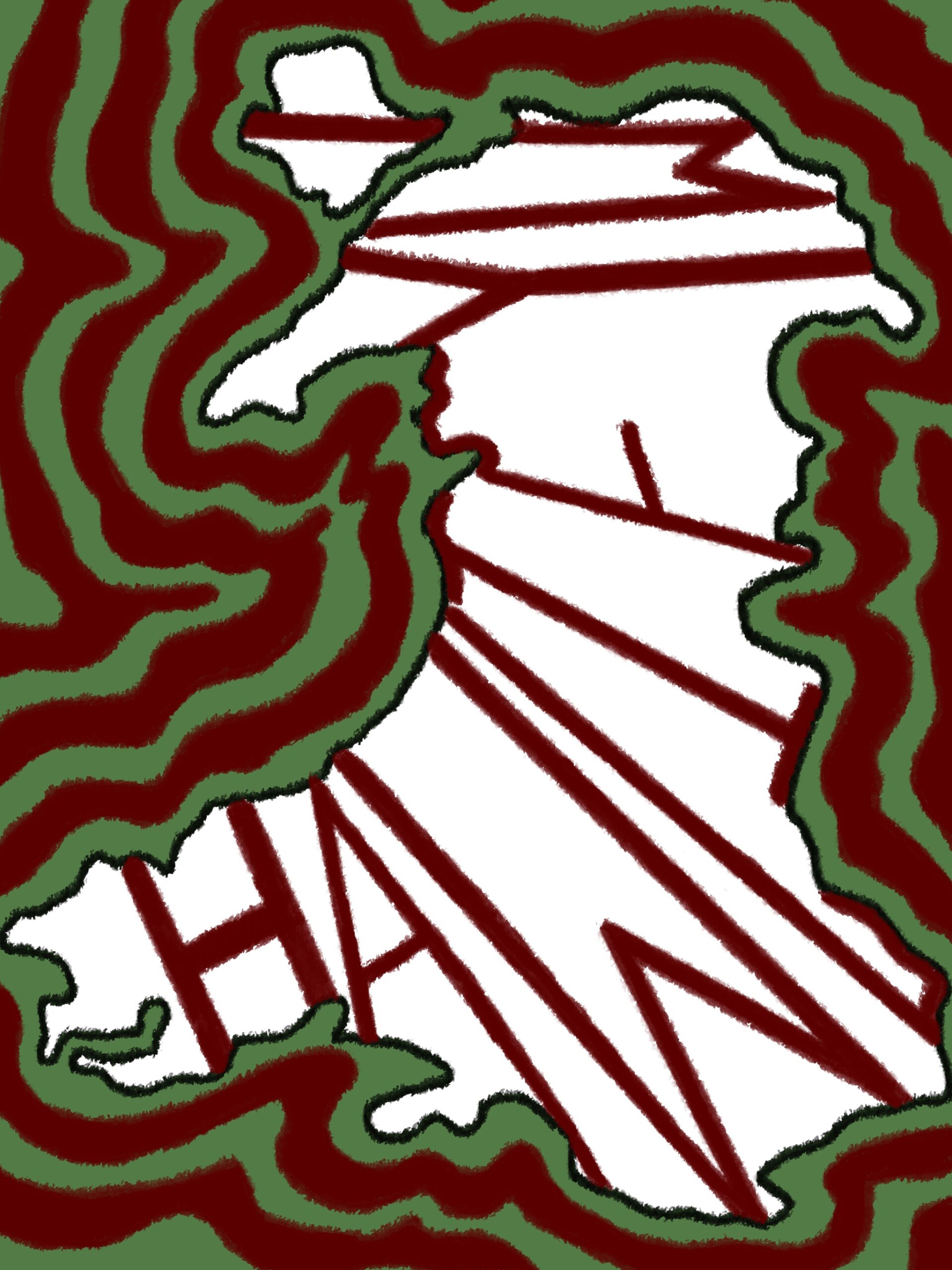
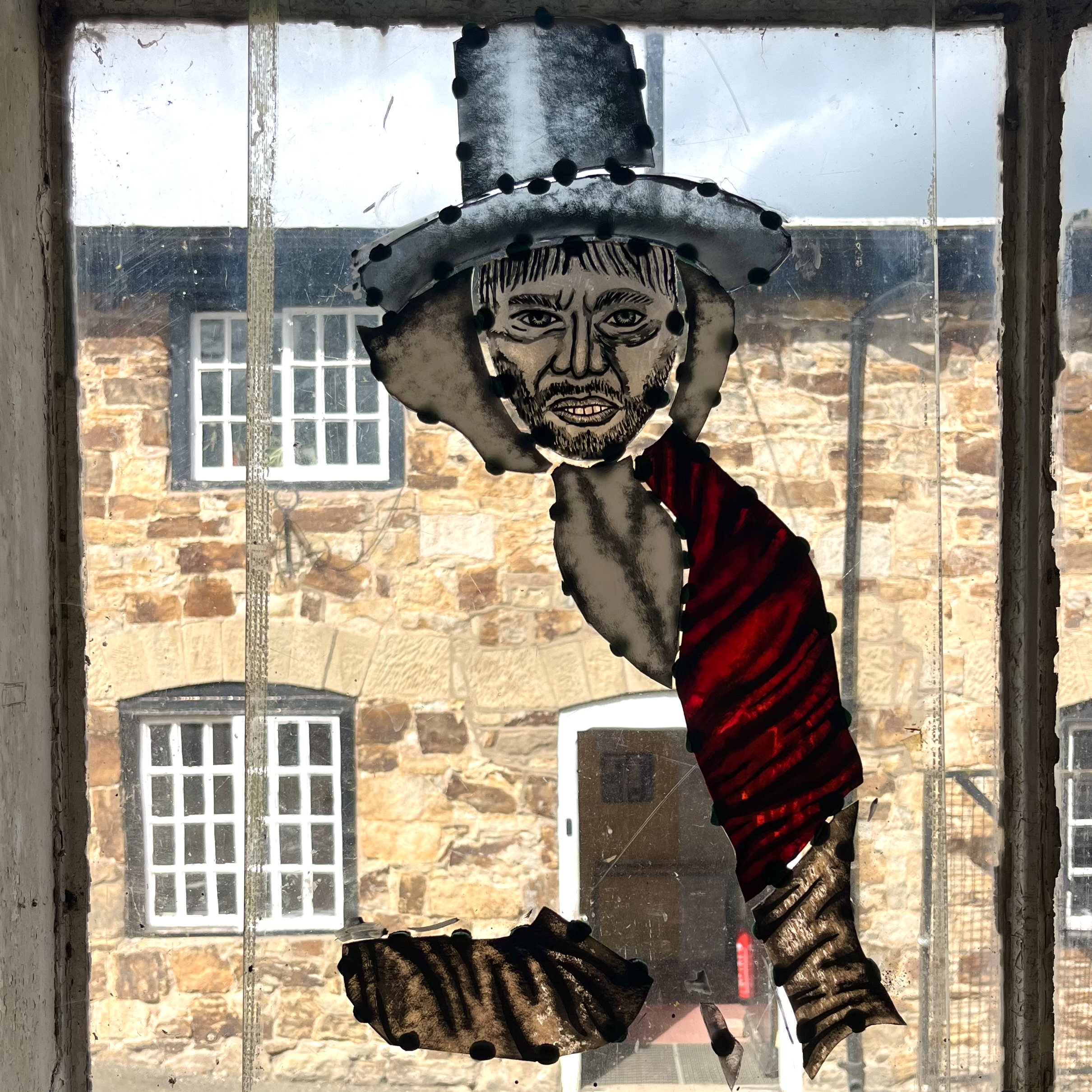
My practice involves creating propaganda style posters the protest the rise in second home ownership in Wales. My work draws inspiration from protests of the 19th century, the 1970s-90s, and the present day; blending the historical and the contemporary. By creating my posters from stained glass I am juxtaposing the very traditional and historical art of stained glass with more contemporary political themes. Instead of seeing saints and biblical figures depicted in stained glass, I put working-class Welsh people in the spotlight, illuminated as heroes. Furthermore, to accompany my glass, I have made traditional Welsh clothing as a ‘uniform’ for the historical protester, harking back from the times of ‘Merched Beca’, as well as a modern protest ‘uniform’. Both displayed eerily as though worn by a ghostly figure. Themes of political unrest have always been a part of my work and I wish to inspire change through the art that I create.
Whilst themes of politics in Wales have been key to my practice throughout my degree, stained glass is a relatively new practice to me. I was welcomed into the community with much enthusiasm and support as a young artist in a traditional practice.
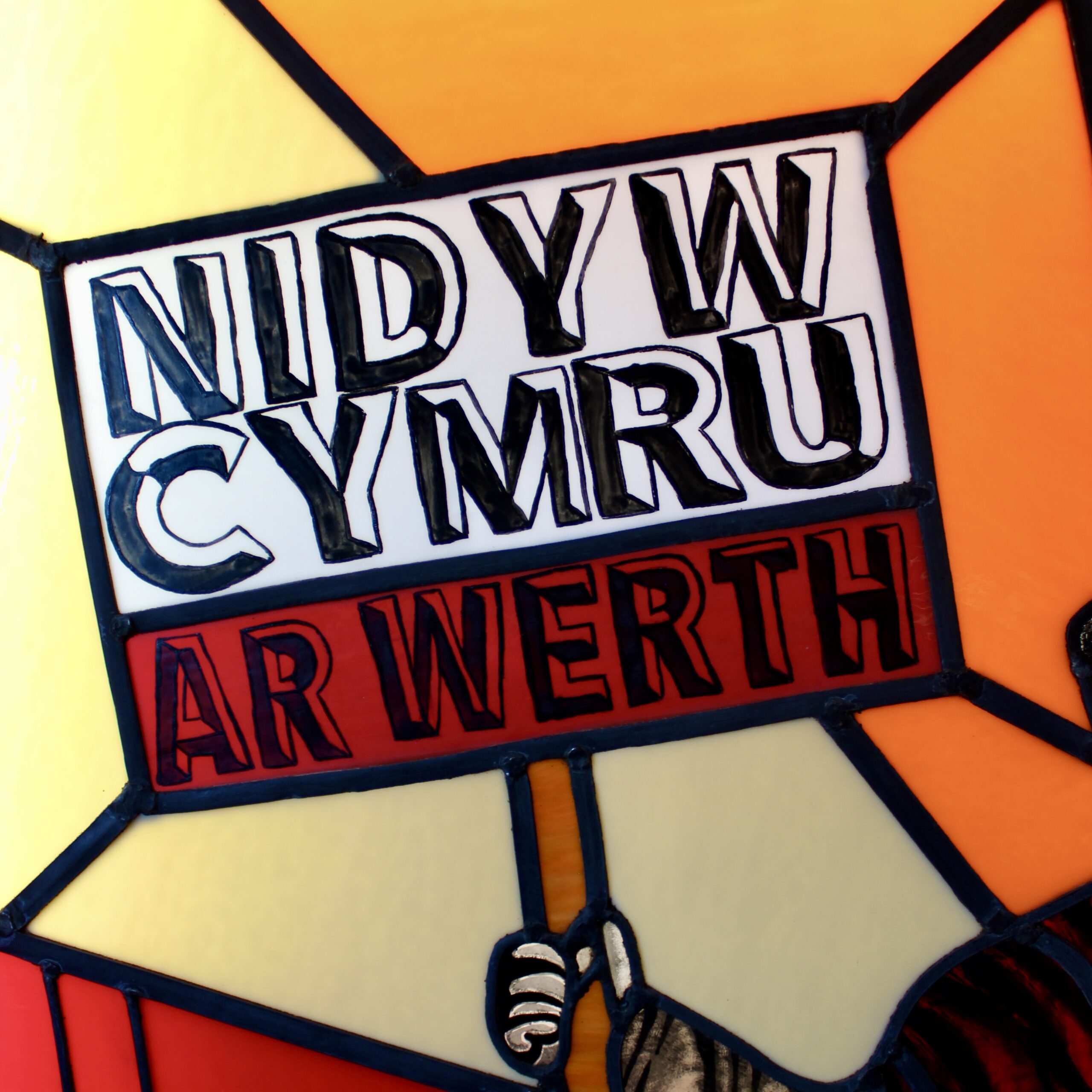
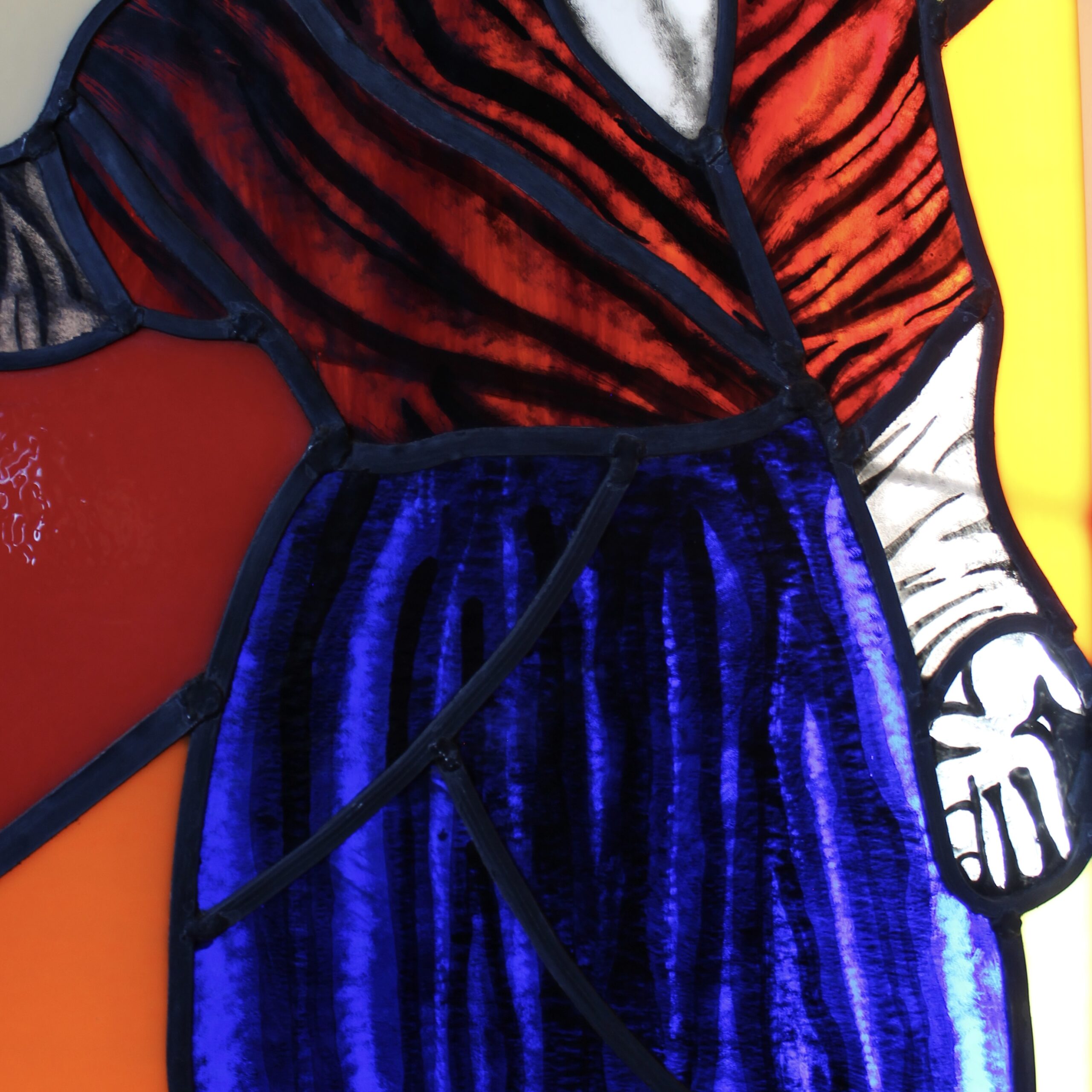
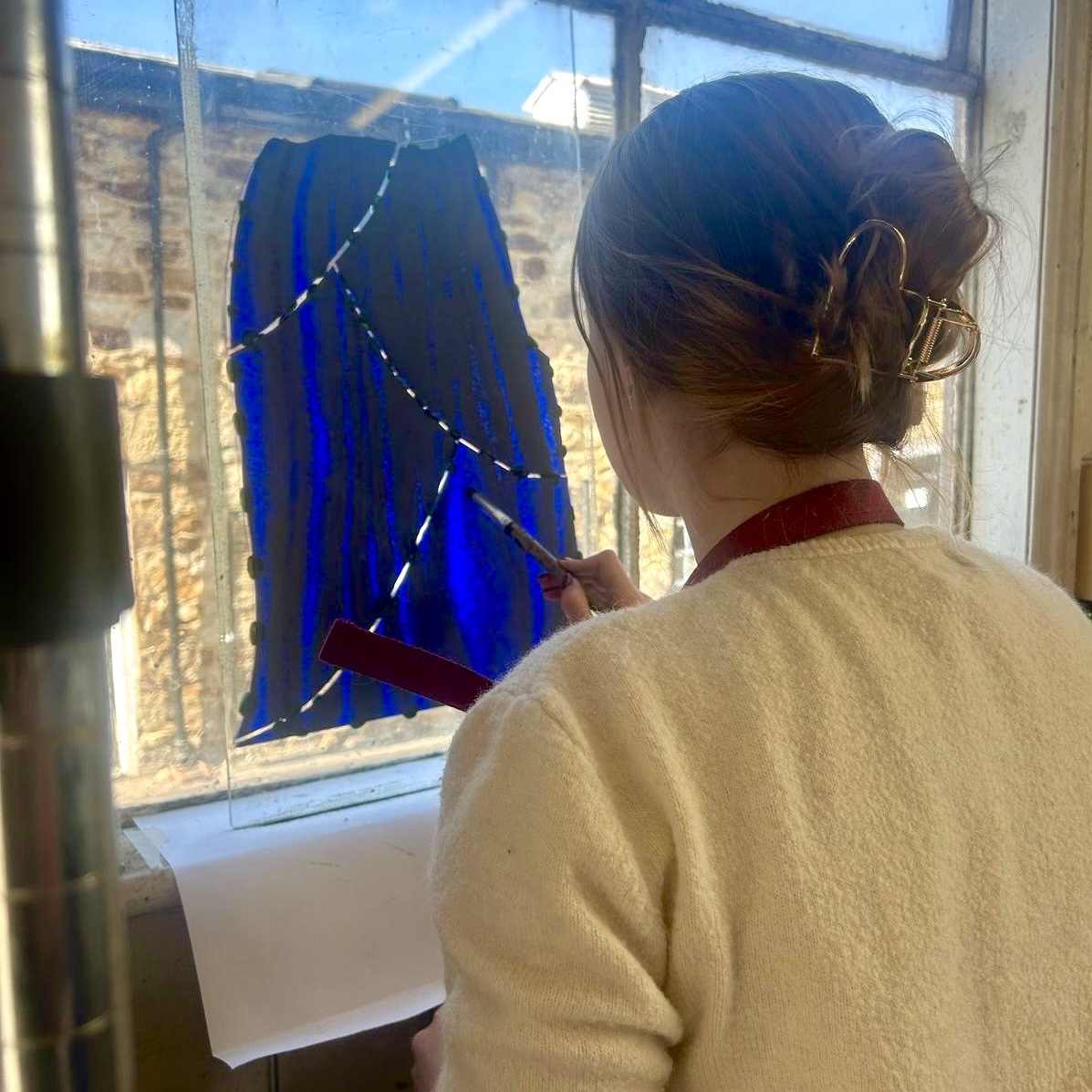
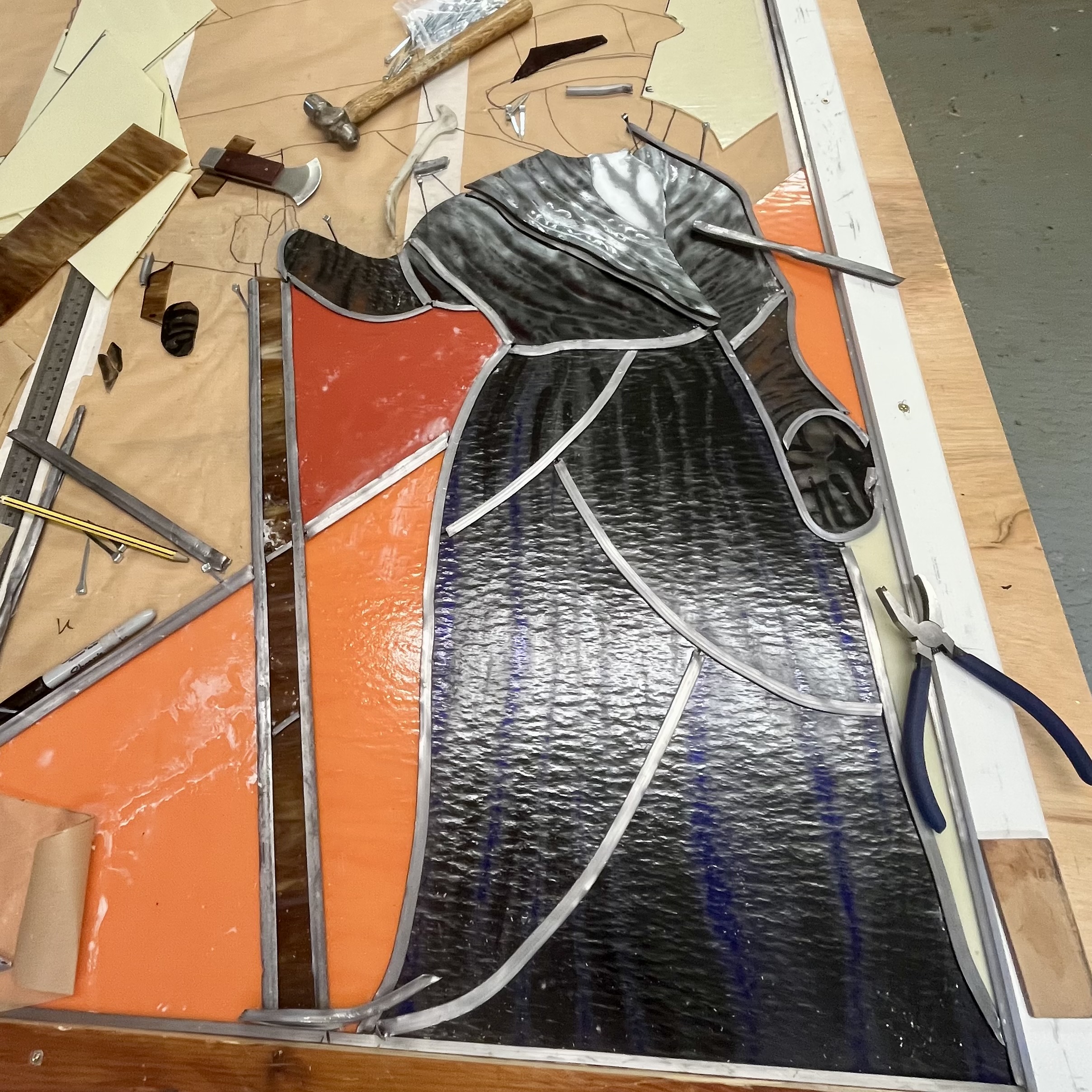
A stained glass panel is made using coloured glass which is cut to fit a cartoon. Patterns and shading are painted on using black glass paint and the glass is fired in the kiln. The glass pieces are joined together using strips of lead came which are soldered together and cemented to create a more solid panel. The lead is brushed with patina to finish which darkens the lead and makes it more resilient. The framed panel is lit from behind using LED strip lights instead of natural light.
Cartoon – Hand drawn design
Lead came – Grooved strips of lead
Solder – Melting metal used to join other metals such as lead
Cementing – Mixture often made from window putty which is pushed under lead came to stabilise and strengthen
Patina – Liquid chemicals brushed onto metal to create a coloured finish